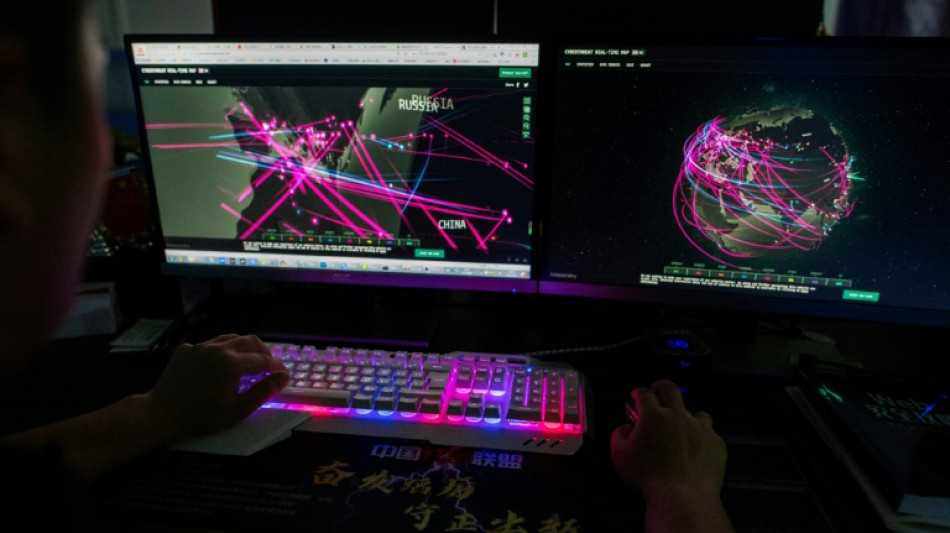
Canadian businesses scrambling to defend against cyberattacks uptick / Photo: © AFP/File

 US hopeful Hormuz strait deal will be done 'today or tomorrow' after ship hit

 Infantino's problems mount as Wenger and key FIFA ally turn on him

 Oil edges higher, stocks gain as investors eye political risks

 Man Utd sign reported record £20mn sponsorship deal for training kit

 Stokes reveals England coaching ambition

 Cargo ship hit after Trump insists Iran talks could reopen Hormuz today

 BP profit soars as Mideast war roils energy prices

 Most stock markets gain, while oil prices edge up after plunge

 Most stock markets gain, while oil prices edge up after latest plunge

 Weak yen helps auto giant Toyota raise forecasts

 TRON DAO Joins Blockchain Application Stanford Summit at the Science of Blockchain Conference as a Sponsor

 Rockets, Starlink, AI: SpaceX faces its first Wall Street grilling

 After sparring over Ceuta, EU states seek lessons from crisis

 Forest fire spreads in Dutch nature reserve

 Japan sees 'urgent' need to boost military
 Myanmar ex-junta chief set for first Thailand visit as civilian leader
 New Zealand hooker Bell out of South Africa tour with calf strain

 Trump attorney general pick looks set to clear US Senate hurdle
 Agassi Sports Entertainment Launches Global "Let's Play" Pickleball and Padel Platform Initiative

 Death toll from Venezuela quakes rises past 6,000

 Shafique, Babar lead strong Pakistan reply against West Indies

 Defending champ Shelton finding tournament sweet spot in Montreal

 Democratic-led US states sue in latest challenge to Trump's tariffs
 Trump says Iran facing 'last chance before decapitation'
 US northwest battles wildfires after Spokane neighborhoods scorched

Canada's governor general and foreign ministry, hospitals and an airline: a litany of recent cyberattacks has exposed poor defenses against hackers, despite warnings to be more vigilant since Russia's invasion of Ukraine.
Last week, Canada and four other Western countries, including the United States, warned that Russia was preparing to launch massive cyberattacks against Ukraine's allies in retaliation for support for Kyiv and sanctions imposed on Moscow.
On the rise for years and becoming increasingly sophisticated, "thousands" of cyberattacks, including by Russian hacker groups, target Canada every day, according to Cherie Henderson, a senior official at the Canadian Security Intelligence Service.
Canada was second behind Britain in number of reported victims of phishing, spoofing, extortion and other Internet-enabled frauds, according to an FBI report on Internet crimes in 2020. (The report excludes the United States in the list).
The most recent victim was the Canadian airline Sunwing. A cyberattack hit one of its suppliers, causing a breakdown of the airline's operations that left thousands stranded in vacation hotspots in the United States, Mexico and the Caribbean.
Companies may be "caught offguard and see their business activities considerably curtailed," commented Benoit Dupont, a cybersecurity researcher at the University of Montreal.
Some, especially smaller enterprises, "do not always have adequate resources and investing in cybersecurity is not always a top priority," he told AFP.
Just prior to the start of the war in Ukraine in late February, the government's Canadian Center for Cyber Security reminded of the need to protect critical infrastructure from Russian-sponsored cyber threats.
Whether it's industrial espionage, vandalism, theft of intellectual property or proprietary information, frozen accounting systems or even entire computer systems, the risks concern companies of all sizes.
- Finance, energy, telecom targets -
Evan Koronewski, a spokesman for the Communications Security Establishment, said the Canadian electronic eavesdropping agency monitors "cyber threat activity directed at critical infrastructure networks, including those in the financial, energy, and telecommunications sectors."
But, he added, that all sectors "are encouraged to take note and be aware of the possibility of increased cyber threat activity."
Some have taken action, according to Trevor Neiman of the Business Council of Canada, an association representing the nation's biggest employers.
"In the run-up to the to the Russian invasion of Ukraine, Canadian businesses have adopted a heightened state of awareness, and they've taken a number of proactive measures to bolster their cyberdefenses," he said.
Public utility Hydro-Quebec, for example, has stepped up "surveillance specifically for this threat," its spokesman Cendrix Bouchard told AFP.
In Canada, one in four companies reported being hit by cyberattacks in 2021 and more than half paid ransoms to hackers who infected their computer systems with malware, according to a Novipro-Leger survey last fall.
Ransom amounts have been climbing, and can reach several million dollars.
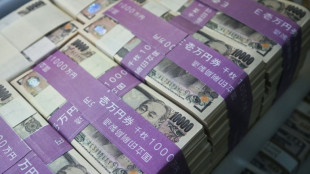
Ottawa announced last year Can$80 million (US$62.5 million) over four years to bolster the nation's cyberdefenses.
But the Canadian Chamber of Commerce said it was not enough, noting that it is a drop in the bucket compared to amounts spent by Canada's G7 peers.
"The United States, Israel, and the UK are investing billions" to boost their cyberdefenses, it said.
Since the start of the pandemic, which saw more people teleworking, ransomware attacks have increased exponentially around the world.
"Malicious cyber actors, whether state sponsored or otherwise, often seek to take advantage of crises," explained BlackBerry's Marjorie Dickman.
"We saw this during the pandemic when threat actors launched repeated Covid-19-themed attacks and sought to leverage security gaps in the work-from-home setting," she said, adding that hackers now use mentions of the war in Ukraine to lure victims.
"You only have to be successfully attacked one time to really hurt your business," warned Rocco Rossi, head of the Ontario Chamber of Commerce, describing it as "an ongoing battle."
"Even after the war in Ukraine ends," he said, "these cybersecurity issues won't go away."
Y.Bouchard--BTB