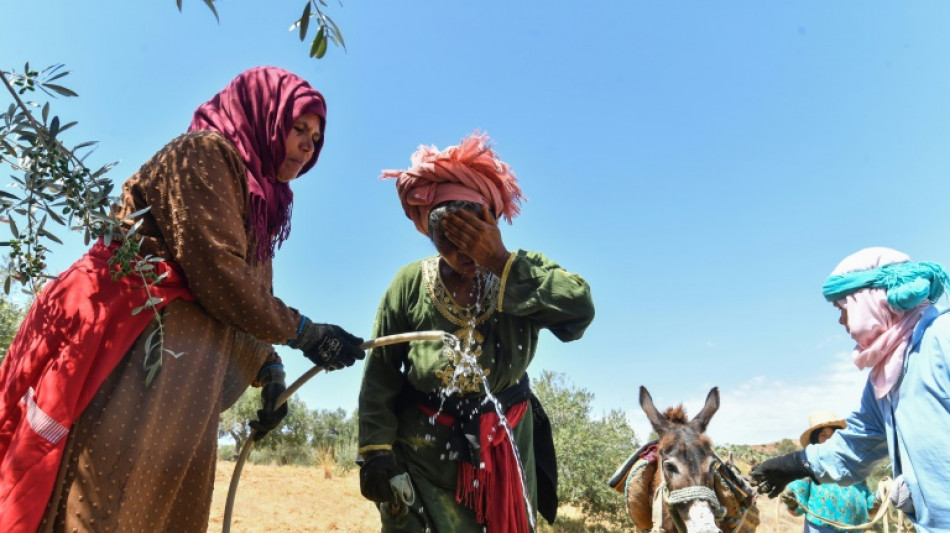
A Tunisian village's fight for running water / Photo: © AFP

 Stopped broadcast, layoffs: Hungary media eyes post-Orban renewal
 Typhoon Dolphin weakens but disrupts travel in east China
 Pakistan brickmakers scorched by sun above and fire below
 Ithaca bets on hometown hero Odysseus for tourism boom

 Five things to know about Zambia ahead of the presidential vote
 Zambia vote to test Hichilema's economic record

 Meta will soon face another high-stakes trial in US

 Syria says reached deal with Moscow on fate of Russian bases

 Netanyahu rejects Gaza plan in new break from Trump

 Kurdish PKK criticises Turkey bill on fate of its fighters

 Clay-courter Merida on hardcourt learning curve in Montreal

 NBA champion player and historic coach Nelson dead at 86

 BMW iX3 Flow Edition brings animated bodywork closer to reality

 Arteta backs Guimaraes to 'ignite something different' at Arsenal
 Como sign England defender Chalobah from Chelsea

 Demi Vollering wins Tour de France Femmes

 Iraola's first Anfield match as Liverpool manager ends in Monaco defeat

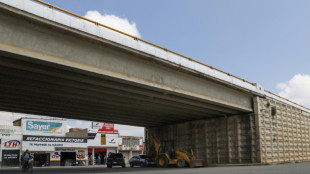 Bodies hanging from bridge revive violence in once-calm town in Mexico
 Lionel Messi bids farewell to father who guided his glittering career

 Raul Fernandez wins British MotoGP Grand Prix

 Tesla FSD secrecy puts Europe’s safety oversight under scrutiny

 Mercedes-AMG GT 53 balances speed, range and daily usability

 Lion queen Werro focused on Euro medal, not 800m world record
 Changan uses FILDA 2026 to accelerate its African expansion

 Honda plots a profitable European comeback without a price war
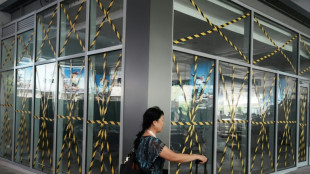
In front of a small mosque in central Tunisia, women queue at one of their village's last water sources, a pipe meant for crop irrigation, but now a lifeline in the parched area.
"We just need something to drink," said Ribh Saket, 56, under the punishing summer sun as she placed a jerrycan beneath a makeshift tap hooked into the water supply.
Like its neighbour Algeria and large areas of the Mediterranean region, Tunisia suffers from "alert drought conditions", according to the European Drought Observatory.
But while drought and rising temperatures impact the region as a whole, repercussions are felt twofold in rural areas, where poverty rates tend to be higher.
Tunisia's national water grid supplies almost all of the country's urban areas, but only about half of the rural population.
The other half largely rely on wells built by local agrarian associations officially working under the agriculture ministry.
"We've been marginalised," said Saket, whose village of around 250 families had one such well.
But it was shut down in 2018 due to unpaid electricity bills -- a common issue among agrarian associations -- and the villagers were left without pumps to extract the water for their community in the Sbikha area, about 30 kilometres (18 miles) north of Kairouan city.
Since then, the families said they have been relying on water from wells originally dug up by local farmers to irrigate their lands.
None of these wells have been authorised by the state as they are often contaminated with pollutants and unfit for human consumption due to improper construction and testing.
- 'Unsustainable' -
Flashing a scar that ran the length of his abdomen, Ali Kammoun, 57, said he has had two surgeries due to waterborne diseases.
"Half of us have kidney issues," his neighbour, Leila Ben Arfa, said. "The water is polluted, but we have to drink it."
The 52-year-old said she and other women "bring the jerrycans on our backs".
Tunisia, in its sixth year of drought, ranks as the world's 33rd most water-stressed country, according to the World Resources Institute.
The World Bank says by 2030 the Middle East and North Africa will fall below the "absolute water scarcity" threshold of 500 cubic metres yearly per person.
That amount is already below 450 cubic metres per inhabitant in Tunisia.
More than 650,000 Tunisians, mainly in the countryside, have no running water at home, with almost half of them living far from a public water source, according to a 2023 United Nations report.
Bottled water, costing around half a Tunisian dinar (16 cents) per litre, remains a luxury for the families whose governorate is Tunisia's poorest.
"We need to find a solution," said Djaouher Kammoun, a 26-year-old farmer who has been sharing his well water with other villagers.
"Most families come to fetch water while we're working, and sometimes we can't do both," he said, describing the system as unsustainable.
According to the National Agricultural Observatory (ONAGRI), about 60 percent of wells across the country are privately dug and unauthorised.
But while the practise may provide a temporary -- albeit unhealthy -- solution for some, it exacerbates water scarcity.
A 2022 study by ONAGRI found that Tunisia's deep aquifers were being exploited at 150 percent their rate of recharge, and groundwater aquifers at 119 percent.
-'Many have left'-
"Today we are in the same spiral, the same vicious circle, with the same problems," said Minyara Mejbri, Kairouan coordinator at the Tunisian Forum for Economic and Social Rights (FTDES).
The villagers have protested, blockaded roads, and complained multiple times -- all to no avail.
"The governorate said we already had access to drinking water," said Saief Naffati, a 34-year-old who has been leading his community's efforts to solve the crisis.
"They told us if we protest, we should own up to it, because the National Guard would arrest us."
At their wit's end, many have left the village, Naffati added.
Among them is his brother, Raouf, now living in the coastal city of Hammamet.
Saleh Hamadi, a 55-year-old farmer also struggling with distributing his well water, said "at least 150 families have left".
"Most of our youth have moved away, leaving their elders on their own," he said.
"In 2024, why is this still a problem? Why are we still thirsty?"
L.Janezki--BTB