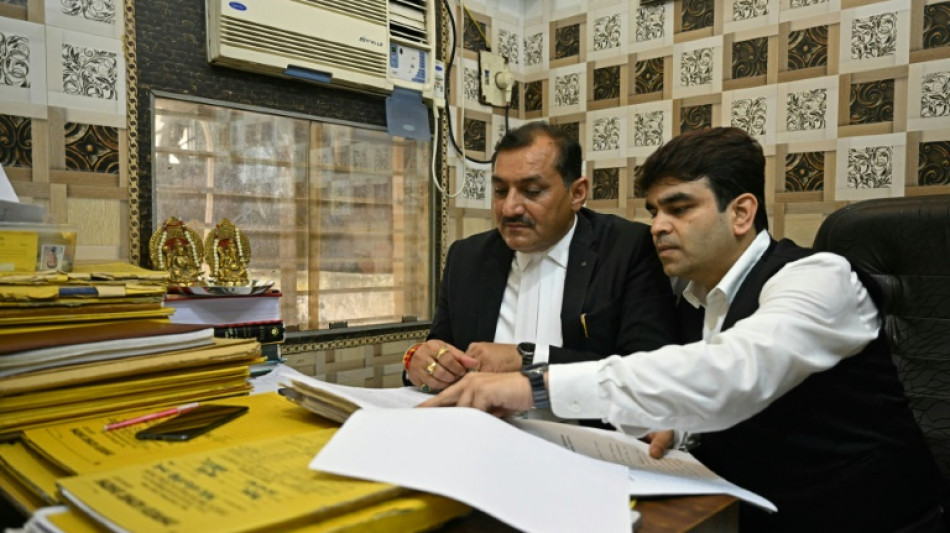
Long wait for justice in India's backlogged courts / Photo: © AFP

 Indicted Raul Castro reappears after months out of public view
 Italian teen Curtis breaks women's 50m backstroke world record for second time

 Taulagi steps out of 'comfort zone' with code switch to French Top 14 new boys

 Leicester's Thai owners put troubled club up for sale: reports

 Stocks steady as US inflation worries ease, oil slips

 Porsche to end production of flagship electric car: report

 Twitch sparks gamers' wrath with Amazon AI sharing deal

 Blaze forces families to abandon Turkish tour boat

 'If you can, move!' say Rome's viral dancing seniors
 Zambia voters weigh Hichilema's economic record

 SBCFX to Showcase Trading Innovation, Regional Growth Strategy, and Future Vision at iFX EXPO Asia 2026

 Hodgkinson sets up Werro showdown after Euro 800m drama

 'How many will die?': the mysterious ailment killing Kenyan elephants

 Arteta coy over Lewis-Skelly's Arsenal future after 'emotional' celebration

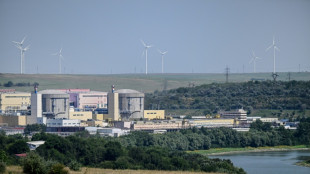 Romania shuts down nuclear plant as Danube drops

 German steel giant Thyssenkrupp weighs options as Rhine drops

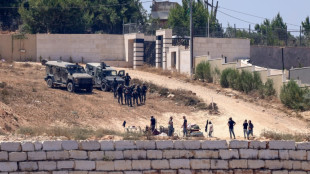 US ambassador denounces settler siege as Israel dispatches troops
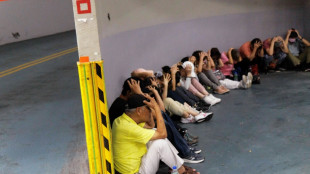
 Hasan takes 6-55 as Bangladesh claim opening day of Australia Test

 Taiwan says AI agents used in cyberattacks targeting island

 Japan protests Putin's first visit to disputed islands

 Kiss wants fit-again Wallabies playmaker Gordon to 'open up' Japan

 British eccentrics push humble garden shed to new heights

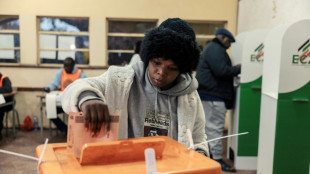 Zambia votes with president's economic record on the line

 Germany's dry rivers spark battle on engineering vs restoration

 Senators demand inquiry into conditions aboard USS Abraham Lincoln

Sonia waited 32 years to see her rapists convicted, a glacially slow legal process all too common in India where half a million cases have been pending for longer than two decades.
The violence inflicted on her was horrific and the trauma was compounded by years of painful stop-start trials, beginning in 1992 and ending only last month with six men jailed for life.
"My heart is full of pain," said Sonia, 52, who as a young woman, was bound gagged and raped in her home city of Ajmer in the northern state of Rajasthan.
"I could not do anything," said Sonia, whose name has been changed to protect her identity. "This should not happen to any girl."
In the world's most populous nation, a staggering 533,000 cases have been languishing in court for between 20 and 30 years, according to justice ministry figures.
More than three-quarters of them are criminal cases.
Last year, the Supreme Court warned victims may become "disillusioned when the legal process moves at a snail's pace", expressing their "anguish" at some cases taking as long as 65 years.
Nearly 3,000 cases nationwide have been pending for at least half a century.
- 'Justice denied' -
Sonia, against many expectations, eventually got justice.
In her case, part of a wider rape and blackmail trial, 18 men were charged.
But only a handful were initially in detention. Defence lawyers demanded the trial restart each time another arrest was made.
As the years wore on, trial lawyers came and went. Evidence was trawled over again and again.
Virendra Singh Rathore, who was at least the tenth public prosecutor to have handled the case, said it was "traumatic" for survivors.
"They would ask us, why we are bothering them, and, why the accused were not being punished," he said.
On August 20, a court in Ajmer sentenced six men to life imprisonment, ending a complex case that had seen years of twists and turns, several convictions and subsequent acquittals.
Rathore said the lives of the survivors would have been very different had justice been swifter.
"Others, who have had to endure such crimes, would have had the courage to come forward," he said.
"For the common man, justice delayed is basically justice denied -- or completely absent."
- 'Overburdened' -
The justice ministry has ordered hugely backlogged courts to prioritise the "speedy trial of specific cases of heinous nature", but their caseloads are overwhelming.
At least 44 million cases are pending across the country of 1.4 billion people.
That judicial jam could take decades -- if not centuries -- to clear at current speeds, even without a continuing pileup of fresh cases.
Procedures are bogged down in rigid rules rooted in the British colonial era.
There has been little investment in digital systems to streamline and organise hearings, while a meagre ratio of judges -- just 21 per million of population in India -- means procedures are notoriously slow.
New Delhi-based lawyer Mishika Singh, who founded the Neev Foundation to improve legal access for the city's poor, warns those seeking justice in an "overburdened" system to be ready to wait.
"We tell them very clearly that even to get an interim order, it can easily take a year to two years," she said.
"For the final decision to come, it can take three to four years, easily."
- 'Never-ending saga' -
Neelam Krishnamoorthy's two children, aged 13 and 17, were among the 59 killed in a blaze in a Delhi cinema in 1997.
After an epic legal fight, cinema owners Sushil and Gopal Ansal were sentenced in 2007 for negligence to two years in jail.
But that was challenged on appeal, and reduced to a fine.
Another case of tampering with evidence saw them sentenced to seven years in 2021, but a court in July set the pair free due to their age.
Today, 27 years since her children died, Krishnamoorthy is fighting an appeal case demanding they serve jail time.
"When I went to the court initially, I thought it was what I saw in films: you go to court, you have four or five hearings and justice is delivered," she said.
"I was in for a rude shock. This is a never-ending saga."
Krishnamoorthy accused the judicial system of only acting swiftly when a case captured public attention.
"They intervene if there is a public outrage," she said. "Don't other victims of crime like us need justice?"
O.Bulka--BTB