Fires taking Amazon closer to 'point of no return': expert / Photo: © AFP

 Zambia voters weigh Hichilema's economic record

 SBCFX to Showcase Trading Innovation, Regional Growth Strategy, and Future Vision at iFX EXPO Asia 2026

 Hodgkinson sets up Werro showdown after Euro 800m drama

 'How many will die?': the mysterious ailment killing Kenyan elephants
 Arteta coy over Lewis-Skelly's Arsenal future after 'emotional' celebration

 Romania shuts down nuclear plant as Danube drops

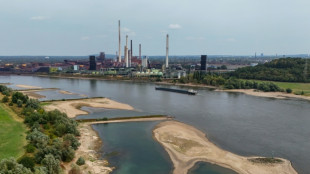 German steel giant Thyssenkrupp weighs options as Rhine drops

 US ambassador denounces settler siege as Israel dispatches troops

 Hasan takes 6-55 as Bangladesh claim opening day of Australia Test

 Taiwan says AI agents used in cyberattacks targeting island
 Japan protests Putin's first visit to disputed islands

 Kiss wants fit-again Wallabies playmaker Gordon to 'open up' Japan

 British eccentrics push humble garden shed to new heights

 Zambia votes with president's economic record on the line

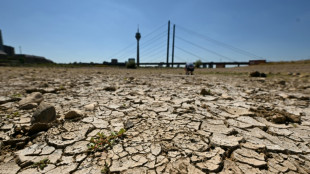 Germany's dry rivers spark battle on engineering vs restoration

 Senators demand inquiry into conditions aboard USS Abraham Lincoln

 All Blacks' Proctor out of South Africa series, Mo'unga called up

 Bangladesh quick Hasan reduces Australia to 74-4 at lunch

 Seoul tech leads Asian stock gains as traders cheer US inflation

 Farage and Count Binface go head-to-head in snap UK poll

 Afghan students divided over smartphone ban at universities

 Japan go back to school for second Australia Test

 Matthew McConaughey on his sweet return to the big screen
 President's economic record on the line as Zambia votes

 U.S. Polo Assn. Takes No. 1 Spot for All Sports Brands and Climbs to No. 22 Overall on License Global's 2026 'Top Global Licensors' Ranking

A year ago, Carlos Nobre, one of Brazil's top climate scientists, was a rare voice of optimism about the future of the planet.
The 73-year-old, one of the top experts on the Amazon rainforest, was cheering the fact that "for the first time, all the leaders in the region are mobilized to find solutions for the forest" at a summit in northern Brazil.
Today, he warns that the world's biggest jungle, which is being ravaged by the worst drought-fuelled wildfires in decades, is in existential danger.
The world risks "losing the Amazon," he told AFP in an interview.
A record wave of wildfires, fueled by severe drought linked to climate change and deforestation, is causing havoc across South America.
The worst drought in Brazil in recent memory has fanned the biggest fires in the country in more than a decade, leaving up to 80 percent of the country blanketed in smoke.
While several countries, including Canada, regularly battle catastrophic wildfires, theirs are often the product of naturally occurring lightning strikes that spread quickly through dry vegetation, Nobre said.
In the Amazon, by contrast, most of the fires are illegally started by humans for agricultural purposes.
"The criminals realized that satellites only detect fires when the fire spreads to 30 or 40 square meters (320 to 430 square feet).
"This gives them time to leave the area before being arrested," Nobre said.
- Not linear -
In February, Europe's climate monitor Copernicus announced that for the first time on record, Earth had endured 12 consecutive months of temperatures 1.5 degrees Celsius hotter than the pre-industrial era -- four years earlier than predicted.
Experts had warned that extreme weather events would accelerate sharply at the 1.5C-warming mark.
"It is not a slow, linear increase," Nobre said.
"In 2024 we are already seeing how the frequency of extreme phenomena is accelerating and breaking records," he added, citing increased "heatwaves, heavy rains, droughts, forest fires" among the extreme weather events that have become frequent in some parts of the planet.
- From jungle to savannah? -
Nobre warned that the fires consuming chunks of the Amazon risked accelerating its transition into dry savannah grasslands.
"If global warming continues and we do not completely stop deforestation, degradation and fires, by 2050 we will have passed the point of no return," he warned.
"In 30 to 50 years, we will have lost at least 50 percent of the forest," he said.
An increase in warming to 2.5C by 2050 would trigger new tipping points, he said, including "losing the Amazon" outright.
Among the measures he advocated to reduce climate warming were accelerating the transition to renewable energy and the mass planting of trees in cities to act as sponges for carbon dioxide.
Trees can help lower urban temperatures by up to 4.5C and also increase humidity.
"Urban sponges are a very important solution all over the world."
T.Bondarenko--BTB