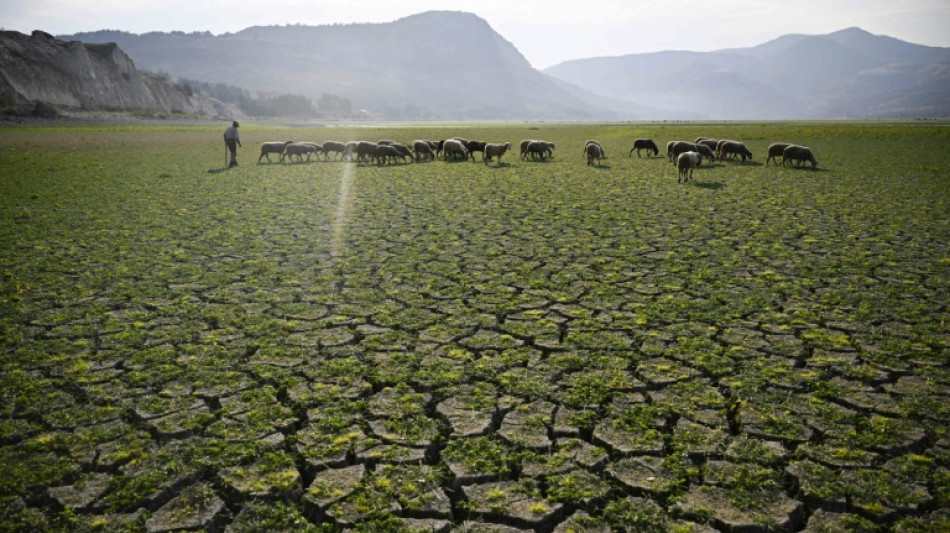
UN warns world's water cycle becoming ever more erratic / Photo: © AFP

 Infantino future should be decided by election says African football chief
 Man City star Doku signs five-year contract extension
 Fabien Barthez joins Zidane's new France coaching setup
 Taiwan chokes mobile internet speeds in drill for Chinese attack

 From Chinese AI to Global ETFs: STARTRADER Launches 45 New 24/7 Stock and ETF CFDs
 Tech stocks enjoy rebound after US inflation on mixed day for markets
 Hasan takes 6-55 as Bangladesh bundle out Australia for 198

 Swiatek sinks Svitolina to set up Rybakina title clash in Toronto
 Australia's Pallister shines, mixed relay record falls as Pan Pacs open
 Hasan puts Bangladesh in charge as Australia struggle to 183-8
 Putin visits Kuril islands claimed by Japan
 Swiatek downs Svitolina to reach first WTA final of 2026

 Jones says Japan 'watching videos of geese' for Australia clash

 Bloodied but unbowed, defending champ Shelton reaches Montreal final
 Wallabies make eight changes for return Japan Test

 Messi returns after father's death but Miami knocked out of Leagues Cup
 Outflanked by AI, stars fade for South Korea's blind fortune-tellers

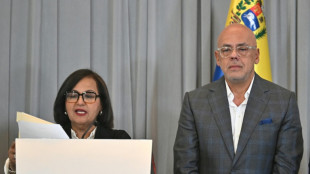 Venezuela govt, opposition wrap up round of post-Maduro talks

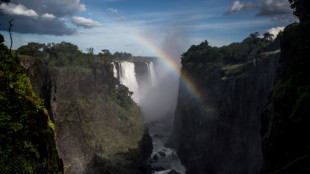 Five things to know about Zambia as it goes to the polls
 Nakashima holds off Jodar to book first ATP Masters final in Montreal

 Grieving Messi available for Miami in Leagues Cup clash

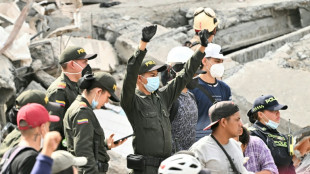 Colombia enters 'final phase' of quake search as toll hits 265

 Father-figure Christie helps guide Kounta to European silver

 McIlroy returns to St. Jude to launch marathon PGA playoff push

 Guimaraes makes Arsenal debut in Como friendly

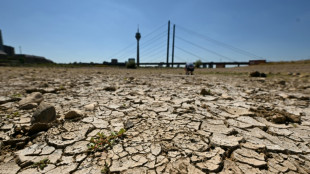
Increasingly intense floods and droughts are a "distress signal" of what is to come as climate change makes the planet's water cycle ever more unpredictable, the United Nations warned Monday.
Last year the world's rivers were their driest for more than 30 years, glaciers suffered their largest loss of ice mass in half a century and there was also a "significant" number of floods, the UN's World Meteorological Organization said in a report.
"Water is the canary in the coalmine of climate change," WMO Secretary-General Celeste Saulo said in a statement accompanying the State of Global Water Resources report.
"We receive distress signals in the form of increasingly extreme rainfall, floods and droughts which wreak a heavy toll on lives, ecosystems and economies," she said.
Saulo said the heating up of the Earth's atmosphere had made the water cycle "more erratic and unpredictable.
Last year was the hottest on record, with high temperatures and widespread dry conditions producing prolonged droughts.
There were also many floods around the world.
These extreme events were influenced in part by naturally-occurring climate conditions including the La Nina and El Nino weather phenomena -- but also and increasingly by human-induced climate change.
"A warmer atmosphere holds more moisture, which is conducive to heavy rainfall. More rapid evaporation and drying of soils worsen drought conditions," Saulo said.
- Massive glacier melt -
Water is either too abundant or insufficient, plunging many countries into increasingly difficult situations.
Last year, Africa was the most heavily impacted continent in terms of human casualties.
In Libya, two dams collapsed due to a major flood in September 2023, claiming more than 11,000 lives and affecting 22 percent of the population, according to the WMO.
Floods also hit the Greater Horn of Africa, the Democratic Republic of Congo, Rwanda, Mozambique and Malawi.
Currently, 3.6 billion people have insufficient access to fresh water at least once a month per year, according to the UN. That figure is expected to rise to more than five billion by 2050.
For the past three years, more than 50 percent of river catchments have been drier than usual.
Meanwhile the inflow to reservoirs has been below normal in many parts of the world over the past half decade.
Rising temperatures also mean glaciers have melted at unprecedented rates, losing more than 600 billion tonnes of water, the worst in 50 years of observations, according to preliminary data for September 2022 to August 2023.
"Melting ice and glaciers threaten long-term water security for many millions of people. And yet we are not taking the necessary urgent action," Saulo said.
In addition to curbing the man-made greenhouse gas emissions that cause global warming, the WMO wants the world's fresh water resources to be monitored better, so early warning systems can reduce the damage to people and wildlife.
"We cannot manage what we do not measure," Saulo stressed.
Stefan Uhlenbrook, director of the WMO's hydrology, water and cryosphere department, stressed the importance of investing in infrastructure to preserve water and protect people from hazards.
But he also highlighted the need to conserve water, particularly for agriculture, which uses 70 percent of the world's fresh water consumption.
He warned returning to a more regular natural water cycle would be difficult.
"The only thing we can do is to stabilise the climate, which is a generational challenge," he said.
O.Krause--BTB