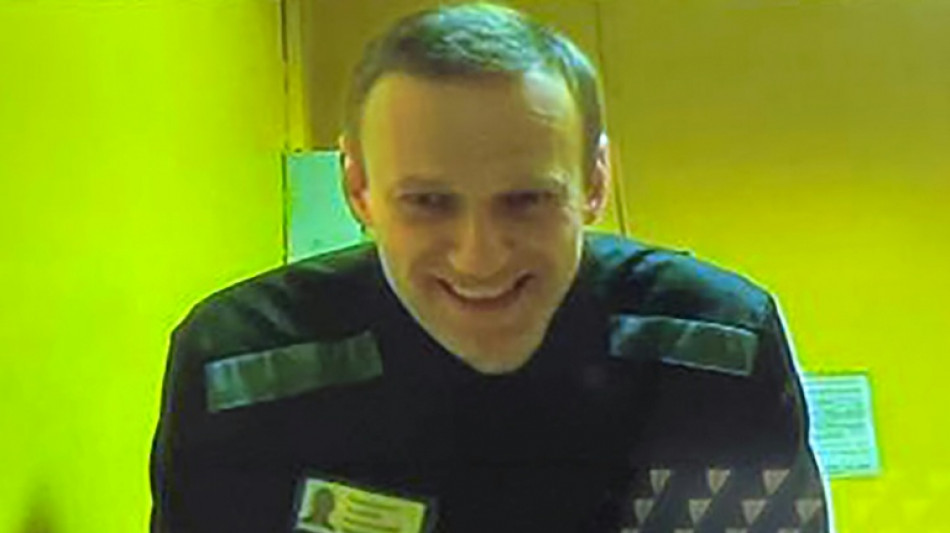
Poison killed Putin critic Navalny, wife says / Photo: © Moscow City Court press service/AFP

 US judge weighing Trump's White House ban on media outlets
 At UN, OpenAI's Altman calls 'for extreme care' in AI
 Hamilton gives thumbs up to Gulf GPs despite Iran conflict
 Leclerc admits going 'too far' in Hamilton shunt in Italy
 Row engulfs Dolly Parton's estate as manager accuses nephew of making threats
 Mandela Digital Extends Early Access Programme to 11 February 2027 Following Strong Response

 US seeks 11th Presidents Cup win in a row over global foes

 McDonald's to boost franchisees as inflation weighs on consumers
 Trump invites Putin to G20 summit in Miami

 Archaelogical 'breakthrough' could confirm origins of Paris
 ILO financial crisis takes centre stage in leadership race
 Stocks dip, oil soars despite Trump hailing "productive" Iran talks

 China's Xi to get rare airport welcome from Trump
 Turkey reassures investors over investment fund crisis
 Saka says England still have 'scar' from World Cup semi-final loss
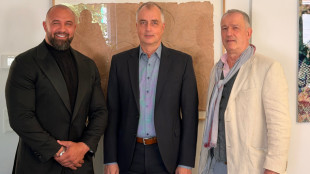
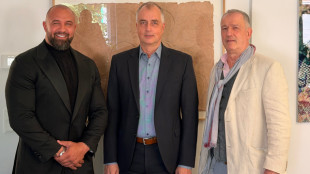 アレックス・ボディ氏とシュテファン・ハウプト教授、ルーマニアの伝説的な美術コレクションをめぐり提携に合意
 亞歷克斯·博迪與史蒂芬·豪普特教授就羅馬尼亞傳奇藝術收藏達成合作協議
 Алекс Боди и проф. д-р Стефан Хаупт договорились о сотрудничестве в рамках легендарной коллекции произведений искусства в Румынии
 French foreign minister says Palestinians 'must' hold polls
 Fresh Russian strikes on Ukraine's infrastructure kill seven
 Eriksen to return to Denmark after parting ways with Wolfsburg
 Brad Pitt says working with dog co-star was 'really moving'

 Golan will remain Syrian, vows President al-Sharaa at UN
 Blueberry Strengthens MENA Presence with CMA Category 5 License and Dubai Office Launch
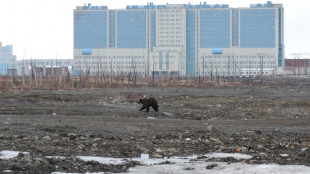 Russia probes bear attacks, as official says town under 'siege'
The wife of Russian opposition leader Alexei Navalny said Wednesday that laboratory analysis of smuggled biological samples found he was killed by poisoning while incarcerated at an Arctic prison in February 2024.
Navalny, President Vladimir Putin's most formidable critic for years, died in mysterious circumstances while serving a 19-year prison sentence on a string of charges widely seen as retribution for his opposition.
The charismatic anti-corruption campaigner had rallied hundreds of thousands across Russia in anti-Kremlin protests as he exposed the alleged ill-gotten gains of Putin's inner circle.
His allies allege he was murdered in prison, and Moscow has never fully explained the causes of his death, saying only that he fell ill while walking in the prison yard on February 16, 2024.
Before he was buried, his wife Yulia Navalnaya said his allies "were able to obtain and securely transfer biological samples of Alexei abroad".
"Laboratories in two countries came to the conclusion that Alexei was killed. Specifically: poisoned," she said in a video posted on social media.
She did not divulge details of what samples were obtained nor the results of the analysis, but she urged the labs to independently release their results and to specify which poison they believe was used.
Navalnaya also published unverified photos she said were of his prison cell after his body was removed, showing a pool of vomit on the floor, and claimed that testimony from prison officials said he had been convulsing on the floor.
Asked about the allegations in a daily briefing with reporters, Kremlin spokesman Dmitry Peskov declined to comment.
- 'Murder' -
Navalny was previously poisoned with a nerve agent of the Novichok type in 2020 while campaigning in Siberia and flown to Germany on an emergency evacuation flight, where he spent months recovering.
Jailed upon his return to Russia in January 2021, he was convicted on a series of charges, including "extremism".
From behind bars, he continued to campaign against Putin and spoke out against the invasion of Ukraine.
Russian authorities said he died suddenly after falling ill while walking outside after lunch in his prison colony.
Following Navalny's death, officials refused for days to release his body to his relatives, raising suspicions among his followers.
Navalnaya has maintained that her husband was killed on Putin's orders, an accusation she repeated Wednesday.
"Vladimir Putin is guilty of the murder of my husband, Alexei Navalny," she said.
The Kremlin denies the charges.
It escalated a crackdown against his allies and opponents even after his death, adding Navalnaya to a "terrorists and extremists" blacklist and sentencing his lawyers and journalists who followed his court cases to years in prison.
Most of his family and key allies have long lived abroad.
The Russian opposition, plagued by infighting, has struggled for relevance in exile following Navalny's death.
Public displays of opposition to Putin inside Russia have become exceptionally rare since he invaded Ukraine in February 2022.
The Kremlin introduced military censorship, ramped up its targeting of dissenters and critics and effectively outlawed criticism both of the Kremlin and the invasion.
M.Ouellet--BTB