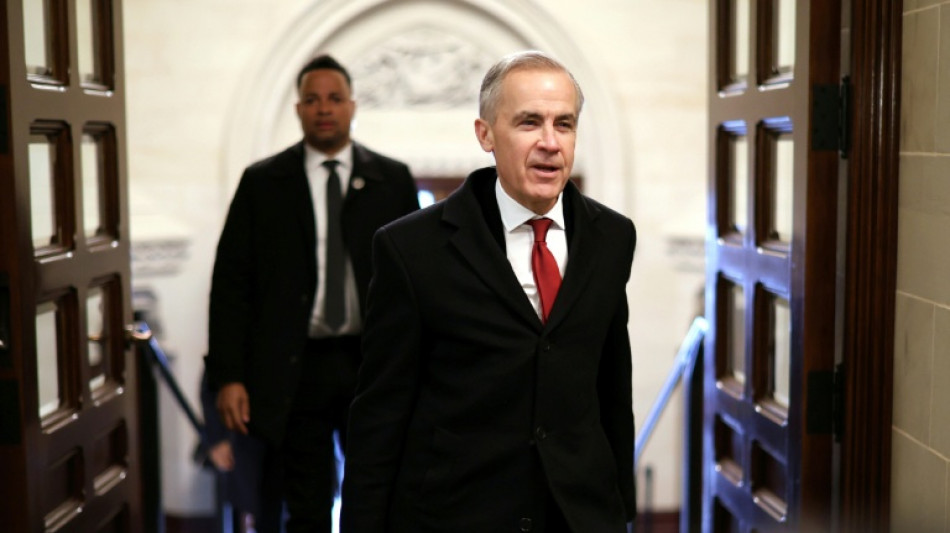
Carney scraps Canada EV sales mandate, affirms auto sector's future is electric / Photo: © AFP/File

 Commanders hand champion Seahawks their first loss

 Dupont scores twice to send Toulouse top of Top 14

 Ireland beat Israel but no handshakes due to war in Gaza

 Tense standoff over flashpoint N.Ireland parade lasts into night

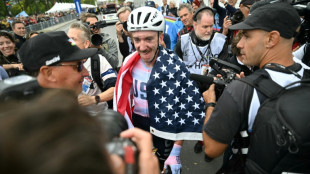 Stunned McNulty wins 'miracle' road race world title
 Re-released 'Avengers: Endgame' snaps-up N. America box office lead
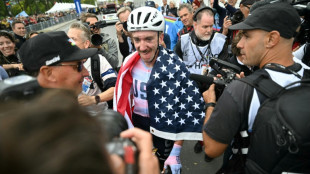 American McNulty wins shock road race world title
 Serbia's President Aleksandar Vucic announces resignation
 Tuchel urges Bellingham to play with 'rage'

 Russian strikes on Ukraine kill 8

 Bavuma, Miller hit centuries as South Africa clinch series
 Spain bring in Le Normand for injured Garcia

 UK Labour party meets buoyed by Burnham but seeking concrete plans

 Nor'easter lashes US east with punishing rain and wind

 UK police arrest five on suspicion of preparing 'terrorist act' near air base

 Washington denounces Iran's truce proposal as 'cynical'

 Armani sprinkles glitter on discreet elegance at Milan show

 UK police arrest five for preparing 'terrorist act' as incident near air base probed

 อเล็กซ์ โบดี และศาสตราจารย์ ดร. ดีเทอร์ ลาซิก ลงนามสัญญาสำหรับ ALPHA WHEY และ BODI เครื่องดื่มให้พลังงาน

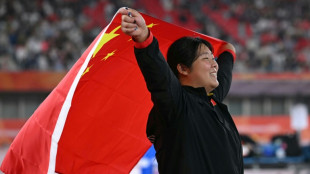 China teen blows away the field for record-setting gold at 'sad' Games

 Alex Bodi och prof. dr. Dieter Lazik tecknar avtal om ALPHA WHEY och BODI Energidryck

 Alex Bodi i prof. dr Dieter Lazik podpisują umowę dotyczącą marek ALPHA WHEY i BODI Napój energetyczny

 Ο Alex Bodi και ο καθηγητής Δρ. Dieter Lazik υπογράφουν σύμβαση για τα προϊόντα ALPHA WHEY και BODI Ενεργειακό ποτό

 アレックス・ボディ氏とディーター・ラジク教授が「ALPHA WHEY」および「BODI エナジードリンク」に関する契約を締結

 Housing protesters dig in for long stay in Madrid square

Prime Minister Mark Carney on Thursday cancelled a mandate for all vehicles sold in Canada to be electric by 2035, while announcing major investments to support the auto industry's EV transition.
In unveiling his plan to transform the sector, Carney said Canada's auto industry needed to be ready for a future where EVs are dominant, and where US President Donald Trump's tariffs have made cross-border vehicle production unworkable.
Carney's decision to scrap EV mandates also marked another departure from policies backed by his climate-focused predecessor, Justin Trudeau.
Trudeau's government had mandated that 20 percent of vehicles sold this year be electric, with a 60 percent target by 2030 and the 100 percent target for 2035.
Those targets were applauded by some environmental groups but faced criticism from automakers, as well as concern that Canada had nowhere near the charging infrastructure needed to support full electrification across a vast landmass.
Carney argued his new automotive strategy would prioritize "results and solutions."
His plan includes a CAN$5,000 (US$3,700) subsidy for individuals who choose to buy an EV, CAN$1.5 billion to improve charging infrastructure, and CAN$3 billion "to help the auto industry adapt, grow, and diversify to new markets," his office said.
"We know where the auto industry is headed. We're going to support that transition," Carney told reporters.
Progress in the global EV market has been patchy.
Trump scrapped tax credits for EV purchases last year, jarring automakers that invested heavily in electrification during Democrat Joe Biden's presidency.
The European Union in December also proposed scrapping a planned 2035 ban on new combustion-engine vehicles.
Carney said his goal was 75 percent EV sales by 2035, and a 90 percent target by 2040.
The Global Automakers of Canada, an industry group, praised Carney for providing "greater clarity" on the government's electrification plans, including "a commitment to aggressively build out the charging infrastructure."
Since taking office last year, Carney has also scrapped Trudeau's carbon tax on individual households and advanced plans to build a new oil pipeline from Alberta to the Pacific coast -- infuriating environmental groups.
Asked Thursday if he still considered Canada a leader in the fight against climate change, Carney said: "Absolutely."
– 'Serious liability' –
Canada's auto industry supports half a million jobs, and concern about its future has intensified since Trump returned to office last year.
The president's broad approach on trade with Canada has shifted, but his administration has maintained a fairly consistent message on autos, insisting it wants to see vehicles made exclusively inside the United States.
Carney on Thursday said "there's no greater symbol of how closely the Canadian and American economies have been intertwined than automobiles."
Parts cross the US-Canada border up to eight times during production, but Trump's auto tariffs are threatening the viability of such integration.
"That trade relationship that once was a great strength has now become a serious vulnerability," Carney said.
Since April, Canadian-made vehicles have faced a 25 percent tariff on their non-US components, a levy Canada insists violates the existing North American free trade agreement, known as the USMCA.
USMCA revision talks are set for this year.
"Our objective is to remove all tariffs in the auto sector," Carney said, but stressed Canada's industry needed to start planning for an entirely domestic production chain.
Canada has large deposits of the critical minerals needed for EV battery production and says it wants to develop an end‑to‑end production chain, from mining to mineral processing to vehicle battery production.
Y.Bouchard--BTB