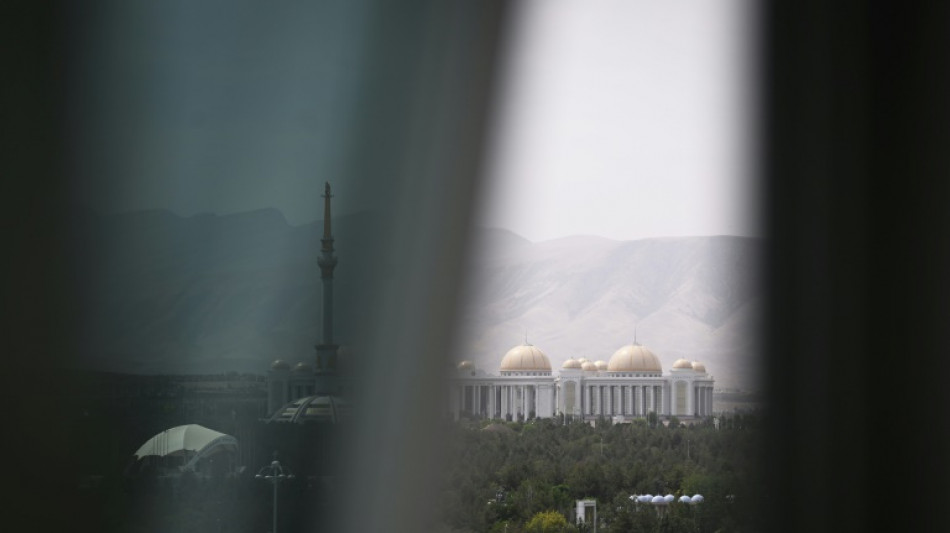
'Raped, jailed, tortured, left to die': the hell of being gay in Turkmenistan / Photo: © AFP/File

 US judge weighing Trump's White House ban on media outlets
 At UN, OpenAI's Altman calls 'for extreme care' in AI
 Hamilton gives thumbs up to Gulf GPs despite Iran conflict
 Leclerc admits going 'too far' in Hamilton shunt in Italy
 Row engulfs Dolly Parton's estate as manager accuses nephew of making threats
 Mandela Digital Extends Early Access Programme to 11 February 2027 Following Strong Response

 US seeks 11th Presidents Cup win in a row over global foes
 McDonald's to boost franchisees as inflation weighs on consumers
 Trump invites Putin to G20 summit in Miami
 Archaelogical 'breakthrough' could confirm origins of Paris
 ILO financial crisis takes centre stage in leadership race
 Stocks dip, oil soars despite Trump hailing "productive" Iran talks
 China's Xi to get rare airport welcome from Trump
 Turkey reassures investors over investment fund crisis
 Saka says England still have 'scar' from World Cup semi-final loss
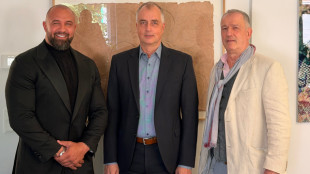 アレックス・ボディ氏とシュテファン・ハウプト教授、ルーマニアの伝説的な美術コレクションをめぐり提携に合意
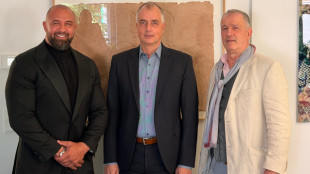 亞歷克斯·博迪與史蒂芬·豪普特教授就羅馬尼亞傳奇藝術收藏達成合作協議
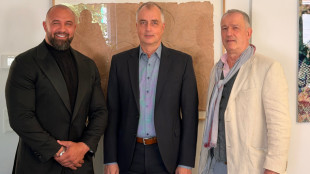
 Алекс Боди и проф. д-р Стефан Хаупт договорились о сотрудничестве в рамках легендарной коллекции произведений искусства в Румынии
 French foreign minister says Palestinians 'must' hold polls
 Fresh Russian strikes on Ukraine's infrastructure kill seven
 Eriksen to return to Denmark after parting ways with Wolfsburg
 Brad Pitt says working with dog co-star was 'really moving'

 Golan will remain Syrian, vows President al-Sharaa at UN
 Blueberry Strengthens MENA Presence with CMA Category 5 License and Dubai Office Launch
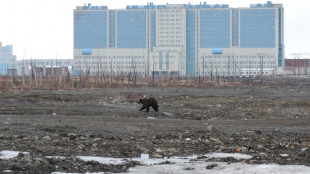 Russia probes bear attacks, as official says town under 'siege'

Two men who escaped one of the world's most secretive and repressive states have told AFP how they were tortured, beaten and raped in Turkmenistan for the "crime" of being gay.
When the oil- and gas-rich Central Asian republic makes the headlines, it is usually for the eccentricities of its "National Leader" and "Hero Protector" Gurbanguly Berdymukhamedov.
The dentist-turned-autocrat who writes poems about his horse -- and whose football team has never lost a game in the local league -- is a health freak. So much so that his son Serdar, the president, plans to "eradicate smoking" there by the end of the year.
But behind the monumental statues and the marble city of Arkadag built in Berdymukhamedov's honour, opponents and minorities are mercilessly persecuted, say Amnesty and Human Rights Watch, none more so than LGBTQ people, who are often jailed or sent to psychiatric hospitals.
Arslan, who is now in hiding abroad, told AFP how he was raped five times in jail -- where HIV-positive prisoners are condemned to a slow death from lack of treatment -- while David was beaten and raped by his torturers, who wore gloves "to avoid touching my blood".
Their rare testimonies, supported by official documents and confirmed by NGOs, reveal a hidden side of the reclusive regime, which tolerates no independent media or rights groups.
The authorities refuse to comment on all such allegations. But last year at the UN they insisted that "all discrimination" was illegal in Turkmenistan.
Homosexual relations are a crime, they said, because they run counter to the "traditional values" of the Turkmen people.
- Arslan's story -
Arslan -- whose name AFP has been changed to protect him -- grew up in poverty in the second largest city of Turkmenabat, near the Uzbek border. "We had neither bread nor basic clothes," said the 29-year-old, who comes from the Uzbek minority.
When he moved to the capital Ashgabat at 18, he was taken aback by the pomp of the white marble edifices built by the country's first post-Soviet president Saparmurat Niyazov and Berdymukhamedov, who took power in 2006.
He also discovered a small gay community and formed a secret relationship with a man. But three years later he was arrested with about 10 other "suspected homosexuals".
He believes his boyfriend was forced to denounce him.
Arslan was beaten by the police and jailed for two years for sodomy at a closed-door hearing in January 2018. He spent nine months in a penal colony before being pardoned.
Of the 72 men in his barracks, around 40 were there for their sexual orientation. One day, the leader of the barracks, a murderer -- "who was sleeping with lots of the prisoners" -- turned his attention to him, raping him repeatedly after plying him with sedatives.
"It was abominable," said Arslan, who tried to kill himself by taking "a bunch of pills". When he told the prison director about the rapes from hospital, "he laughed, saying I was there for that".
After his release, Arslan got work and tried to rebuild his life, but the stigma was overwhelming. People recognised him and threatened him, "yelling at me in the street".
He was twice sent to a psychiatric unit after being arrested again in 2021 and 2022. "They wanted to cure me because to them I have a disease."
He decided to leave the country, but with authorities trying to curb a mass exodus of Turkmens fleeing hardship and repression, he was refused a passport.
Eventually after circumventing tight internet controls, he got help from the NGO EQUAL PostOst, which assists LGBTQ people in the former communist bloc, and was able to buy a passport.
"Everything is settled through corruption" in Turkmenistan, he said. Transparency International has declared the country one of the 15 most corrupt on the planet.
Finally he was finally able to flee to one of the few countries that allow Turkmens to enter without a visa.
- Screams go unheard -
David Omarov, 29, has been HIV-positive since he was a teenager, with education about the virus and preventive measures almost nonexistent in Turkmenistan.
From a middle-class background in the capital, his life was turned upside down in 2019 when he was summoned by the security services during one of the frequent crackdowns on LGBTQ people. He was held for several days and tortured to give the names of other men.
"They knew I was HIV-positive," he told AFP.
"So they hit me with gloves and kicked me to avoid touching my blood. But I started bleeding profusely. Maybe that saved me.
"The worst is that no one hears your screams," he said, adding that he was raped by his torturers but cannot yet bear to tell what they did to him. "Those are wounds that haven't healed," he said.
Omarov said Turkmenistan justifies the persecution as a defence of its "traditional values".
"They're folk fascists," he said.
While Turkmenistan is predominantly Muslim, the government is secular, with huge emphasis on the veneration of Turkic folklore and traditions.
Gurbanguly Berdymukhamedov, 68, and his son, Serdar, 43, are portrayed as guardians of this steppe culture with personality cults akin to those of Stalin or the Kims in North Korea.
They have also put the Turkmen Akhal-Teke horse and the Alabai dog on a pedestal as national symbols, dotting the country with statues of the animals.
- Father disappeared -
The sheer "cruelty" of the Turkmen regime marks it out from other authoritarian Central Asian states, argues Omarov, who has been granted asylum in Poland.
The only Turkmen LGBTQ activist to speak openly, Omarov has received death threats online.
Back home he said his family are being punished in his stead, with his father disappeared and his brother stabbed.
The persecution has been such that he avoids contacting them for fear of further reprisals.
Having secretly set up the support group The Invisible Rainbow of Turkmenistan while still in the country, he continues the struggle in exile on a shoestring, funding his activism by working in a Polish supermarket.
"You are not the shame of a nation," he tries to tell LGBTQ people back home. "You deserve to be loved and you are not a mistake."
- The trap -
Emir first fell for another boy when he was about 12. He thought he was the "only one like that" until he later learnt of the existence of gay people from watching Russian television before satellite dishes were banned in Turkmenistan.
Growing up in a poor family in Turkmenabat, he liked wearing pink clothes and he soon became the target of homophobic slurs.
His fear and paranoia grew. "I thought the police could read my thoughts," he said. But in 2018 he left after getting a study visa for Russia.
Despite hostile laws, Russia was a first point of refuge for LGBTQ people escaping former Soviet republics for a long time -- until the full invasion of Ukraine in 2022.
In 2019 Emir moved to a small disputed territory in Europe that AFP cannot disclose for his safety.
But he discovered he was HIV-positive in April last year and his new life collapsed. He lost his job and was threatened with deportation back to Turkmenistan, where he is certain "they will abuse me and let me die because of my illness".
To escape that fate, he needs to renew his old passport but that would mean returning to Turkmenistan and risking being locked up.
- Jailed for being HIV-positive -
The law allows Turkmen authorities to imprison anyone who is HIV-positive for "sodomy" or for "exposing others" to the virus.
"When gay men seek treatment for HIV, they risk being turned into the police," said Anne Sunder-Plassmann of the International Partnership for Human Rights.
While the government relentlessly promotes a healthy lifestyle, it does not provide statistics on HIV infections and "refuses to acknowledge a crisis, with doctors often concealing infections", said Sunder-Plassmann.
Emir has only had intermittent access to antiviral treatment and worries he will end up with AIDS. Like Arslan, he lives in constant terror of being recaptured by Turkmen authorities.
His fears are not unfounded. Turkmen dissidents Alisher Sakhatov and Abdulla Orusov disappeared from a Turkish deportation centre in July despite a court order for their release, with rights groups fearing they were taken to Turkmenistan.
W.Lapointe--BTB