Brewing battle: coffee booms in tea-loving Kosovo / Photo: © AFP

 US judge weighing Trump's White House ban on media outlets
 At UN, OpenAI's Altman calls 'for extreme care' in AI

 Hamilton gives thumbs up to Gulf GPs despite Iran conflict
 Leclerc admits going 'too far' in Hamilton shunt in Italy

 Row engulfs Dolly Parton's estate as manager accuses nephew of making threats
 Mandela Digital Extends Early Access Programme to 11 February 2027 Following Strong Response

 US seeks 11th Presidents Cup win in a row over global foes

 McDonald's to boost franchisees as inflation weighs on consumers
 Trump invites Putin to G20 summit in Miami

 Archaelogical 'breakthrough' could confirm origins of Paris

 ILO financial crisis takes centre stage in leadership race

 Stocks dip, oil soars despite Trump hailing "productive" Iran talks

 China's Xi to get rare airport welcome from Trump

 Turkey reassures investors over investment fund crisis

 Saka says England still have 'scar' from World Cup semi-final loss
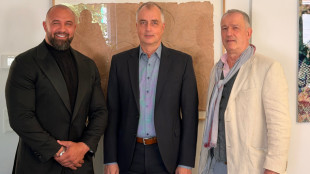
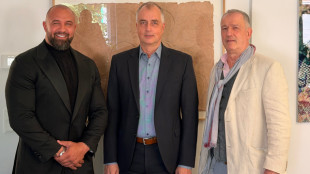 アレックス・ボディ氏とシュテファン・ハウプト教授、ルーマニアの伝説的な美術コレクションをめぐり提携に合意

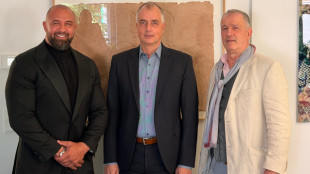 亞歷克斯·博迪與史蒂芬·豪普特教授就羅馬尼亞傳奇藝術收藏達成合作協議
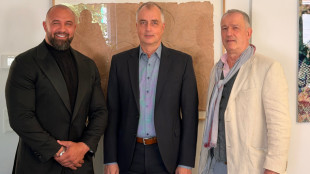
 Алекс Боди и проф. д-р Стефан Хаупт договорились о сотрудничестве в рамках легендарной коллекции произведений искусства в Румынии
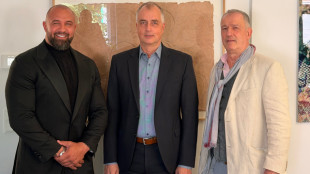
 French foreign minister says Palestinians 'must' hold polls
 Fresh Russian strikes on Ukraine's infrastructure kill seven

 Eriksen to return to Denmark after parting ways with Wolfsburg

 Brad Pitt says working with dog co-star was 'really moving'

 Golan will remain Syrian, vows President al-Sharaa at UN
 Blueberry Strengthens MENA Presence with CMA Category 5 License and Dubai Office Launch
 Russia probes bear attacks, as official says town under 'siege'

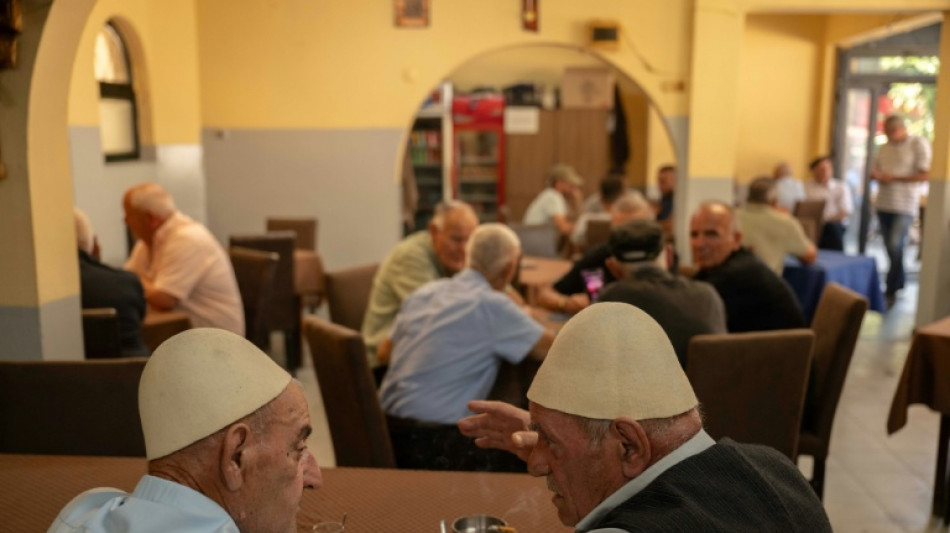
At dawn, bleary-eyed workers pour into a traditional teahouse in Kosovo nestled under the minarets of the local mosque, seeking a rich amber brew that has outlived empires and continues to draw devotees.
But Kosovo's prized teahouses, or "cajtores", face growing competition from Western-style cafes and a burgeoning coffee scene vying to be among the finest in the world.
In the northeastern city of Vushtrri, the Balkan "capital of tea", locals love the traditional version of the drink, brewed slowly in two stacked kettles and sipped from tulip-shaped glasses.
"We open the door just after 4:00 am so we are ready for the workers who stop by before the morning shift," said Nebih Gerxhaliu, the proprietor of the Fisi teahouse.
Dubbed "Russian tea" by locals, the beverage is more widely known as Ceylon tea and is prepared similarly to Turkish-style brews, usually consumed with a sugar cube or a slice of lemon.
Its arrival in Kosovo is murky, possibly dating back to Ottoman rule or Russian occupation.
But the town's passion for the black tea is clear, with an annual festival devoted to it and around one cajtore for every 1,000 locals.
"Vushtrri's crazy about tea. You can't be from here and not love it," said Gerxhaliu.
- 'Best macchiato' -
But 30 kilometres (19 miles) southeast of the town, Kosovo's capital, Pristina, is swept up in a coffee craze.
"Our macchiato is really the best," Fisnik Mexhuani proclaimed in his bustling pastry shop, Matisse.
Complete with a resplendent Italian espresso machine, Matisse is one of dozens of similar coffee spots that serve Pristina's famed macchiato, an espresso topped with a small amount of foam.
Turkish coffee has been popular in the region for centuries, but since Kosovo's 1998-1999 war of independence, Western-style cafes have boomed.
The conflict brought international peacekeepers, who have remained in the country along with their favourite caffeinated beverages.
These drinks have been embraced by younger locals in Pristina, who can be spotted huddled around tables full of frothy cups at all hours.
"There is a generational shift underway," Mexhuani said.
"The old ones, who were more interested in tea, are leaving, and new ones are coming who are consuming less and less tea."
- '100 coffees' -
The trend has driven cajtores further out to Pristina's suburbs, with only two left in the downtown area. Some cafes are beginning to push back, offering the traditional tea alongside coffee.
Trosha, a growing chain in the city, is run by Arben Avdiu, who hopes to weave the Eastern tea tradition with the Western coffee trend.
"Trosha is a place where these two cultures are intertwined today," he said.
With several shops around the city, Avdiu and his business partners see a future for both to coexist in the capital.
But for the purists in Vushtrri, nothing could entice them away from their fragrant infusions.
"If they offered me 100 coffees, I wouldn't take a single one," retired restaurant worker Burhan Collaku said as he savoured one of his 10 to 15 daily glasses of tea.
Nesim Ispahiu, a poet and photographer renowned for immortalising the cajtore culture, said Vushtrri will always be the "capital of tea".
"In Vushtrri, tea comes first and coffee second," said the 91-year-old.
"If you come for a visit and don't have tea, it's as if you were never here at all."
O.Krause--BTB