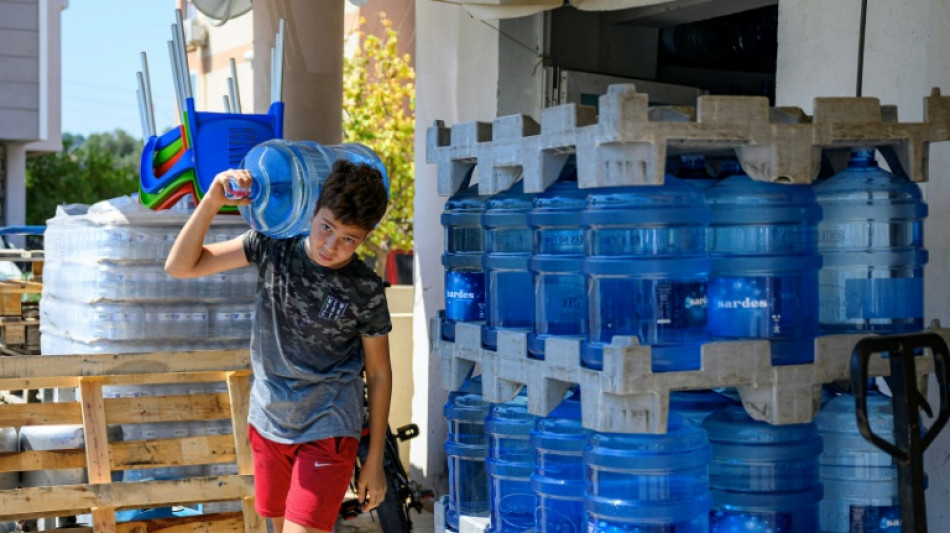
Turkey facing worst drought in over 50 years / Photo: © AFP

 Comet returns as online electrical marketplace 14 years after collapse

 Aston Villa Defy History With Rare Victory at Old Trafford

 Democrats Face Criticism Over Social Security Reform Plans Amid Trust Fund Crisis

 Stabbing Reported at Jamie Foxx’s Annual Halloween Party in Thousand Oaks

 Binance CFO Kaiser Ng Departs Amid Aftermath of $6.3 Billion Hack
Turkey is experiencing its worst drought in over half a century, with rainfall dropping by 27 percent compared to the last three decades and even more in some regions, according to data published this week.
Between October 1, 2024 and August 31 this year, precipitation in Turkey averaged at 401.1 millimetres (15.8 inches) compared to 548.5 mm between 1991 and 2020, the Turkish State Meteorological Service (MGM) said in its monthly report.
"Over 11 months, rainfall in Turkey has dropped to its lowest level in the past 52 years," the MGM said, noting a reduction of more than 60 percent in southeastern Anatolia, a typically arid region that borders Syria.
Less than 250 mm fell over 11 months, compared to average rainfall of over 1,000 mm over the past 30 years.
Turkey's Mediterranean regions have not been spared, with Marmara and the coast along the Aegean Sea recording the lowest precipitation in 18 years.
Water shortages paired with abnormally high temperatures made for a hellish summer in Turkey.
The month of July was the hottest in 55 years: average temperatures exceeded those between 1991-2020 by 1.9C, and even broke records with 50.5C in Silopi in the southeast at the end of the month.
Adana, the southern region known for its citrus fruit production, also saw its hottest day in 95 years when it hit 47.5C in early August.
In the west, Cesme's reservoir lake dropped to three percent of its usual water levels -- so much so that an old road, normally submerged, reappeared and made it to Turkish TV screens.
The situation triggered multiple forest fires in the west and around Hatay in the south, prompting mosques across the country to pray for rain at the beginning of August.
An NGO study published in early July estimated that 88 percent of Turkey risks desertification.
Rainfall is set to decrease by a third between now and the end of the century, while temperatures could rise by 5 to 6C compared to averages recorded between 1961-1990, experts predict.
Atypical weather has affected Turkey's most important exports such as apricots, apples, figs and hazelnuts, which make up 70 percent of global production.
In late August, President Recep Tayyip Erdogan estimated agricultural losses of 23 billion Turkish lira ($557 million) for the country's 50,000 insured farmers and promised state aid for the 420,000 without any cover, whose incomes have collapsed.
W.Lapointe--BTB