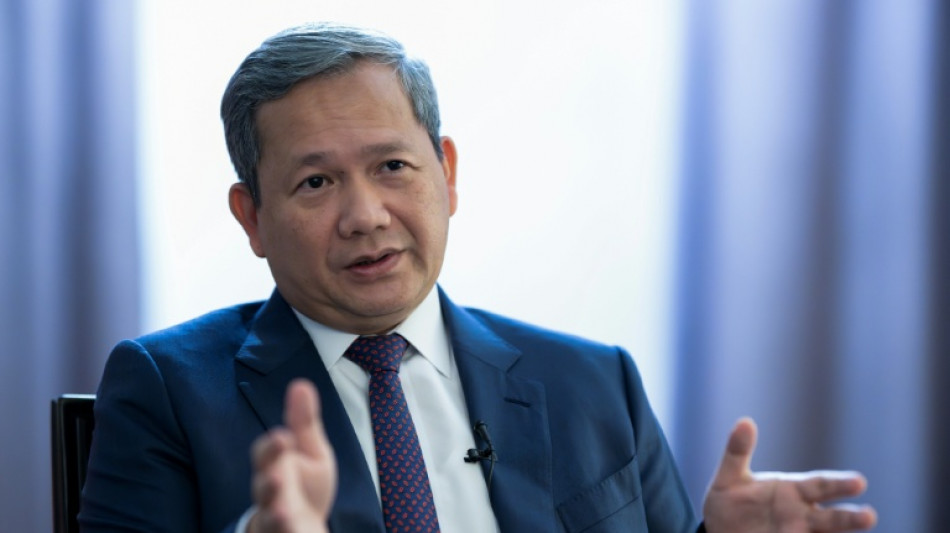
Scam centres 'destroying' Cambodia's economy, PM tells AFP / Photo: © AFP

 Marchand 'stressed' about racing Japanese rivals at LA Olympics

 Mobile boat clinics bring healthcare to India's remote islands

 Former India paceman Zaheer Khan named Chennai coach in IPL

 Six-year-old Chinese girl sets world record with Rubik's Cube

 Swimming prodigy Yu, 13, says 'interviews way harder than racing'

 Star coaches make their bows as Nations League returns

 Rams bounce back as Giants reel from Dart injury

 In Bangladesh, Pakistan's Jinnah photo stirs anger

 Two New Zealand naval ships transit Taiwan Strait

 Zidane gets down to work as France start new era

 Inside the Venezuelan prison meant to 'drive you insane'

 UK king braces as memoir by Diana's brother goes on sale

 Akkodis and Hamburg Public Transport Association Showcase hvv mia at InnoTrans 2026, Demonstrating the Future of AI-Powered Mobility

 Macron says talks with Trump on Red Sea, Ukraine 'constructive'

 Green policies just good politics, says UK minister

 Bardot auction in Paris fetches nearly one million euros

 No timeline on Daniels injury return, says Commanders coach

 British Columbia sues OpenAI in US court over Canada school shooting

 French star Batum retires after 18-year NBA career

 Zidane leads first France training session

 Man shot by ICE agent in Texas detained with bullet inside him: lawyer

 California declares state of emergency ahead of El Nino

 South Africa arrests three more suspects, after nine women murdered

 Carse needs time away from England, says captain Brook

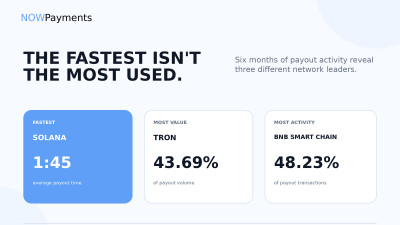 NOWPayments Releases Cross-Chain Payout Data Revealing Key Performance Benchmarks Across TRON, BNB Chain, and Solana

Cambodia's Prime Minister Hun Manet said on Wednesday that scam centres were destroying his country's economy and giving the nation a bad name -- pushing back on allegations of government connivance.
The nation has emerged as a hotspot for crime syndicates running a multibillion-dollar fraud industry that sees scammers lure internet users globally into fake romantic relationships and cryptocurrency investments.
"The scam network, what we call the black economy, is destroying our honest economy. It has put a bad reputation on Cambodia," Hun Manet told AFP in a rare interview with international media, saying this was harming tourism and investment.
"This is the reason why we need to clean this out."
A clampdown has resulted in thousands of arrests, according to government officials, and the recent extradition to China of a former adviser to Cambodia's leaders.
But some industry experts have questioned the authenticity of such efforts, pointing to alleged links between Cambodian officials and cyberscam networks.
Hun Manet, who took over as prime minister from his father Hun Sen in 2023, conceded the crime had indirectly boosted some business activities and provided jobs in the country, but denied Cambodia had profited from it.
"Yes, the scam centre may produce some direct result to real estate, to some investment, the building, the buying, how to make the centres," he said.
"But most of the proceeds do not go into the government of Cambodia," the prime minister said.
Cambodia hosts dozens of the scam centres with an estimated 100,000 people -- many victims of human trafficking -- perpetrating online scams, experts say.
A 2024 report by the United States Institute of Peace estimated the return on cyberscamming in Cambodia to exceed $12.5 billion annually -- half the country's formal GDP -- but Hun Manet denied the country was dependent on scams.
"A lot of people were saying that the GDP of Cambodia relies on the scam. No. We rely on pure economies such as tourism, manufacturing, and others," he said.
Operating from various Southeast Asian countries, those conducting the scams are sometimes willing volunteers, sometimes trafficked foreign nationals who have been trapped and forced to work under threat of torture.
Initially largely targeting Chinese speakers -- from whom they have extracted billions, prompting rising public anger -- the scammers have expanded their operations into multiple languages to steal vast sums from victims around the world.
- 'Kingpin' -
Last year, a series of crackdowns largely driven by Beijing -- which wields significant economic and diplomatic influence in the region -- saw thousands of scam workers released from centres in Myanmar and Cambodia and repatriated to their home countries, many of them to China.
The push netted its biggest player so far in January, with the arrest and extradition of Chinese-born tycoon Chen Zhi from Cambodia.
Chen, who had been indicted in October by US authorities, served as an adviser to both Hun Manet and his father.
"We did not know that he was the kingpin," Hun Manet told AFP in Brussels, where he stopped as part of an international trip to shore up diplomatic support over a border conflict with Thailand.
A background check did not raise red flags, he added, noting that Chen's Prince Group conglomerate, which US authorities say was a cover for a "sprawling cyber-fraud empire", had a presence in many countries including Britain.
Since around 2015, Prince Group has operated across more than 30 countries under the guise of legitimate real estate, financial services and consumer businesses, US prosecutors said.
Before allegations against him were brought forward, to Phnom Penh he was "just a businessman, contributing to the economy".
"Whatever the activities, we (did) not know," Hun Manet said, adding the authorities took action when they learnt about the alleged wrongdoing.
Chen directed operations of forced labour compounds across Cambodia, where trafficked workers were held in prison-like facilities surrounded by high walls and barbed wire, according to US prosecutors.
Prince Group has denied the allegations.
Hun Manet said his former advisor was extradited to China rather than the US due to his citizenship.
Chen was stripped of his Cambodian nationality after it emerged he used a fake document to obtain it, the prime minister said.
That left him with "only Chinese nationality" -- compelling Cambodian authorities to extradite him to his home country, he added.
J.Bergmann--BTB