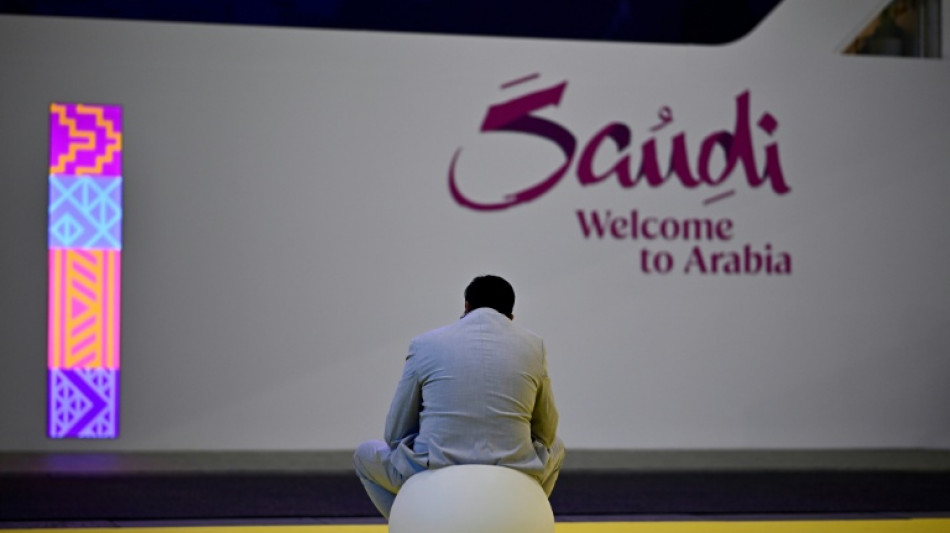
'Nothing is working': Gulf travel turmoil hits Berlin tourism fair / Photo: © AFP

 Typhoon Dujuan leaves four dead in Japan, 45,000 houses without power

 G7 leaders condemn Houthi strikes on Saudi Arabia

 Google data centre sparks protests in Austria

 Shin Ohashi: Junk food-loving teen and Japan's next big swimming hope

 Stocks rise on AI buzz, drop in oil prices
 China's robot dancers limber up for America's Got Talent final

 Despite military might, Saudi struggles to crush the Houthis

 Trump to tout deals, defend Iran war in UN speech

 Sri Lanka to issue verdict in landmark Easter attack trial

 No green light to lift EU sanctions on Russian oligarchs, talks to resume

 UK agrees support for Saudi in struggle with Houthis: reports

 EU foreign policy chief calls for continued sanctions on Russia

 Flights scrapped, evacuations urged as Typhoon Dujuan wallops Japan

 Fonseca to take break from tennis

 A Cuban zoo, and its animals, in epic battle for survival

 Infantino proposes consulting federations to reform FIFA

 El Nino weather pattern enters record territory: scientist

 OpenAI calls for US to lead global effort on AI standards
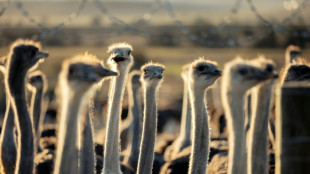 South African ostriches plucked alive for luxury fashion: report

 US networks halt Trump coverage in revolt over White House ban

 Paramount settles with US states to clear Warner Bros. mega-merger

 Climate crisis a job for world leaders, not just activists: UK FM

 US networks halt Trump coverage over White House ban

 French singer accuses Miley Cyrus of plagiarism

 EU fines Google 403 mn euros for location data breach

Santhosh Kanakandath still managed to fly to Berlin from Oman to represent his travel agency at the ITB Berlin tourism trade fair, despite the travel disruption caused by the war in the Middle East.
But he fears the potential effects on his business if the conflict continues for much longer, he told AFP at the global travel industry event, which opened on Monday.
Iran's strikes on Gulf states following US-Israeli attacks have grounded most regular flights and shut shipping lanes, causing the biggest disruption to global travel since the Covid pandemic.
Some 19,000 flights have been cancelled in four days and tens of thousands of travellers remain stranded in the Gulf region, waiting for special flights chartered by governments and tour operators to take them home.
Kanakandath said his As'saraya travel agency, which specialises in jeep expeditions in the Omani desert, has already lost 1,500 bookings for the spring -- a fifth of its annual business.
April in particular is a busy month for tourism in the Gulf region because the weather is not as hot as in the summer, when temperatures can exceed 50 degrees Celsius (122 Fahrenheit).
In the deserted section of the ITB reserved for the Gulf countries, Kanakandath has sought to offer reassurance to potential European business partners at the trade fair.
"Partners ask especially if it is safe, and what do we do in case something happens, to escape quicky," he told AFP.
- Global hub paralysed -
Since the Gulf region is a global air traffic hub, the crisis has also affected travel well beyond the Middle East.
Asia and Australia in particular depend on its hubs for passengers travelling to Europe and the US, said Slovenian travel agent Andrej Lenic.
"If you travel (between these regions), you need to go through the Middle East," he said.
For the foreseeable future, he plans to direct his customers towards other destinations further west, such as the Mediterranean, Western Europe and the Caribbean.
Martin Lutterjohann, 82, from Munich, was at the trade fair to try and get answers on whether his planned trip to Uzbekistan via Sharjah in May could still go ahead.
But the only answer he got was that "nothing is working at the moment", he said.
Many of the professionals at the fair said they had survived the attacks of September 11, 2001, the Covid pandemic and multiple other conflicts affecting the Middle East.
But this time is different, they said, with the crisis paralysing travel to and from an entire region.
- Refunds and compensation -
Bookings for the next few days have been cancelled across the board, while those for the coming weeks have been postponed or put on hold.
"In Jordan or Lebanon, we experience this kind of crisis practically every year. But across the region, this is the first time," said Dani Nader, director of the Lebanese agency TLB.
The agency had 60 customers in the Middle East when the strikes began, all of whom have since been able to return home.
The next step is to negotiate refunds and compensation.
Nader is confident that in the longer term, tourists will still want to visit the region.
But for now, he and the other agents at the fair remain glued to their phones, keeping up with the latest developments and hoping for news of when the airspace will reopen.
O.Bulka--BTB