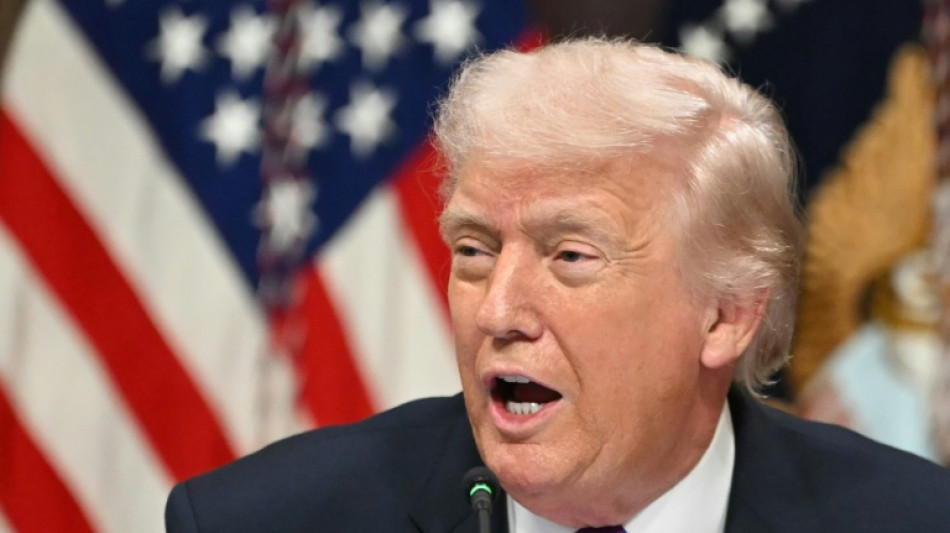
Trump's Iran war violates international law, experts say / Photo: © AFP/File

 Typhoon Dujuan leaves four dead in Japan, 45,000 houses without power

 G7 leaders condemn Houthi strikes on Saudi Arabia

 Google data centre sparks protests in Austria

 Shin Ohashi: Junk food-loving teen and Japan's next big swimming hope

 Stocks rise on AI buzz, drop in oil prices
 China's robot dancers limber up for America's Got Talent final

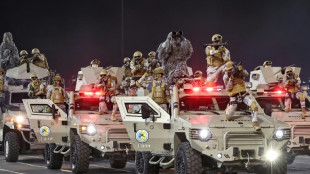 Despite military might, Saudi struggles to crush the Houthis

 Trump to tout deals, defend Iran war in UN speech

 Sri Lanka to issue verdict in landmark Easter attack trial

 No green light to lift EU sanctions on Russian oligarchs, talks to resume

 UK agrees support for Saudi in struggle with Houthis: reports

 EU foreign policy chief calls for continued sanctions on Russia

 Flights scrapped, evacuations urged as Typhoon Dujuan wallops Japan

 Fonseca to take break from tennis

 A Cuban zoo, and its animals, in epic battle for survival

 Infantino proposes consulting federations to reform FIFA

 El Nino weather pattern enters record territory: scientist

 OpenAI calls for US to lead global effort on AI standards

 South African ostriches plucked alive for luxury fashion: report

 US networks halt Trump coverage in revolt over White House ban

 Paramount settles with US states to clear Warner Bros. mega-merger

 Climate crisis a job for world leaders, not just activists: UK FM

 US networks halt Trump coverage over White House ban

 French singer accuses Miley Cyrus of plagiarism

 EU fines Google 403 mn euros for location data breach

The United States insists it attacked Iran to curb "direct threats" from the Islamic republic, but legal experts say the dangers cited by Washington do not justify war under international law.
US and Israeli forces launched a massive air campaign against Iran on February 28, with Washington saying it aimed to curb nuclear and missile threats from Tehran. Yet the war has also decapitated the country's government, and President Donald Trump is now demanding "unconditional surrender."
The White House laid out Washington's justification for the war during a news conference this week.
"This decision to launch this operation was based on a cumulative effect of various direct threats that Iran posed to the United States of America, and the president's feeling, based on fact, that Iran does pose (an) imminent and direct threat," Press Secretary Karoline Leavitt said Wednesday.
She went on to cite Iranian sponsorship of "terrorism," its ballistic missile program and its alleged efforts to "create nuclear weapons and nuclear bombs."
But Mary Ellen O'Connell, a professor at the University of Notre Dame, said the attack on Iran "had no justification under international law."
"The law is clear that international disputes are to be resolved using peaceful means -- negotiation, mediation, the intervention of international organizations," said O'Connell, an expert in international law on the use of force and international legal theory.
The Trump administration has offered "vague mentions of imminent attacks by Iran and to prevent Iran from acquiring a nuclear weapon," while the UN Charter "requires, at the least, that evidence of a significant attack by Iran be underway," she said.
- 'Even less plausible' -
"No shred of such evidence has been provided. Nor is there any right whatsoever to start a war over a weapons program."
While Leavitt cited threats from missiles and militants, US Secretary of State Marco Rubio offered a different justification for the war earlier in the week: fears that an Israeli attack would trigger reprisals against US forces.
Brian Finucane, senior adviser for the International Crisis Group's US Program, said there were several issues with Rubio's explanation, including that the Trump administration has since offered other rationales for the war.
"The US probably could have prevented any Israeli attack on Iran by virtue of the leverage afforded by critical US military support," said Finucane, who previously worked in the Office of the Legal Adviser at the US Department of State.
The Iran war is not the only legally dubious military intervention by the Trump administration.
In early September, the United States began carrying out strikes on alleged drug-smuggling boats in the Caribbean and later the eastern Pacific -- a campaign that has killed more than 150 people.
The US government has yet to provide definitive evidence that the vessels it targets are involved in drug trafficking, and legal experts and rights groups say the strikes likely amount to extrajudicial killings.
Trump also ordered strikes on Iranian nuclear sites last year, and sent US forces into Caracas in early January to seize leftist Venezuelan leader Nicolas Maduro, who is now on trial in the United States.
Finucane said Trump's Friday demand for "unconditional surrender" by Iran "further undercuts prior justifications for US military action."
"The administration has not even bothered to argue that Operation Epic Fury complies with international law, but certainly statements like this make any such argument even less plausible," he said, referring to the Iran operation.
J.Bergmann--BTB