Cut off from the West, Muscovites rediscover Russian 'roots' / Photo: © AFP

 Zidane leads first France training session

 Man shot by ICE agent in Texas detained with bullet inside him: lawyer

 California declares state of emergency ahead of El Nino

 South Africa arrests three more suspects, after nine women murdered

 Carse needs time away from England, says captain Brook

 NOWPayments Releases Cross-Chain Payout Data Revealing Key Performance Benchmarks Across TRON, BNB Chain, and Solana

 British Museum bans photos of Bayeux Tapestry as crowds linger
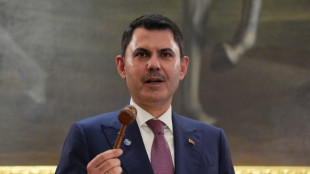 COP31 host says AI climate footprint to be a summit priority

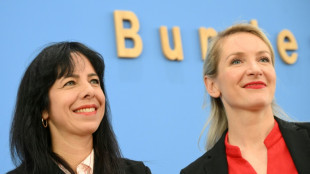 Berlin's far-left vote winners reject anti-semitism charges

 Mancini eager for 'new adventure' on Italy return

 Mbappe says having Zidane as France coach 'like a film'

 Palmer, Rice out of England Nations League squad

 German auto workers stage mass protests in bid to save jobs

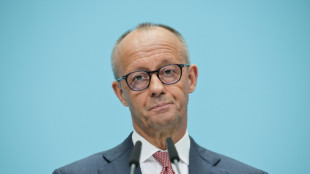 Embattled Merz vows to keep ruling for 'democratic future' of Germany

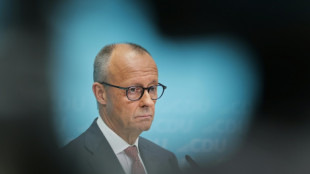 Merz vows to keep ruling coalition together for 'democratic future' of Germany
 Spain coach De la Fuente gets new deal after World Cup success

 Pressure grows on Germany's Merz after election defeats

 China's Zhang beats Japan rivals to Asian Games gymnastics gold
 Samlingen Haupt: Vad pengar avslöjar om oss människor
 Tens of thousands of German auto workers protest to save jobs

 हॉप्त् कलेक्शन: पैसा हमारे बारे में एक इंसान के रूप में क्या प्रकट करता है

 Συλλογή Haupt: Τι αποκαλύπτει το χρήμα για εμάς τους ανθρώπους

 TradersYard Shifts Focus to Futures Trading

 ハウプト・コレクション:お金が人間について明かすこと
 하우프트 컬렉션: 돈이 우리 인간에 대해 드러내는 것
At a cooking school in Moscow, Yulia Fedishova was preparing a "smetannik": a traditional Slavic layer cake with a sour cream topping.
The "Lunch a la Russe" master class she was attending on the secrets of classic Russian dishes is just one example of how many Muscovites are trying to reconnect with their ancestral "roots" amid the war in Ukraine.
The push is encouraged by the Kremlin as Russia faces deepening isolation from the West.
"In such troubling times, you want to return to something familiar, to become closer to your roots in order to find calmness and balance," said Fedishova, a 27-year-old corporate trainer.
Whereas before the war, fondness for traditional pastimes and cuisine may have been dismissed as parochial in big-city Western-inspired Russia, now it is all the rage.
Facing difficulty travelling to Europe and steeped in an ultra-patriotic drive from the Kremlin, many Russians have turned to the tastes and style of their Tsarist and Cold War-era ancestors.
Village foods like cloudberries and jam from pine cones have resurged as a popular ingredient in teas and cakes in Moscow cafes.
Trips to the banya -- the Russian steam bath that involves being flogged with a birch branch and, in winter, jumping into the snow -- have surged, replacing visits to modern-style spas.
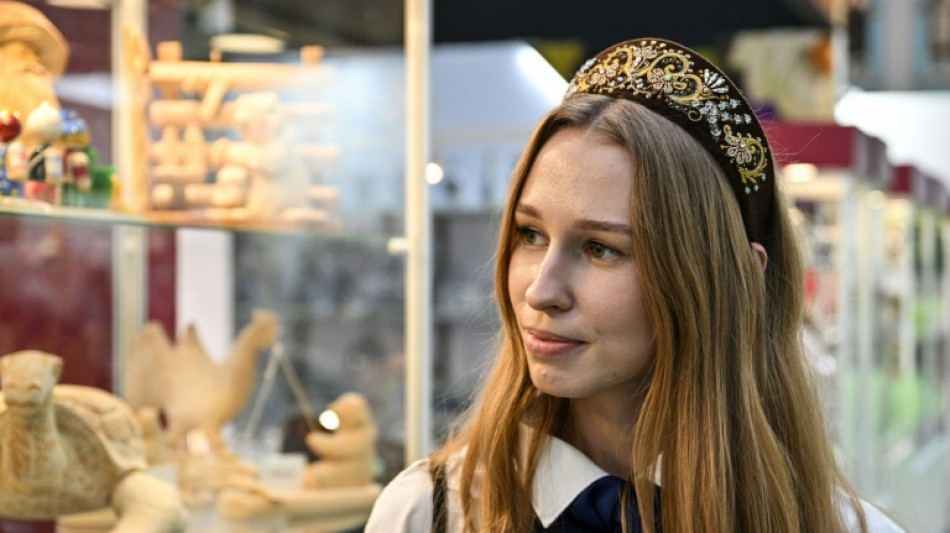
Much to the delight of President Vladimir Putin, the kokoshnik, an elaborate traditional Russian headdress, has even made a comeback.
"I've been told that we have a revival of a Russian tradition -- young women are going to events, or going out to bars and so on, wearing kokoshniks and traditional Russian outfits," the Kremlin chief said last October.
"You know, it's not a joke. It makes me very happy."
- 'Retreat' -
The drive comes both from the top -- with Putin pushing Russia to ditch Western values and embrace its break from the West -- and from below, with organic and cultural bottom-up initiatives.
Foreign social networks are banned or restricted, independent media have been forced into exile and Western society routinely bashed as decadent, godless and debauched by officials and on state TV.
Cultural links have diminished since Russia launched its military offensive in 2022.
There are no direct flights to the West and obtaining a visa to visit the EU or the United States has become much more complicated.
"We used to travel a lot, saw Europe, and know it by heart," Natalia, a well-off 39-year-old from Moscow, told AFP.
"But I don't want to go there anymore," she said, blasting what she called "passport discrimination".
"I've never supported the West's policy of lumping us all together regardless of our views -- just as I've never supported what's happening in our country now."
In the early 2010s, two-thirds of Russians described themselves as pro-European, Denis Volkov, head of the Levada Centre independent pollster -- labelled a "foreign agent" by Moscow -- told AFP.
"Now the situation is exactly the opposite," he said.
"It's kind of a retreat into our own identity against the background of Russia's isolation."
At the same time, nationalism and patriotism are surging.
The proportion who see Russia as "one of the best countries in the world" has more than doubled since the mid-1990s -- up from 36 percent to 76 percent, the Levada Center found.
- 'New patriotism' -
In the world of fashion, several brands have launched collections featuring classic embroidery and floral patterns.
The Tvoye brand -- "yours" in Russian -- has had a hit with its "Russian vibes" line, featuring prints of babushkas -- Russian grandmas -- and distinctive Russian window frames on T-shirts.
"This is our new kind of patriotism," interior designer Anna Loseva said.
"My clients no longer want to copy the West. They prefer authentic things over standardised ones."
Recently, some of her customers have even commissioned iconostases -- huge wooden screens featuring paintings of Orthodox icons, typically found in churches -- for their homes.
Others have tried to incorporate elements of tradition, while holding onto the European influence.
The whitewashed walls of Alexei Kochkarev's OKN restaurant evoke an old Orthodox monastery, while its decor is clearly Scandinavian minimalism.
"It's an intentional dualism," he told AFP.
The enthusiasm for heritage is "our response to external pressure."
"Right now it really is a national awakening. But we can't be separated from Europe. Why is it necessary to choose?"
B.Shevchenko--BTB