
'Filter of fantasy': Japan trials anime therapy to treat depression / Photo: © AFP/File

 Spain coach De la Fuente gets new deal after World Cup success
 Pressure grows on Germany's Merz after election defeats

 China's Zhang beats Japan rivals to Asian Games gymnastics gold
 Samlingen Haupt: Vad pengar avslöjar om oss människor

 Tens of thousands of German auto workers protest to save jobs

 हॉप्त् कलेक्शन: पैसा हमारे बारे में एक इंसान के रूप में क्या प्रकट करता है

 Συλλογή Haupt: Τι αποκαλύπτει το χρήμα για εμάς τους ανθρώπους

 TradersYard Shifts Focus to Futures Trading

 ハウプト・コレクション:お金が人間について明かすこと
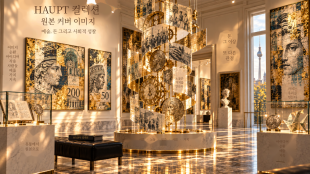 하우프트 컬렉션: 돈이 우리 인간에 대해 드러내는 것

 Indonesia doing 'everything' but struggling to curb fires
 Sbírka Haupt: Co o nás lidech prozrazují peníze

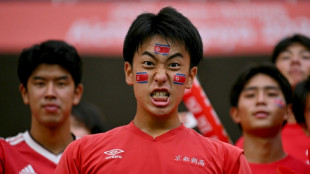 North and South Korea fight out draw in niggly Asian Games clash

 Officials say man shot, wounded by ICE agent in Texas

 豪普特收藏:金錢如何揭露人類的本質

 Kolekcja Haupta: Co pieniądze mówią o nas, ludziach
 The Haupt Collection: What Money Reveals About Us as Human Beings

 Barcelona enter new era aiming to retain Women's Champions League crown

 US has deported 25,000 to third countries under secretive deals: report

 Three South Korean soldiers injured in DMZ blast: military

 New Zealanders pick endangered black robin as Bird of the Year

 Asia stocks rise on AI, US-China trade talks optimism

 Malaysia's 'elephant whisperer' fights to save Borneo's endangered giants
 'I live in fear': 1.5 million Pakistani children sexually exploited online

 Cowboys beat Commanders, Vikings down Bears as star QBs injured
As a teenager struggling to fit into life in rural Sicily, psychiatrist Francesco Panto found refuge in anime, where he discovered characters that resembled the kind of man he wanted to be.
Now living in Japan, Panto thinks anime can benefit others and is trialling whether it could be used as a method of therapy, particularly for people who would otherwise struggle to ask for help.
"The use of manga and anime supported me so much... they were very important emotional support kind of tools," Panto told AFP.
"Being raised in Italy, in Sicily, there were very strong stereotypes around gender or self-expression. But when I was 12 or 13 years old I started to play this game called 'Final Fantasy'... and the male protagonists resonated with me.
"They were so masculine and cool, but in their own way."
Panto's six-month pilot study into "character-based counselling" at Yokohama City University ended in March.
As part of the trial, he and his team recruited 20 people aged 18-29 who had symptoms of depression and gave them online counselling delivered by a psychologist who appeared on the screen as an anime avatar with a digitally altered voice.
He believes that the "filter of fantasy" can help put people at ease and aid recognition of their problems -- and he's hoping that the trial results will confirm this theory.
From a steady and trustworthy "maternal energy" figure who brandishes an assault rifle, to an emotionally perceptive "prince-like" male who wears a cape, six different characters were created specifically for the study.
Each is based on a particular archetype in Japanese manga, with trial participants given freedom to choose among them.
"I tried to infuse each character with a specific mental struggle. One character is called Kuroto Nagi. She's affected by bipolar personality traits," Panto said.
Others struggle with post-traumatic stress disorder or anxiety disorders, or experience problems related to alcohol use.
But the idea is for the avatars to be "fun", Panto explained, and although the psychologist tells the story of their character at the start of the session, they were instructed not to make mental health issues too obvious.
One 24-year-old trial participant explained how they had been drawn to the study by a description of one of the characters, who was said to be "searching for true strength".
That "made me feel like it might help me get closer to the answer to my own problems," said the participant, an anime fan and game developer who could not be identified by name under the rules of the trial.
- 'Will to live' -
The phase-one trial -- which tracked participants' heart rates and sleep -- is primarily to test whether anime therapy is feasible and if this kind of treatment can reduce symptoms of depression.
Panto is also considering whether the therapy could be delivered using artificial intelligence, without the medium of a real psychologist.
The research project is one of many trying to find solutions to mental health challenges in Japan including "ikizurasa", a term for people who find it "difficult to live, difficult to survive in society", said Mio Ishii, an assistant professor helping lead the project.
"There are many young people who cannot go to school or continue working. So, our scope is to give them... new choices to recover from their difficulties," she said, adding that there was still huge stigma in Japan attached to seeking help.
As of 2022, only six percent of people in Japan had used psychological counselling for mental health problems, according to data cited on the World Economic Forum website. The rate was much higher in Europe and the United States.
Jesus Maya, who specialises in family therapy at the University of Seville and is not involved in the trial, said the use of anime during sessions can be "really useful".
"It can facilitate the expression of emotions... (and) identification and communication between the patient and the therapist," he said.
Under the rules of the study, the 24-year-old trial participant -- whose current favourite anime series include "The End of Evangelion" and "Girls Band Cry" -- could not comment on the trial itself.
But they said anime had given them the "will to live, seeing characters who are full of life as they work hard toward their dreams".
Ishii hopes the therapy could help people of all ages across the world.
"Because usually people have stigmas and psychological barriers to ask for help about their mental health," she said. "But anime or technology can decrease them."
H.Seidel--BTB