
'I live in fear': 1.5 million Pakistani children sexually exploited online / Photo: © AFP/File

 Elon Musk jokes about moving businesses to space after US midterms

 NHS to test blood screening designed to detect 13 cancers earlier

 Democrats near House takeover as voters judge Trump presidency

 Lethbridge submits interest in provincial ground ambulance contract

 The Cat in the Hat expands its stakes to cosmic scale in animated reboot

 Lettermen co-founder Tony Butala dies at 87

 James Talarico defeats Ken Paxton in historic Texas Senate result

 Goa plans relationship-readiness course amid concern over divorces

 Carmen de Burgos: The Life and Legacy of Spain's Pioneer for Women's Rights

 Mutual fund returns show shifting leaders across market-cap categories

 IndiGo holds talks with Embraer over potential order for 100 aircraft

 Indian companies report mixed second-quarter results on November 4

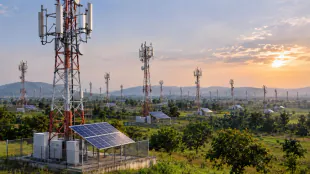 Indus Towers expands solar-powered network to 50,000 telecom sites

 Equitas Small Finance Bank rebounds after naming interim chief executive

 Titan quarterly profit seen rising as jewellery business drives growth

 Indian crude-sensitive shares gain after 13% oil-price decline

 Stocks and dollar fall as Democratic election gains reshape markets

 Kuwait marks key events and anniversaries from national history

 Trump congratulates Democrats and signals willingness to cooperate

 Qatar prime minister advances mediation through diplomatic calls

 Greenland parliament approves security agreement with United States

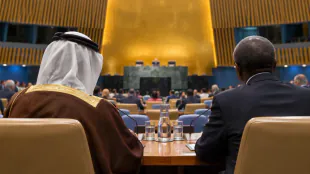 Qatar envoy meets incoming UN General Assembly president
Pakistani teenager Zara Shah was targeted by a stranger while playing a computer game, drawn into a conversation that would expose her to terrifying online sexual exploitation.
Zara, whose name has been changed by AFP for safety reasons, is one of an estimated 1.5 million children in Pakistan who experienced online sexual abuse in one year, according to a report published by the UN children's agency this month.
"We started chatting while playing an online game, and he began acting like a friend. Later, he wanted to meet and, after, started asking me for nudes," 17-year-old Shah said.
"When I refused, he threatened to find my family online and tell them that we had been talking," she added.
According to the UNICEF report, around 85 percent of perpetrators were known to the victims, aged between 12 and 17.
"The abuse may start with a friendly conversation, a gaming interaction, a promise of gifts, money or romance," Daniel Kardefelt, lead author of the global UNICEF report, told AFP.
"Perpetrators may spend months building trust using information that they find on social media," Kardefelt said.
In Muslim-majority Pakistan, 71 percent of victims did not tell anyone, according to the UNICEF report, while no child surveyed reported the abuse through formal channels -- including police, helplines or social workers.
Their silence was mostly because of stigma, shame and fears over how their families or society may react.
"Around 44 percent of reported abuse was entirely online, with Snapchat and WhatsApp among the most common settings," said Mehek Naeem, director of PAHCHAAN, a children's rights organisation based in the eastern city of Lahore.
Girls can face heightened risks of sexual extortion in the conservative society, which can lead to restrictions on their mobility or withdrawal from school.
For Zara, the threat of being exposed to her family was enough to keep her silent.
"I could have been stopped from going to school or leaving the house altogether," she said.
"Staying quiet felt like the better option than speaking up. But anxiety kills me every day."
- Loopholes, 'no implementation' -
With around 74 percent of children aged 12 to 17 in Pakistan estimated by UNICEF to be internet users, concerns over online safety are growing as their access to digital platforms expands.
Echoing other policies around the world, the provincial government in Punjab this month passed a resolution to bar children under 16 from using social media.
However, it has faced opposition.
"I disagree with the ban," said Usama Khilji, a digital rights activist.
"It will be a challenge to implement, and children can circumvent the ban through VPNs. Children have the right of freedom of expression, and a ban takes that away," he said.
Pakistan has a legal framework addressing tech-facilitated offences against children, but "there is no implementation", said Tahira Afrasiyab, a spokesperson for non-profit organisation Muslim Hands.
And, according to experts, there are loopholes in existing laws.
Human rights lawyer Salman Afridi said this issue shows how "economic vulnerability can be weaponised" for amounts as small as 10,000 Pakistani rupees ($36) in exchange for the production of sexual content.
"What we are seeing is the use of technology to facilitate an entire chain of grooming, inducement, coercion, blackmail, production, distribution and commercialisation," he said.
"There is a strong basis for describing this as a commercial ecosystem of exploitation," Afridi added.
For Zara and many others like her, the consequences of an encounter that began with an online game remain difficult to escape.
"I was, and am, scared," she said. "I live in fear."
S.Keller--BTB