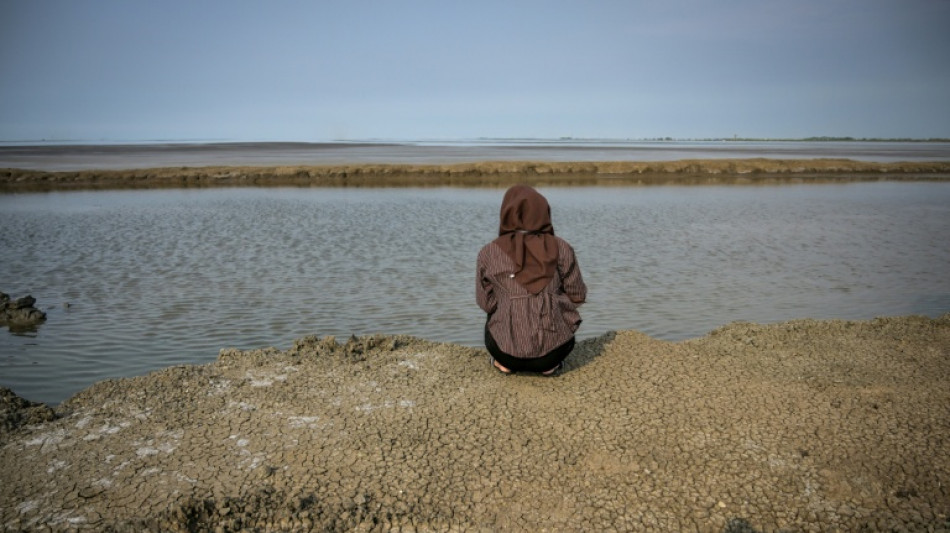
Two decades later, impacts from Indonesia mud volcano linger / Photo: © AFP

 Spain coach De la Fuente gets new deal after World Cup success

 Pressure grows on Germany's Merz after election defeats

 China's Zhang beats Japan rivals to Asian Games gymnastics gold
 Samlingen Haupt: Vad pengar avslöjar om oss människor

 Tens of thousands of German auto workers protest to save jobs

 हॉप्त् कलेक्शन: पैसा हमारे बारे में एक इंसान के रूप में क्या प्रकट करता है

 Συλλογή Haupt: Τι αποκαλύπτει το χρήμα για εμάς τους ανθρώπους

 TradersYard Shifts Focus to Futures Trading

 ハウプト・コレクション:お金が人間について明かすこと

 하우프트 컬렉션: 돈이 우리 인간에 대해 드러내는 것

 Indonesia doing 'everything' but struggling to curb fires
 Sbírka Haupt: Co o nás lidech prozrazují peníze
 North and South Korea fight out draw in niggly Asian Games clash

 Officials say man shot, wounded by ICE agent in Texas

 豪普特收藏:金錢如何揭露人類的本質

 Kolekcja Haupta: Co pieniądze mówią o nas, ludziach
 The Haupt Collection: What Money Reveals About Us as Human Beings

 Barcelona enter new era aiming to retain Women's Champions League crown

 US has deported 25,000 to third countries under secretive deals: report
 Three South Korean soldiers injured in DMZ blast: military

 New Zealanders pick endangered black robin as Bird of the Year

 Asia stocks rise on AI, US-China trade talks optimism

 Malaysia's 'elephant whisperer' fights to save Borneo's endangered giants
 'I live in fear': 1.5 million Pakistani children sexually exploited online

 Cowboys beat Commanders, Vikings down Bears as star QBs injured
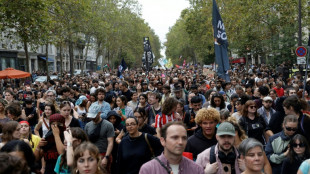
Harwati clasped her hands and offered a prayer on the edge of a sludge lake on the Indonesian island of Java, as dozen of residents gathered to mark two decades since mud volcano eruptions began displacing thousands.
On May 29, 2006, the earth in the Sidoarjo district of East Java province opened up, ejecting pungent, steaming hot mud that swallowed villages and factories.
Thirteen people died when an underground gas pipeline in the disaster zone exploded.
The eruptions, which continue to occur, destroyed at least a dozen villages and have displaced tens of thousands of people.
Harwati said the gathering, held on Friday to mark two decades since the disaster, was organised to remind the government that residents are still feeling the impact of the mudflow.
"Even though presidents change, we still hope (the government will) provide justice for us," the 50-year-old told AFP on Saturday, insisting that the disaster was "far" from over.
She demanded the government conduct a thorough examination of the mudflow's impacts on the health of nearby residents, saying many locals have suffered from cancers after the incident.
An area of over 600 hectares was swallowed by the mud, according to the government, as efforts to plug it, including with huge concrete balls, have proved ineffective.
The disaster forced Muhammad Irsyad to leave his village in 2012, as he could no longer tolerate pollution that seeped into the well his family relied on for cooking and bathing.
"I was angry when I wanted to take a bath because when we shower, my eyes got stung as soon as the water hits it," Irsyad, 62, told AFP.
Two decades since the disaster, Irsyad said he was still "rearranging" his life, with his family surviving on income earned from their food stall and drinking water sales.
Irsyad's wife Siti Chusniawati said she was "sad" to relocate to a new place, but added that the family had little choice.
"It was tough, but whether we want it or not, we just go on day by day, trying to be able to adapt with this new circumstance," the 48-year-old said.
- 'Not finished' -
Independent studies alternate blame between oil and gas company PT Lapindo Brantas, which was drilling in the area at the time, and an earthquake that struck two days earlier about 260 kilometres (162 miles) away.
Lapindo -- part of a business empire controlled by Indonesia's powerful Bakrie family -- was eventually ordered to compensate victims, but payments took years, triggering angry protests.
The government eventually intervened and loaned the company the funds to expedite the remaining payments.
Irsyad called the use of public money to pay for damages following the disaster an "injustice". He said the company should take responsibility.
Lapindo, which has since changed its name to Minarak Brantas Gas, did not immediately respond to an AFP request for comment, but the firm previously said investigations "determined that no correlation could be proven between the drilling activities and the mud eruption".
Environmental groups have found that groundwater near in area has been polluted following the disaster, causing illnesses for locals, said Melky Nahar, a coordinator of NGO Mining Advocacy Network (JATAM).
"After two decades, the destruction over the health, environment and base of production of people... are not finished," he said.
Irsyad, who moved to his current home some four kilometres away from his old one, said he told his friend that he wished to be buried in his old village.
"So my child and grandchild will look for me there. And from there they possibly will have a question: 'why grandfather was buried here?'"
I.Meyer--BTB