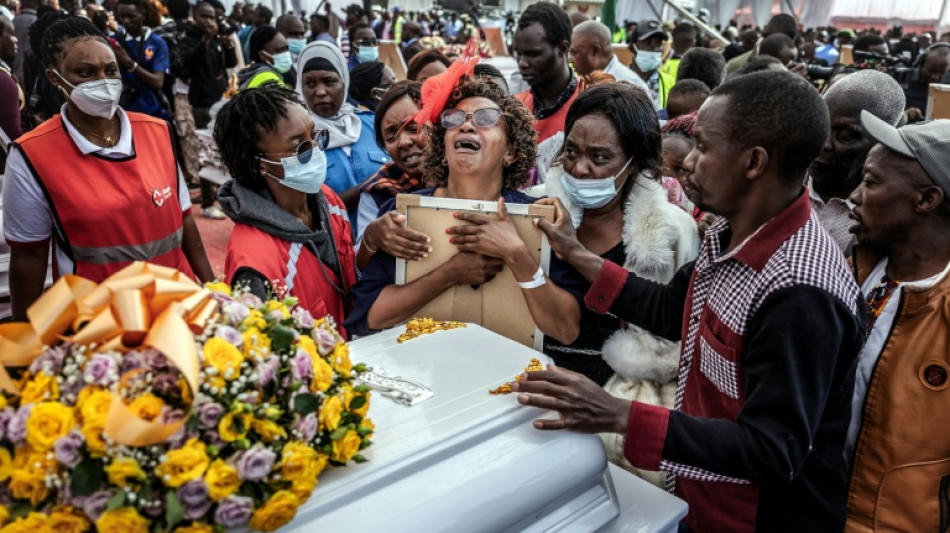
Why are Kenyan kids burning schools and killing their classmates? / Photo: © AFP

 Sisters of jailed Pakistan ex-PM Imran Khan arrested

 African players in Europe: Semenyo brace helps City top table

 'For my family': India boxer beats hardship, injury to go for Games gold

 Indonesia doing 'everything' but still struggling to curb fires

 Once decried as 'human cockfighting', MMA wants Olympic spot

 China's Yu, 13, great for swimming says multiple Olympic medallist

 Putin's party set to retain power after Russia vote hit by cyberattacks, drones

 Germany's Merz under pressure after bruising state election losses

 Messi, Miami frustrated in 2-2 draw with San Diego

 Thousands march in France against 'licence to kill' draft law

 Braves clinch division title as Red Sox reach MLB playoffs
 Bordeaux-Begles hammer Stade Francais despite Jalibert injury

 Milan and Juventus end blips with home wins

 Bridgeman wins PGA Biltmore title with sizzling 61

 Williams injured as Bears shut down by Vikings

 US warns of rapid escalation in Middle East war

 Germany's far-right AfD celebrates another state election win

 Russia vows revenge for election-day attacks as poll shows ruling party win

 Spaun late shows snatches PGA Championship win

 Conceicao strikes as Juventus beat Atalanta

 Britain, Zverev-inspired Germany, Spain complete Davis Cup finals

 Man Utd salvage Fulham draw as pressure mounts on Carrick

 Spanish civil war drama 'The Black Ball' wins at Toronto festival

 Germany's Merz shaken by far-right and far-left gains in state votes

 Macron welcomes Canada's Carney to French Atlantic territory

Almost 50 fires have ripped through Kenyan schools this year, 16 schoolgirls have died, and more than 100 schools have temporarily closed. Everyone knows there is a crisis, but few have solutions.
To many, Kenya's strange and deadly spate of arson attacks is the result of an education system buckling under chronic funding shortfalls and corruption.
Problems are exacerbated by Kenyans' preference for boarding schools -- a legacy of the British colonial system -- where children spend months away from parents in institutions often associated with overcrowding, underfunding and abuse.
On May 28, 16 girls were burned alive after their dormitory at the Utumishi Girls' Academy in Nakuru County was set ablaze at night. Nine of their classmates are under investigation.
Tasha, 15, only escaped after frantic friends battered down a door that had been locked from the outside, in contravention of fire regulations.
She told AFP there were rumours some girls were unhappy about conditions in the school, and were planning a strike.
"I didn't think they would go that far," she said at a mass for her lost friends.
Psychologist Catherine Gachutha, ex-chair of Kenya's Counselling and Psychological Association, said teenagers were usually not malicious but were simply "not looking at the consequences".
Many are likely copying incidents at other schools, and may also be mirroring the violent protests on Kenyan streets over government corruption and economic stagnation, which often see public areas and businesses set alight.
There are real political issues at play, too: Kenyan children face extreme exam pressure in an economy where just 10 to 20 percent of the workforce have formal employment.
"These are young people who are going through a school system that is not giving them jobs," said Gachutha, and fires "can be a way of rebelling against the government".
- 'Cash cow' -
Few wish to speak openly about the problems.
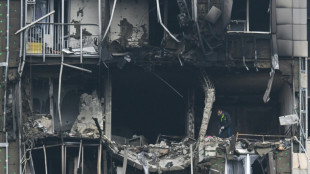
AFP visited the smouldering ruins of a dorm at Gathiruini Boys Secondary School in Kiambu County earlier this month, where a fire had fortunately left no casualties.
Teachers and local education officials all refused to speak.
One experienced principal of a boarding school in western Kenya was willing to talk to AFP, but only anonymously, as he said teachers could face disciplinary action for speaking to the media.
He said he was forced to send all his pupils home recently after receiving an anonymous note threatening "action".
"There is a lot of blackmail from these teenagers now," he said, blaming a culture of "over-entitled" children.
But the bigger issue lay in consistent delays and shortfalls in government funding, including "misuse" by officials, he said.
"Greedy" headmasters oversubscribed some schools to get more cash, he added, with pupils often sleeping in converted cafeterias or corridors, in violation of safety guidelines.
"The teaching fraternity has turned schools into a cash cow," agreed one parent, also speaking anonymously for fear their child would face consequences.
- 'Haven't learned' -
There is also a lack of basic safety, multiple emergency responders told AFP.
"Many schools simply cannot afford a robust fire response plan," said Isaac Maina, head of national operations at G4S, among Kenya's largest private fire responders.
George Ndege, head of the Architectural Association of Kenya (AAK), said school boards believed that ensuring "students don't sneak out is more critical than their safety" -- leading to grilled windows and barricaded dormitory doors.
AAK has identified 55,000 public schools with "deplorable conditions", it said, vowing to revamp them, but Ndege said the work would take years.
President William Ruto's government said this week it would not offer financial bailouts for impacted schools, putting the costs on parents, though it has pledged a taskforce to examine the factors behind school fires.
But similar promises have been made in the past.
After a dorm fire killed 21 boys in 2024, the education ministry ordered 348 boarding schools to convert into day schools for safety reasons.
It is not clear if this was ever implemented. The ministry did not respond to requests for comment from AFP.
"Fire is not a yesterday phenomenon. It's not an issue that is coming to surprise people," said Peter Kinyanjui, who survived a school fire when he was a teenager some 20 years ago.
"We haven't learnt the lessons."
D.Schneider--BTB