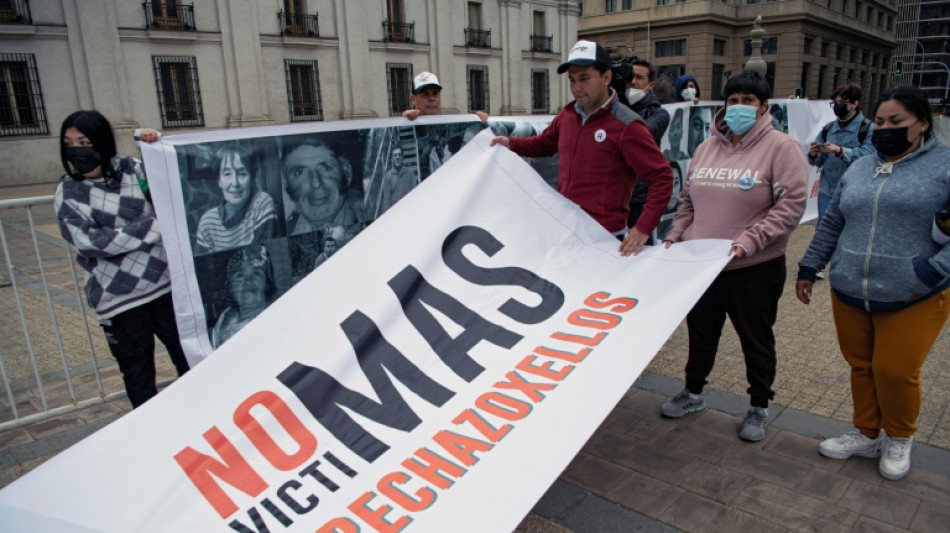
Chile to vote on overhauling dictatorship-era constitution / Photo: © AFP/File

 Houthi missile attacks kill 58 Saudi-backed Yemeni govt forces: source

 No.1 Sabalenka and Pegula advance at Toronto

 China missile test top of agenda as Pacific diplomats meet in Fiji
 Most UK teens to opt out of planned social media curfew: poll

 Venezuela's political transition talks launch in Caracas
 2 killed, 13 wounded in bus blast near Syrian capital: state media

 All Blacks skipper Taylor cautiously recovering from calf strain

 UN chief denounces Russia, Ukraine for civilian deaths

 UEFA turn up the pressure on Infantino and repeat boycott threat

 Rodri approves Barcelona transfer talks with Man City: Barca source to AFP
 Venezuela unable to tally missing from cataclysmic quakes
 Le Court sprints to stage six Tour de France Femmes win
 Doping body says Parker's positive cocaine test caused by nutritionist

 UEFA says boycott of World Cups stands despite FIFA backdown on private investment

 Rheinmetall sales keep surging despite cancelled naval frigate project

 Pogacar teammate Del Toro gets new UAE deal after Tour podium
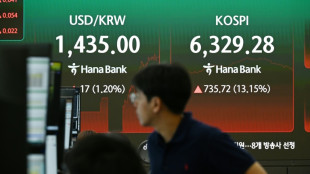 Stocks tread water with earnings, tech in focus

 Forex Expo Dubai Announces Opportunity to Win Up to 150 Grams of Gold This September 2026

 Forlan named new Uruguay head coach

 UEFA chief Ceferin: 'Underdog' leader taking fight to FIFA's Infantino

 Salah completes move to Turkey's Trabzonspor
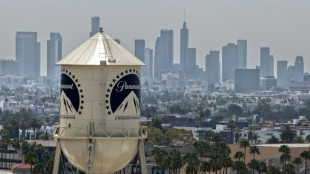 UK clears Paramount's takeover of Warner Bros
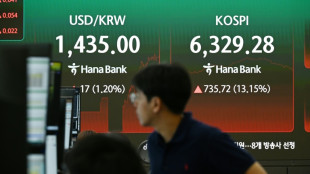
 North Korea fires ballistic missile: South Korea military

 'Don't have to hide': Thai IDs, legal work give hope to Myanmar refugees

 Stocks mixed with tech firms back under pressure

Chileans will vote Sunday on whether to adopt a new constitution and shift from a market-driven society to a more welfare-based one.
The proposed draft aims to replace the current constitution, written during the Augusto Pinochet dictatorship (1973-1990), that -- despite several successive reforms -- is still considered an obstacle to any fundamental social changes.
Education, health care and pensions are still in the hands of the private sector.
But despite an overwhelming majority of Chileans -- close to four-fifths -- voting previously to rewrite the constitution, opinion polls suggest the new document will be rejected.
Chief among the concerns of voters, though, is the prominence given to the country's Indigenous peoples, who make up close to 13 percent of the 19 million population.
Proposals to legalize abortion and protect the environment as well as natural resources such as water, which are currently often overexploited by private mining companies, have also garnered much attention.
For many people, the thought of a new constitution that aims to de-privatize certain key sectors has sparked fears.
"I don't want to be another Venezuela; we have a lot to lose," Patricio Gutierrez, 40, an engineer for a transnational mining company, told AFP.
Like many others, he fears the new constitution would generate instability and uncertainty, which could then harm the economy.
"Social reforms are necessary but not changing the rules in a country that is doing well," added Gutierrez.
Yet around 40 world-renowned economists and political scientists have expressed their support for the new project.
- Starting somewhere -
Those in favor of the new constitution say it will prompt major changes in a conservative country marked by social and ethnic tensions and lay the foundation for a more egalitarian country.
Anadriel Hernandez, 18, a first-time voter, expects the new constitution "will change Chile, maybe not overnight, because that would be impossible, but you always have to start somewhere."
One of the main drivers for the new constitution was the outbreak of massive social unrest in 2019, initially in response to a metro fare hike. But it mushroomed into demands for greater social justice in a country that enjoyed years of economic strength but widening inequality.
Many people blamed the constitution, which gave private enterprise free reign over crucial industries, creating fertile breeding ground for the rich to prosper and the poor to struggle.
Although the constitution has undergone several reforms since it was implemented in 1980, it retains the stigma of having been introduced during a dictatorship.
But Luz Galarce, 53, who teaches young children, said she will vote no because the idea to rewrite the constitution "came from a moment of great crisis in our country, it wasn't a decision taken objectively."
- Rejection likely -
Some 15 million people will go to the ballot box in a compulsory vote.
Having already voted to rewrite the constitution and then elect the representatives to do so, this will be the third time in two years Chileans have headed to the polls over this issue.
The new text was drawn up by a constitutional commission made up of 154 members -- mostly without political affiliation -- split equally between men and women, and with 17 places reserved for Indigenous people.
The resulting proposal recognizes 11 Indigenous peoples and offers them greater autonomy, particularly in terms of justice.
It is the most controversial clause, with some critics accusing the authors of trying to turn the traditionally marginalized Indigenous people into a higher class of citizen.
"Most likely the reject vote will win, and for that to change depends on the number of people who vote and who votes," political scientist Marcelo Mella told AFP.
If accepted, Chile's congress will then start deciding how to apply the new laws. If the new text is rejected, then the current constitution will remain in place.
If that happens, then the simmering unrest that has gripped the nation for three years may well boil over once again.
L.Dubois--BTB