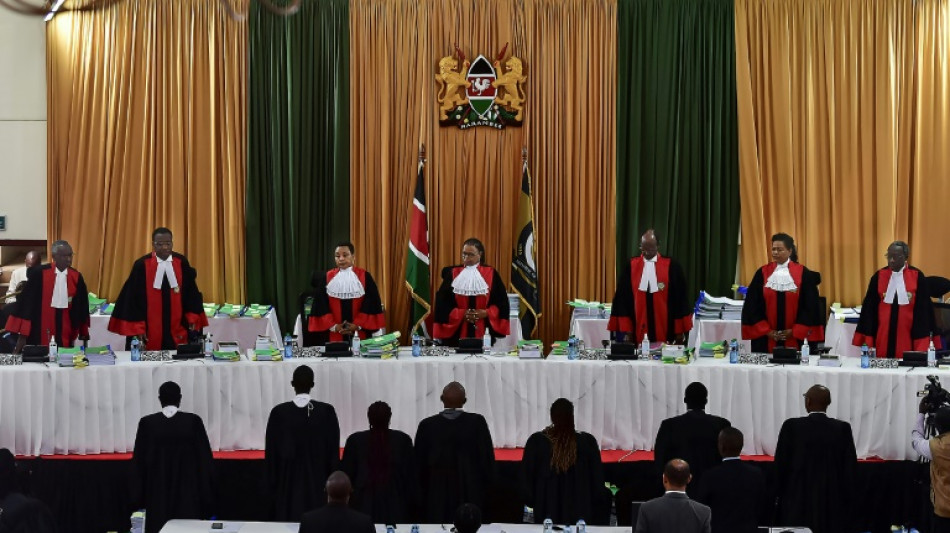
Four things to know about Kenya's vote dispute / Photo: © AFP

 Houthi missile attacks kill 58 Saudi-backed Yemeni govt forces: source

 No.1 Sabalenka and Pegula advance at Toronto

 China missile test top of agenda as Pacific diplomats meet in Fiji
 Most UK teens to opt out of planned social media curfew: poll

 Venezuela's political transition talks launch in Caracas

 2 killed, 13 wounded in bus blast near Syrian capital: state media

 All Blacks skipper Taylor cautiously recovering from calf strain

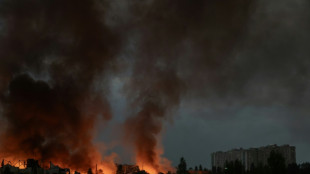 UN chief denounces Russia, Ukraine for civilian deaths

 UEFA turn up the pressure on Infantino and repeat boycott threat
 Rodri approves Barcelona transfer talks with Man City: Barca source to AFP
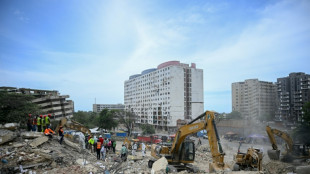 Venezuela unable to tally missing from cataclysmic quakes
 Le Court sprints to stage six Tour de France Femmes win
 Doping body says Parker's positive cocaine test caused by nutritionist

 UEFA says boycott of World Cups stands despite FIFA backdown on private investment

 Rheinmetall sales keep surging despite cancelled naval frigate project

 Pogacar teammate Del Toro gets new UAE deal after Tour podium
 Stocks tread water with earnings, tech in focus

 Forex Expo Dubai Announces Opportunity to Win Up to 150 Grams of Gold This September 2026

 Forlan named new Uruguay head coach

 UEFA chief Ceferin: 'Underdog' leader taking fight to FIFA's Infantino

 Salah completes move to Turkey's Trabzonspor
 UK clears Paramount's takeover of Warner Bros
 North Korea fires ballistic missile: South Korea military
 'Don't have to hide': Thai IDs, legal work give hope to Myanmar refugees

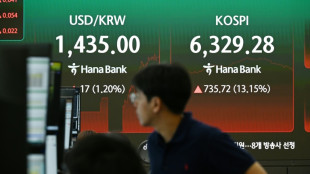 Stocks mixed with tech firms back under pressure

Kenya's Supreme Court on Friday wrapped up hearing three days of oral arguments in the case challenging the validity of the August 9 presidential election won by Deputy President William Ruto.
His 77-year-old opponent Raila Odinga, who lost his fifth stab at the presidency, insists the election results were manipulated and claims to have "enough evidence" to prove his case.
With the seven-judge bench set to hand down its decision on Monday -- the constitutional deadline -- here are some key questions about the case and its potential implications for the country.
- How did we get here? -
The Independent Election and Boundaries Commission (IEBC) proclaimed 55-year-old Ruto president-elect on August 15 after a nail-biting wait for results.
Odinga lost by a wafer-thin margin of around 230,000 votes despite the support of his old foe and outgoing President Uhuru Kenyatta, and the weight of the ruling party machinery behind him.
The former prime minister cried foul over the outcome, which also triggered turmoil within the IEBC.
No presidential poll outcome has gone uncontested in Kenya since 2002, and Odinga himself has been down this road before, petitioning the court in 2013 and 2017.
In August 2017, the Supreme Court annulled the election after Odinga rejected Kenyatta's victory.
The IEBC was under intense pressure to produce a transparent vote after facing stinging criticism over its handling of the 2017 election.
- What are the complaints? -
Seven petitioners -- whose cases have been collapsed into one -- have alleged that there were massive irregularities that compromised the integrity of the vote.
Odinga's 72-page petition claims that hackers broke into the IEBC servers and "converted, manipulated and unlawfully" dumped forms used to tabulate results from polling stations.
He alleges that the IEBC released contradictory figures on voter turnout and failed to tally results from at least 27 of the 290 constituencies, arguing that Ruto did not therefore meet the constitutional threshold of 50 percent plus 1 of the valid votes cast.
The court, led by Chief Justice Martha Koome, said it had identified nine issues to consider before arriving at a verdict.
Judges will attempt to figure out whether the IEBC website was hacked and if there was any interference with the transmission of result forms.
They will also scrutinise the IEBC's servers to ascertain if the election technology -- a hot-button issue that led to the nullification of the August 2017 vote -- met the "standards of integrity, verifiability, security and transparency".
IEBC chairman Wafula Chebukati has denied the allegations, insisting he carried out his duties according to the law of the land despite facing "intimidation and harassment".
- What next? -
There are three possible outcomes.
If the court finds substantial irregularities that could have seriously affected the results announced by the IEBC, it can nullify the election and order a new vote within 60 days.
Alternatively, it can criticise the electoral process but conclude that the irregularities do not merit an annulment.
If it nonetheless finds that the president-elect did not secure 50 percent plus 1 of valid votes, it will order a runoff, which must be held within 30 days, marking a first for Kenya.
Finally, it can uphold Ruto's victory, allowing him to be sworn in on September 13.
The court's ruling will be decided by a majority vote.
The Supreme Court is the highest in the land, created under Kenya's 2010 constitution "as the final arbiter and interpreter of the constitution".
Its rulings are final and binding.
- What's at stake for Kenya? -
Plenty.
The aftermath of the poll and court decision is being keenly watched as a test of democratic maturity in the East African powerhouse.
While Kenya is considered a pillar of stability in a volatile region, there are fears a drawn-out dispute may trigger violence in a country with a history of post-poll unrest.
Kenya's worst electoral violence occurred after the 2007 vote, when more than 1,100 people died in politically motivated bloodletting between rival tribes.
A prolonged electioneering period will also exacerbate already difficult economic conditions, with business likely to slow down in the midst of political uncertainty.
The country is struggling with soaring prices, a crippling drought that has left millions hungry, endemic corruption and disenchantment with the political elite.
M.Odermatt--BTB