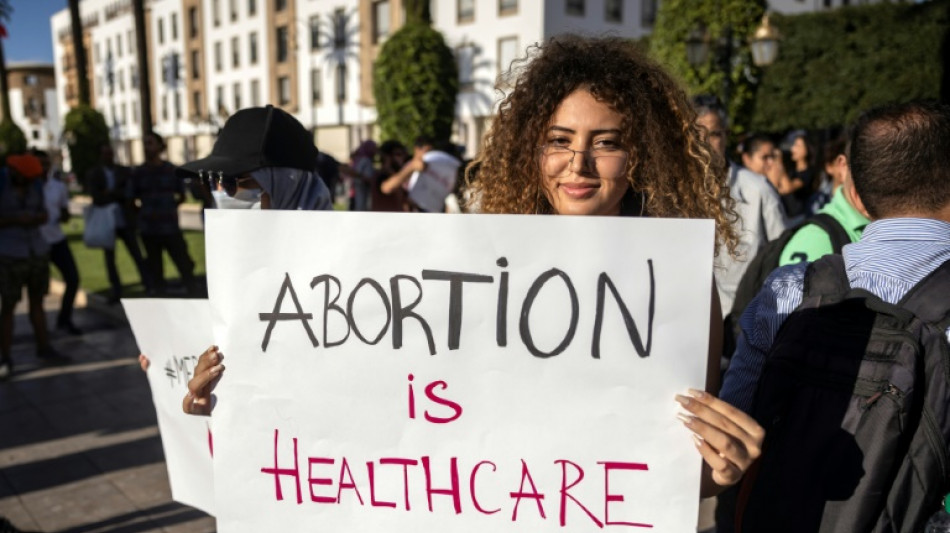
Abortion under spotlight in conservative Morocco / Photo: © AFP

 Amazon behind massive private gas plant for new data centers

 Apple and OpenAI escalate legal battle over devices

 All Blacks strike late to secure opening win against Stormers
 Saudi Arabia, Turkey, Pakistan sign defence pact amid regional war

 Trump renews effort to remove US Fed Governor Lisa Cook
 Abelardo de la Espriella, the flamboyant millionaire taking power in Colombia
 Germany holds security meeting over explosive drone amid Russia protest

 Austrian writer Stefan Zweig, who fled Nazis, honoured in London
 Mexico and Peru reestablish ties after asylum spat

 Dollar drops, stocks climb as weak US jobs data eases rate fears
 Japan defender Tomiyasu joins Crystal Palace
 Celtic boss O'Neill out of hospital after 'small procedure'
 Man City reject Barcelona bid for Rodri - reports
 US unexpectedly loses jobs in blow to Trump ahead of midterms

 Dollar drops, stocks climb after surprise US jobs miss
 Thai students in disbelief after deadly school shooting

 McLaren boss glad of 'harmony' between F1 teammates Norris and Piastri
 Saudi Arabia, Turkey and Pakistan sign defence pact amid regional war

 Maradona bloated, bedridden and resigned before death, says icon's masseur
 Infantino and the failed investment plan -- What they said

 Thailand teen kills seven in home, school shooting

 Volt Funded Launches Globally with Evaluation Program Offering Up to 90% Profit Share
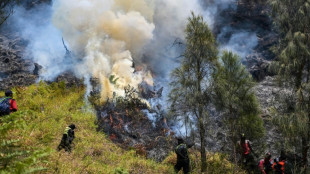 Indonesia battles Mount Bromo wildfire as El Nino takes root

 STARCARES Revamps Basketball Court at the University of Lagos for Future Healthcare Professionals

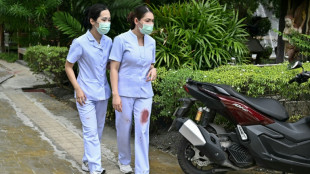 Eight dead, including teen suspect's grandparents, in Thailand shooting
The debate over abortion rights has flared in Morocco after a teenager's death following an unsafe termination, but social taboos continue to stall reforms.
"If I spoke out for abortion rights in front of my brothers, I'd be risking my life," said student Leila, 21, adding that she comes from a relatively "modern" family.
In September, a 14-year-old identified as Meriem died following an unsafe procedure in a rural village in the country's centre.
The conservative North African kingdom, which criminalises abortion, has since seen growing calls for reform to women's reproductive rights, although pervasive social attitudes and a lack of political will continue to block change.
"If I said the word 'abortion' in my family, I'd be accused and rejected, even by my parents," said 22-year-old Amal, a student at the University of Rabat.
- 'Law that kills' -
Unless a pregnancy endangers a woman's health, Moroccan women undergoing abortions face up to two years in jail, while those assisting them risk five years' imprisonment.
Local organisations say that despite the heavy penalties, between 600 and 800 women have an abortion every day in the country of 38 million people -- many in dangerous, unsanitary conditions.
Meriem's was carried out "at the home of a young man who was sexually exploiting the victim", Moroccan feminist coalition Spring of Dignity said.
Her death came seven years after a royal commission recommended decriminalising the procedure in "certain cases" such as rape, incest, foetal malformation or if the mother is mentally disabled.
But the report changed "nothing", according to gynaecologist Chafik Chraibi, a campaigner for legalisation.
"There's nothing but silence, the subject isn't a priority," he told AFP.
Chraibi, the founder of the Moroccan Association Against Clandestine Abortion, says a lack of political will is blocking any change to an "archaic" law that dates back to 1963.
A draft bill to modify the legislation has been presented twice to parliament before being withdrawn without any official explanation.
Dozens of rights activists gathered outside parliament in late September to demand changes to the "law that kills".
Families Minister Aawatif Hayar told parliament last month that the government was taking "serious interest" in changing the penal code.
But any changes must "respect Islamic law and be acceptable to Moroccan society", she said.
Campaigner Chraibi said religious authorities and Moroccan conservatism were blocking moves towards decriminalisation -- but added that nothing in Islamic law explicitly bans the practice.
- 'Judicial and social violence' -
Morocco is far from being an outlier in the Arab world.
The only North African state to allow women to choose an abortion is Tunisia, whose first post-independence president Habib Bourguiba legalised the practice in 1973, two years earlier than former colonial power France.
But there is little national debate on the subject, and most women who undergo the procedure keep it a secret.
A 2018 Algerian law provides for the "therapeutic termination of pregnancy", but rights groups note this requires a medical committee's approval and is limited to cases of mortal danger to the mother or if the baby is likely to be severely disabled.
Algeria otherwise can impose a two-year jail term for women who have an abortion, while doctors who facilitate terminations face five years.
Libya also criminalises abortions except when there is mortal danger to the mother, and imposes long jail terms on those carrying them out.
Sentences are often reduced in cases where the procedure is undertaken to preserve the family's "honour". Libyan women with the means often seek abortions overseas.
Moroccan activist Faouzia Yassine says the kingdom's laws are a form of "judicial and social violence against women".
She called for a "root-and-branch reform of the penal code" and to bring it in line with "international conventions that Morocco has ratified".
"Criminalisation of abortions means restricting a woman's freedom to control her body and shows a desire to compel her to keep a foetus against her will," she said.
Y.Bouchard--BTB