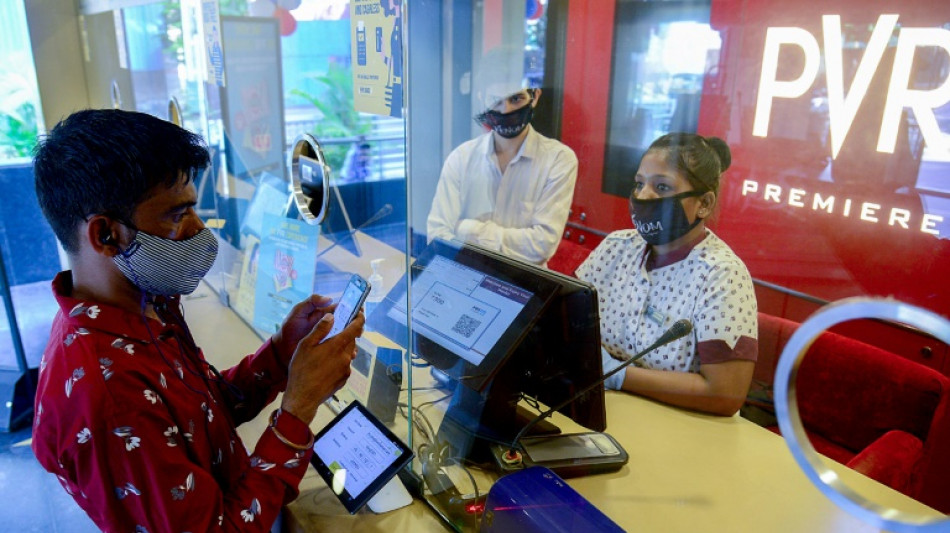
India's top multiplexes to merge to survive 'streaming onslaught' / Photo: ©

 Far-Right Extremists Claim Opportunity to Seize Control of GOP After Midterms

 New Campaign Highlights Knowledge Gaps on Carbon Monoxide Safety Among Americans

 JR East Launches 'teppay' to Integrate Suica Balance with Mobile Payments

 Phil Spencer on Housing Market Fairness: How Buyers and Sellers Navigate Falling Prices

 Beirut Cinema Festival Draws Thousands Despite War Fatigue

 AMD Forecasts First-Ever Revenue Lead Over Intel on AI Chip Surge

 GoodData.AI Launches the Agentic Serving Plane, a New Category of Enterprise Data Infrastructure for AI Agents

 Abu Dhabi Demand Response Project Achieves 401 MW Peak Reduction in 2025

 Panthers expected to begin 2027 NRL season away from new stadium
India's two largest multiplex operators are set to merge, the companies said, as the industry recovers from the pandemic and battles a surge in subscriptions to streaming platforms.
Bollywood, India's Hindi-language film industry, was worth $2.5 billion in 2019 and is the world's most prolific. Movies in English and other regional languages are also big business.
But pandemic lockdowns and restrictions sent the industry into a tailspin, with multiplex chains suffering major losses and dozens of small cinemas going bust in the movie-mad nation.
"The film exhibition sector has been one of the worst impacted sectors on account of the pandemic," PVR chairman Ajay Bijli said in a statement about the merger with INOX Leisure.
"Creating scale ... is critical for the long-term survival of the business and (to) fight the onslaught of digital OTT (over-the-top) platforms," he added.
The country of 1.4 billion people has attracted streaming giants Netflix, Amazon's Prime Video and Disney's Hotstar, all keen to tap into the boom in online audiences.
An upcoming merger of Sony's India unit with local broadcaster ZEE is expected to replicate the success of Disney's 2019 tie-up with homegrown streaming platform Hotstar.
India's entertainment market -- valued at $24 billion by accountancy giant EY -- is already one of the world's biggest, while smartphone adoption is forecast to expand further.
If the deal receives regulatory and shareholder approval, the new entity will operate 1,546 movie screens across 109 cities, the firms said.
"Both entities have a combined box office share of approximately 42 percent," Elara Capital media analyst Karan Taurani said in a research note.
The merged multiplex giant is also expected to pick up market share from smaller cinema chains and single-screen theatres struggling to keep their doors open.
Shares of PVR and INOX Leisure jumped by up to 10 and 20 percent respectively in Monday trade on the Bombay Stock Exchange.
O.Krause--BTB