'We don't hit women': How Yakuza differs from GTA / Photo: © AFP

 Most equities rise after oil price plunge, US data in focus

 Polar oceans transformed as warming melts ice habitats: research

 Lost shark becomes viral star in South Korea

 Dangote to launch $16bn refinery in Kenya

 North Korean leader 'extremely obese': Seoul spy agency

 Yankees and pope-backed White Sox start MLB playoffs with wins

 Malaysia's ex-PM Mahathir in hospital for observation
 'No limits': Marathon world record holder Sawe chasing history

 Countdown begins to biggest-ever Rugby World Cup

 Bangladesh women lose ground after quota reform
 Vietnam admits 'differing opinions' on Hanoi development

 Stocks temper gains as oil pares heavy losses, US data in focus

 New Zealand denies breaching climate commitments to EU

 Albert becomes youngest US scorer in 4-2 win over Chile

 Pirate island's plunging population shows Greece's demographic decline

 With elections ahead, Latvia's Russian-speakers reject Moscow's help
 Brazil football clubs face massive sponsorship blow from betting ban
 ChatGPT maker wants to be the App Store for AI as safety concerns grow

 Women fight fires and sexism in Indonesian Borneo

 Forsling's OT blast lifts Florida over Carolina in NHL opener

 Hurricane Polo sweeps over Mexico's Pacific coast, heads inland
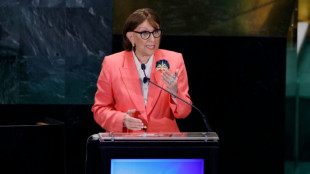 Grynspan pulls ahead in race to lead UN: diplomat

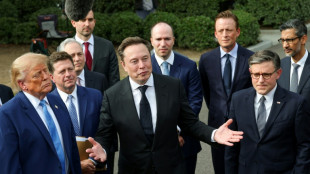 Trump touts AI boss pledge to self-regulate
 Oil down, but stocks lower as bond yields rise
 England break down stubborn Czechs to claim first Nations League win

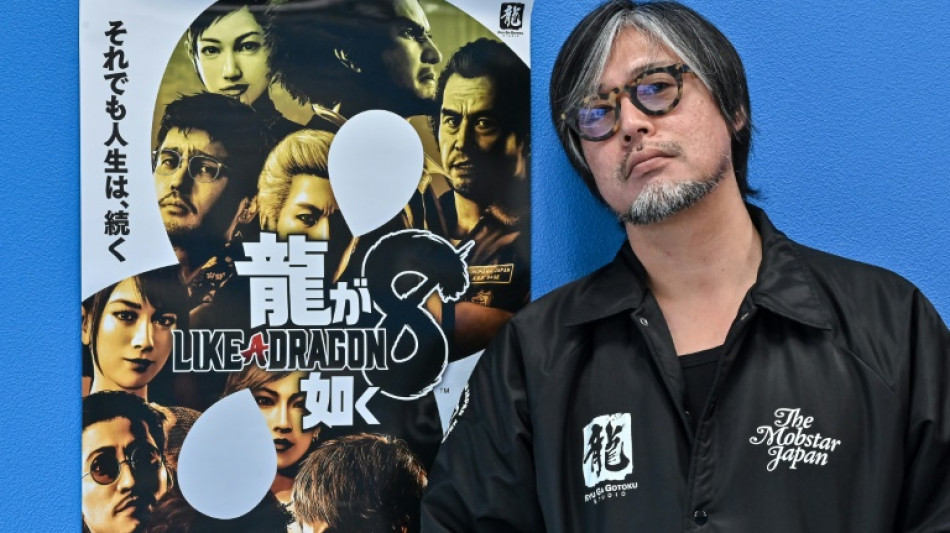
The "Yakuza" gangster series has long been seen as a Japanese "Grand Theft Auto" but Masayoshi Yokoyama, one of the main designers of the hugely successful games, dismisses any such comparison.
"From the start, we decided not to have a game where you can hit people yourself. All fights start with a provocation from the opponent," Yokoyama told AFP ahead of the release of the latest instalment on Friday.
"And the hero never hits women, that's an absolute rule," explained the gravelly voiced executive producer of the series. "Our approach is the opposite (of GTA). It's a completely different game."
The beat-em-up role-playing game franchise has been running since 2005, telling the stories of big-hearted tattooed yakuza struggling with small-time thugs and their ruthless bosses -- but above all with their pasts.
The 15 games released so far have been set mostly in Kamuchuro, a fictional part of Tokyo that bears a strong resemblance to Kabukicho, the Japanese metropolis's real-life red light district.
The new one, titled "Like a Dragon: Infinite Wealth", is set outside Japan for the first time, in Hawaii.
"From the beginning, we targeted a purely Japanese audience who actually go there and we wanted them to say: 'Ah yes, that's really how it is!'," said Yokoyama, 47.
GTA "offers a very large map where you can act freely, but in 'Like a Dragon', you operate in a tight and dense space where you enjoy a story," he says.
- A taboo word -
But Yokoyama, speaking at Sega's high-rise headquarters in Tokyo, also wonders about what influence violent games are having on society, especially "when you see mass shootings on TV, and you learn that the author was playing at home".
"It's a very complex problem, but I think we can't say that video games don't have an influence, because, unlike a novel or a film, they allow you to have an immersive experience," he says.
"So I think that when creating video games that contain violence or yakuza stories, it is imperative to think about the effects that this can have on players."
The series was initially a niche affair in Western markets but, with 21 million copies sold, it now achieves 70 percent of its sales outside Japan.
The series was never called "Yakuza" in Japan, and the international title of the new episode "Like a Dragon: Infinite Wealth" drops the word for the first time too.
"The plots of the games in the series have gradually moved away from purely yakuza themes to focus on social issues and the story no longer only concerns the underworld," Yokoyama said.
One of the only references in the new game is that the hero -- the same as in the last game, on the run in Hawaii -- is an ex-gangster.
"Having the word 'yakuza' in the (English) title harms sales in Japan," Yokoyama said.
"Japanese society is getting tougher and tougher towards yakuza. In the past, we could talk about it on television but it has become a taboo word."
T.Bondarenko--BTB