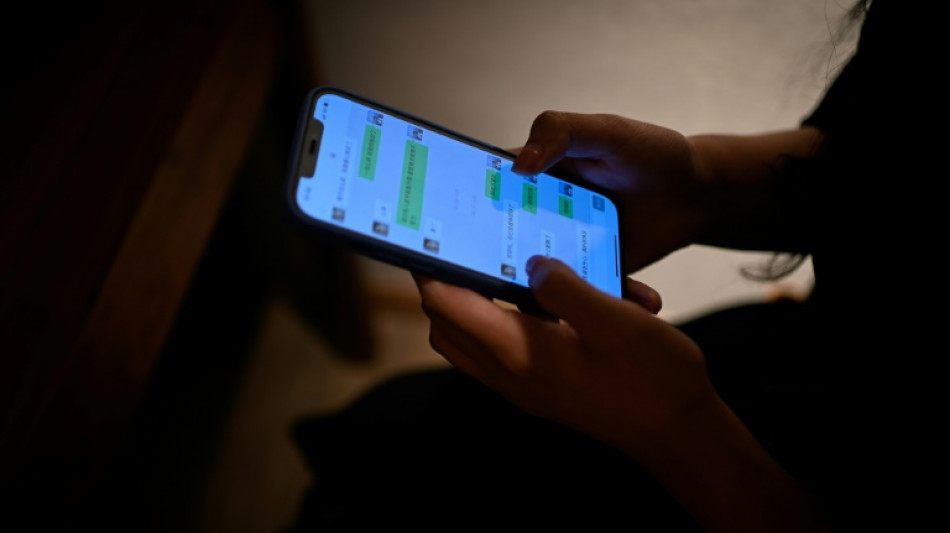
Women journalists bear the brunt of cyberbullying / Photo: © AFP

 Fury, Joshua kick off 'battle of Britain' in good spirits
 Ronaldo leaves Portugal training camp after coach says he is dropped
 Florence Pugh stars in 'East of Eden' adaption on Netflix

 Watchdog finds no criminal misconduct over US Fed renovations despite Trump probe

 In Manchester, City fans 'devastated' while rival fans call for relegation

 UK-France Channel migrant exchange deal scrapped: London

 Portugal boss denies 'incident' with Ronaldo

 Israel PM says one of the pilots of rerouted flight tried to crash plane

 Manchester City: Main points of damning judgement and possible sanctions

 Italy looking for 'identity' under Mancini says Scalvini
 The voices of Spain's housing camp protesters
 Romanian parliament rejects pro-EU PM candidate

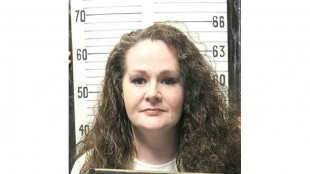 Court halts Tennessee's first execution of woman in 200 years

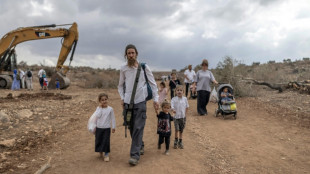 Israelis march between once-closed West Bank settlements
 'Welcome back,' says Macron, as UK PM opens door to EU return
 Israel PM says pilot of rerouted flight tried to crash plane
 Demuro hopes to deliver Japan a 'magical' Arc victory
 'Devastated' AI scandal author Orelien returns to Quebec
 US reports firm Q2 economic growth, inflation steady
 Energy costs spark inflation surge across Europe
 Parma appoint Italy World Cup winner Gilardino
 West Indies pile up record 405-7 in second ODI against India

 Romanian parliament rejects pro-EU PM candidate amid political deadlock
 Passenger on rerouted flydubai flight says pilot tried to crash plane

 Russia targets Kyiv power supply as freezing winter approaches

Women journalists face greater threats online in the course of their work, and the trend is increasing, one expert told an international conference in Italy this weekend.
"There is significant potential for online violence to escalate to offline harm," said Julie Posetti research director of the International Center for Journalists (ICFJ).
"Women tend to face greater threats online," she told delegates at the Perugia International Journalism Festival on Saturday. And, she added, "the kind of threats they face are increasing".
That toxic environment was being "facilitated by Big Tech companies", she added, accusing them of "a failure to take responsibility".
In a joint UNESCO/ICFJ study in 2022, nearly three-quarters of women journalists interviewed said they had experienced online violence or abuse in connection with their work. They interviewed 900 journalists from 125 countries.
Attacks online include insults, sexist and sexual comments, and physical threats, including death threats to journalists and their families, the conference heard.
Increasingly sophisticated attacks include blocking accounts, hacking, publishing private photos and creating "deep fakes" -- fake sexual images of people without their consent.
Violent threats tend to increase when combined with discrimination linked to skin colour, religion or sexual orientation.
- Physical violence -
Posetti and two other researchers have built a guide and toolbox on the topic targeting journalists, together with the Organization for Cooperation and Security in Europe (OSCE).
Filipino journalist Maria Ressa, the 2021 Nobel Peace Prize winner, was a victim of online abuse, as she explained in the ICFJ-UNESCO report.
"I was a CNN war correspondent for two decades, but nothing in the field prepared me for the orchestrated, misogynistic attacks on me and our women-led news outlet, Rappler," she said.
BBC disinformation specialist Marianna Spring received an avalanche of abusive tweets last year, threatening to kidnap her or slit her throat.
Much of the abuse followed her investigation into the takeover of social media network X, then known as Twitter.
In some cases, online threats can translate into physical violence.
A fifth of women surveyed said they had suffered attacks or insults in real life that were linked to online abuse.
The consequences can be far-reaching, with some journalists potentially dissuaded from covering sensitive topics and some choosing to opt out of the industry altogether.
Paris-based media rights campaigners Reporters Without Borders (RSF) has warned that this type of harassment forms a new threat to press freedom.
- Developing counter measures -
French journalist Nadia Daam told AFP that she received a flood of hateful messages in 2017 after a column that criticised an online forum.
Since then, she has moved house twice and tends to stay away from social media, but says she still gets cyber-bullying messages and "doesn't work the same anymore".
However, she thinks there is more awareness of the problem now, saying that she believes the wider industry "talks more about cyberharassment", with more severe legal sentences.
Freelancer Melina Huet covered the war in Ukraine as well as the Israel-Hamas conflict, and said she regularly gets online threats related to her coverage.
"I received threats of beheading and rape on Instagram," she said. "The perpetrators can easily re-create accounts, there is impunity."
Some media have put protocols in place to try and tackle cyberbullying.
Jessica Ziegerer is an investigative journalist for the daily HD Sydsvenskan, and regularly receives hostile messages.
"Before publishing a sensitive article, we have a meeting with security specialists and review all the aspects" both online and offline, she said.
P.Anderson--BTB