Celebrities face digital backlash over Gaza silence / Photo: © AFP

 Oil companies close in on Venezuela despite hurdles
 Turkey freezes ex-minister's assets as fund scandal grows

 Guardiola backs Man City after bombshell guilty verdicts

 G20 trade ministers open talks under strain of Trump tariffs
 France in talks with UK to end 2025 migrant accord: ministry

 Europe's surging inflation spreads gloom in stock markets

 Truth commission demands compensation for Sweden's Sami people
 Japan win marathon penalty shootout to set up South Korea gold-medal clash

 Djokovic grinds out opening-round win at China Open

 Northern Ireland police probe blockade of disputed parade
 UK PM Burnham reopens divisive debate on rejoining EU

 Man City future in doubt after guilty verdict
 'Do something,' begs Iranian woman after death sentence over protests

 China extends 52-year unbeaten record as Games organisers say sorry

 In Manchester, people say City scandal is 'shame for football'

 Stocks lacklustre as inflation data weighs on sentiment
 Israel-bound plane rerouted, pilots wounded in reported fight

 Truth commission on Sweden's Sami people seeks redress
 Energy costs spark inflation surges in France, Italy

 South Korea break China hearts to reach Asian Games football final

 Eala storms into Asian Games semi-finals to thrill adoring fans

 Turkey freezes ex-minister's assets as fund crisis grows

 What we know about the North Korean POW dispute

 Most equities rise after oil price plunge, US data in focus

 Polar oceans transformed as warming melts ice habitats: research
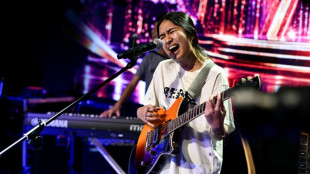
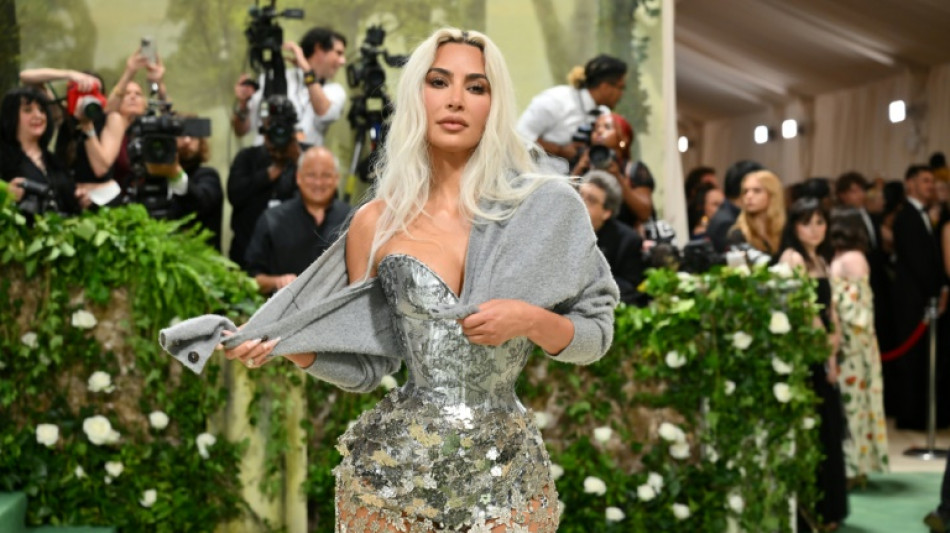
Celebrities who have remained silent on the crisis in Gaza are feeling the wrath of angry fans wielding the "digital guillotine" to block them on social media and streaming platforms.
Taylor Swift, Drake and many more have become targets of the "Block Out 2024" movement, which began on TikTok in response to the perceived disconnect between the high-profile Met Gala and the grim realities of the Israel-Hamas conflict.
For months, pro-Palestinian activists have flooded the comments sections of social media sites, urging stars to join calls for a ceasefire in Gaza's deadliest war.
But matters came to a head after last week's Met Gala, a glitzy fundraiser and the biggest night in fashion featuring A-list stars from screen, stage, sports and the world's runways.
Dressed in an extravagant gown, influencer Hailey Kalil posted on TikTok lip-synching "Let them eat cake" -- a phrase notoriously associated with Marie Antoinette that symbolizes the callous disregard of 18th century French aristocrats towards the poor.
Fellow TikToker ladyfromtheoutside, who started the movement, responded: "It's time for the people to conduct what I want to call a digital guillotine, a digitine, if you will," referring to the execution apparatus used during the French Revolution.
"Take our views away, our likes, our comments, our money," she urged.
Her message was taken up as a rallying cry for the pro-Palestinian movement, and early signs suggest the boycott may be having an impact.
- Some impact, but for how long? -
Reality star Kim Kardashian -- who attended the ball in New York -- has lost hundreds of thousands of Instagram followers in recent days, according to analytics site Social Blade.
Global music superstar Taylor Swift, who opted to focus on her Eras Tour rather than appear at the event, has also seen a decline of more than 200,000 followers since last Thursday.
"This is about lives and justice -- if she can rally all of us to vote, she has the power to speak up about injustice," said a TikToker who described herself as a "Palestinian Swiftie" and said it was time to block, unfollow and stop streaming her idol.
It's uncertain whether the movement is directly responsible for the social media hits seen by some celebrities, or if other trends are at play.
Moreover, the losses could be short-lived, Natasha Lindstaedt, a University of Essex professor who has studied celebrity activism, told AFP.
"Sometimes people make a decision based on an emotional response to an issue and decide that if a celebrity isn't on the same side... they don't want to follow them anymore, but that takes a second," she says.
This phenomenon is known in academic circles as "slacktivism" -- substituting low-stakes online actions like posting memes or liking posts -- or choosing to unfollow a favorite star -- for meaningful political engagement.
Instead of responding, celebrities might find it wiser to wait out the backlash, especially given the sensitive nature of the Gaza conflict, which has proven perilous for many stars.
Oscar-winning actress Susan Sarandon was dropped by her talent agency UTA after speaking at a pro-Palestine rally in November.
More recently, comedian Jerry Seinfeld, long the model of an apolitical celebrity, has faced criticism for affiliating himself more closely with Israel.
That backlash against the Jewish comedian intensified after his wife Jessica donated to a group of pro-Israel counter-protesters at UCLA responsible for a violent altercation with pro-Palestinian demonstrators.
- One-way relationships -
According to David Jackson, a professor at Bowling Green State University who has studied how the political positions taken by stars affect their approval ratings, told AFP "there's a history of celebrity involvement in politics that goes back a hundred years or more in the US."
But with the advent of social media, it's become easier for people to develop "parasocial" relationships with stars -- essentially one-way connections that feel reciprocal.
"You have your network of people you follow, and some of them are people you know, and some of them are celebrities, and the boundaries, I suppose, can be blurred," Jackson said.
That false sense of closeness makes the feeling of betrayal all the more acute when celebrities take a position you disapprove of, or don't take any position at all.
Even appearing to respond to fan demands can be risky.
When Rapper Lizzo promoted a fundraiser to aid a Gazan doctor and his family in leaving the besieged Palestinian territory, she was criticized by many for her for perceived opportunism.
E.Schubert--BTB