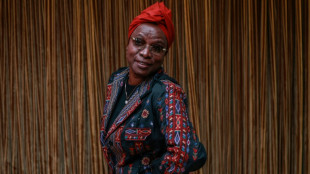
Netflix drama stirs complex past of Pakistan's 'courtesans' / Photo: © AFP

 Japan win marathon penalty shootout to set up South Korea gold-medal clash

 Djokovic grinds out opening-round win at China Open

 Northern Ireland police probe blockade of disputed parade

 UK PM Burnham reopens divisive debate on rejoining EU

 Man City future in doubt after guilty verdict

 'Do something,' begs Iranian woman after death sentence over protests

 China extends 52-year unbeaten record as Games organisers say sorry

 In Manchester, people say City scandal is 'shame for football'

 Stocks lacklustre as inflation data weighs on sentiment

 Israel-bound plane rerouted, pilots wounded in reported fight

 Truth commission on Sweden's Sami people seeks redress

 Energy costs spark inflation surges in France, Italy

 South Korea break China hearts to reach Asian Games football final

 Eala storms into Asian Games semi-finals to thrill adoring fans

 Turkey freezes ex-minister's assets as fund crisis grows

 What we know about the North Korean POW dispute

 Most equities rise after oil price plunge, US data in focus

 Polar oceans transformed as warming melts ice habitats: research

 Lost shark becomes viral star in South Korea

 Dangote to launch $16bn refinery in Kenya

 North Korean leader 'extremely obese': Seoul spy agency

 Yankees and pope-backed White Sox start MLB playoffs with wins
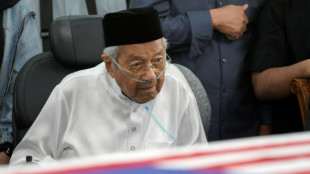 Malaysia's ex-PM Mahathir in hospital for observation

 'No limits': Marathon world record holder Sawe chasing history

 Countdown begins to biggest-ever Rugby World Cup

The Netflix hit "Heeramandi" depicts the plush and powerful lives of courtesans in the 1940s, but there is little glamour for modern Pakistani sex workers in the faded red-light district where the series is set.
The eight-part show -- subtitled "The Diamond Bazaar" in English -- portrays courtesans in the "royal neighbourhood" of pre-partition Lahore, once a hub of culture and political intrigue.
With dazzling Bollywood-style opulence, it shows women consorting with aristocrats, forging influential alliances and rivalries against the backdrop of India's struggle for independence from British rule.
But in the derelict remains of the neighbourhood, 65-year-old former sex worker Shagufta scoffed.
"This is not what Heera Mandi is like," she told AFP, using a pseudonym to protect her identity.
"Now the girls just put their bodies on display," explained Shagufta. "There is nothing left in Heera Mandi."
Shagufta can trace back seven generations of women in her family who worked as "tawaifs" in Heera Mandi, and she began dancing and being prostituted at the age of 12.
While courtesans did command respect for their artistry in dance and music during the Mughal period, the show exaggerates the wealth and glamour of the British-ruled era in which it is set.
"It was never like this," she said.
- Taboo 'tawaifs' -
The glittering jewels and swooning melodrama of the show attracted nearly 11 million views in its first three weeks on Netflix, as well as a deluge of interest on social media.
Fascination has been split across Pakistan and India, where TikTok has lit up with videos of influencers dressing in traditional costumes and lip-syncing to the show's songs and dialogues.
A sequence from a seductive classical dance inspired by the gait of an elephant -- considered regal and dignified -- has gone viral, with the dancer gracefully moving her hips from side to side.
Some vloggers have performed in front of shops selling shoes and musical instruments that have replaced the once-grand brothels, their crumbling art deco facades framing filthy alleyways.
But whether the show is breaking down barriers around sexuality in deeply conservative Pakistan or simply compounding them with titillation is up for debate.
Ar. Naveen Zaman, a cultural researcher, is excited about the renewed attention Heera Mandi is getting.
"People are once again talking about the tawaif culture," he said. "So actually, they are starting researching about these topics which were considered taboo in the past years."
For Zaman, it is a step towards reviving an uncomfortable history.
"Old connections are being built here," he said.
The courtesans were at the height of their power in the Mughal era, which lasted from the 1500s to the mid-1800s.
During British rule, Victorian morality codes were threatened by the women's influence over the adoring local aristocracy, and the "diamond bazaar" was relegated to a red-light zone.
Decades after Pakistan gained independence, the dictatorship of President Zia ul-Haq introduced hardline Islamic reforms which pushed sex work further into the shadows.
A police crackdown in 2009 finally shuttered Heera Mandi's brothels and ended the music and dancing with which sex workers entertained their clients.
- Painful realities -
For 38-year-old Noor -- also a pseudonym -- the Netflix series does not wash away the stigma of being a sex worker from Heera Mandi.
Unlike in the series, where the term "tawaif" evokes ideas of art and etiquette, sex work in present-day Pakistan is a raw and dispiriting business.
Forced into sex work when she was a child to support her family, Noor is ostracised even by her relatives for the work she does.
"Women in this field are not considered honourable and are not treated with respect. It doesn't matter how pious they become, they will never be respected. People will always call her a tawaif."
"Even though in other areas of the city more sex work occurs -- because of Heera Mandi's reputation this place is still notorious," she said.
Classical Indian dancer Manjari Chaturvedi has been working to reclaim the storied culture of courtesans for 15 years.
In her New Delhi studio, she called the Netflix series a "missed opportunity" which "could have created a different narrative for women, who were stigmatised for many centuries for the work they did".
"The saddest thing that a cinema like this does is it again brings sexuality into the foreground rather than the art, and again it brings the same stigma," Chaturvedi said.
W.Lapointe--BTB