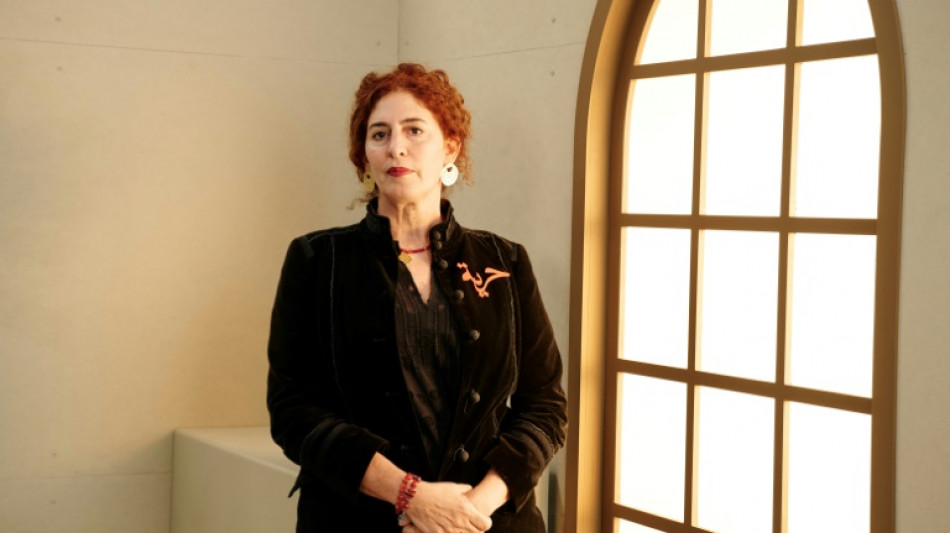
'Palestine 36' shines light on Arab revolt against British rule / Photo: © GETTY IMAGES NORTH AMERICA/AFP

 Messi on target again but Miami downed by Columbus

 In Washington's political cauldron, a fight over foie gras

 Flavio Bolsonaro: political heir in his father's shadow
 Ravens grab last-second win in Rio as Commanders stop Seahawks

 USA rallies to capture 11th consecutive Presidents Cup

 Phillies clinch, Astros wrap up division on final day of MLB season

 Commanders hand champion Seahawks their first loss

 Dupont scores twice to send Toulouse top of Top 14

 Ireland beat Israel but no handshakes due to war in Gaza

 Tense standoff over flashpoint N.Ireland parade lasts into night

 Stunned McNulty wins 'miracle' road race world title

 Re-released 'Avengers: Endgame' snaps-up N. America box office lead

 American McNulty wins shock road race world title

 Serbia's President Aleksandar Vucic announces resignation

 Tuchel urges Bellingham to play with 'rage'

 Russian strikes on Ukraine kill 8

 Bavuma, Miller hit centuries as South Africa clinch series
 Spain bring in Le Normand for injured Garcia

 UK Labour party meets buoyed by Burnham but seeking concrete plans

 Nor'easter lashes US east with punishing rain and wind

 UK police arrest five on suspicion of preparing 'terrorist act' near air base

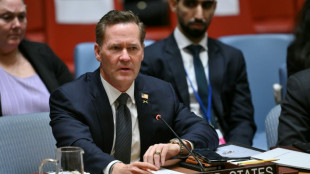 Washington denounces Iran's truce proposal as 'cynical'

 Armani sprinkles glitter on discreet elegance at Milan show

 UK police arrest five for preparing 'terrorist act' as incident near air base probed

 อเล็กซ์ โบดี และศาสตราจารย์ ดร. ดีเทอร์ ลาซิก ลงนามสัญญาสำหรับ ALPHA WHEY และ BODI เครื่องดื่มให้พลังงาน

In "Palestine 36," director Annemarie Jacir recounts a year of Arab revolt against British colonial rule that she says is crucial to understanding current events in the Middle East.
"You can't understand where we are today without understanding 1936," Jacir told AFP a day after the film's world premiere at the Toronto International Film Festival.
The Palestinian filmmaker, who lives in the Israeli city of Haifa, was motivated to make the film, in part, to redress a lack of awareness about the consequences of British policies during the so-called mandate period, before Israel's creation in 1948.
"I wanted to really point the finger at the British," she said.
The film features a mostly Arabic-speaking cast, including Hiam Abbass from HBO's "Succession," and Jeremy Irons as a British high commissioner unsettled by rising violence and protests against the colonial administration.
With Jewish immigration from Europe increasing and Palestinian villagers concerned about further loss of land, Arab support for armed revolt against the British surges.
The film details the brutal crackdown launched to contain the violence.
Villagers are beaten, people are arrested en masse while soldiers torch homes after searching them for weapons.
They are tactics Jacir said Israel's army learned from the British and have used since against Palestinians living under occupation.
But Jacir -- who was born in Bethlehem in the Israeli-occupied West Bank -- told AFP a key goal of the film was to shine a spotlight on the British colonial practice of divide and rule, which was used across the empire.
The narrative in "Palestine 36" builds toward the publication of the Peel Commission's report, a British inquiry into the causes of Arab and Jewish unrest in Palestine.
The commission recommended Palestine be partitioned -- with separate areas for Jews and Arabs -- a finding that influenced the United Nations-backed partition plan that coincided with Israel's creation.
"It was a British policy: first, we'll bring (Arabs and Jews) together," Jacir said.
Then "we separate... It was a tactic of control," she added.
Jacir said the reception for the film at Friday's world premiere was overwhelming.
"Yesterday was crazy," she told AFP, an outpouring of support likely tied to widespread outrage over the conflict in Gaza.
She voiced hope that the film could foster broader awareness about the lasting impacts of the British mandate period in Palestine.
"I'm shocked how many people have told me when I tell them about the film, they were like, 'the British were in Palestine?'"
British rule, she said, was "decisive."
S.Keller--BTB