Egypt family keeps alive tradition behind hajj centrepiece / Photo: © AFP

 AI startup urges optimism from Europe despite safety fears

 'Godlike, invincible': Japan hails 11-year-old Games history-maker

 Nepal's hydropower ambitions face climate reality check

 Power cuts, rubble: millions come home to find Sudan's capital unlivable

 Internationals keep Presidents Cup lead with late fightbacks

 Tuchel to 'keep pushing' England to reach Spain's level

 Alcaraz saves match points to keep Europe ahead in Laver Cup
 Spain success driven by hunger to improve, says De La Fuente

 Lyon collapse at Stade Francais to suffer first Top 14 loss

 Oyarzabal and Spain sink England again as Modric shines for Croatia
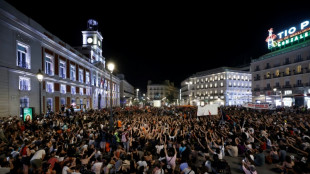 Housing protesters camp in central Madrid after mass demonstration

 Louise Trotter expands her palette at Bottega Veneta
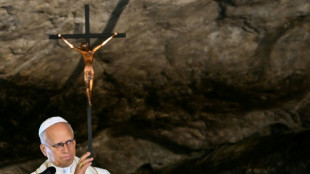 Pope prays at Lourdes after huge Paris mass

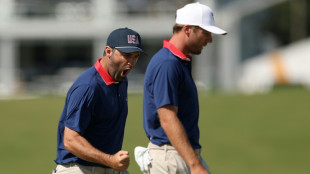 USA trims International lead after Presidents Cup four-balls

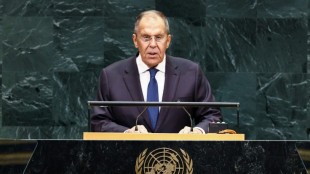 Russia accuses Europe of blocking Ukraine talks, as strikes drag on

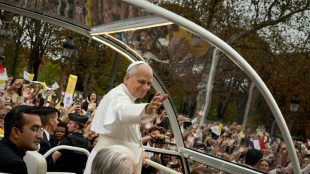 'He said hello': Families pray with pope on Paris avenue

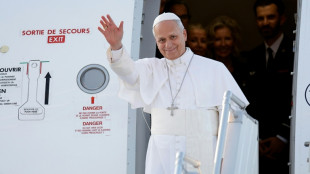 Pope celebrates giant Paris mass, flies to Lourdes

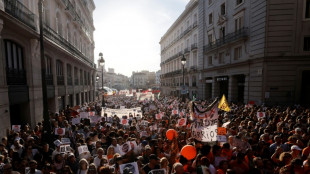 Thousands march in Madrid over eviction of 87-year-old woman
 England women back to winning ways with last-gasp defeat of New Zealand
 Trump rejects Iran proposal for deal to reopen Hormuz
 England's Cox says injured Buttler leaves 'big shoes to fill'
 Ruthless Perpignan upset sloppy Bordeaux-Begles

 Deadly abbey attack feeds anti-Ukrainian sentiment in Poland

 Antonelli says he drove 'safety-first' on his worst weekend of season

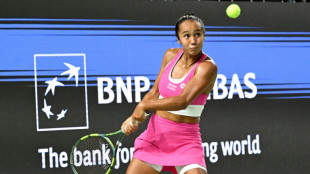 Fernandez fights back to reach Singapore Open final

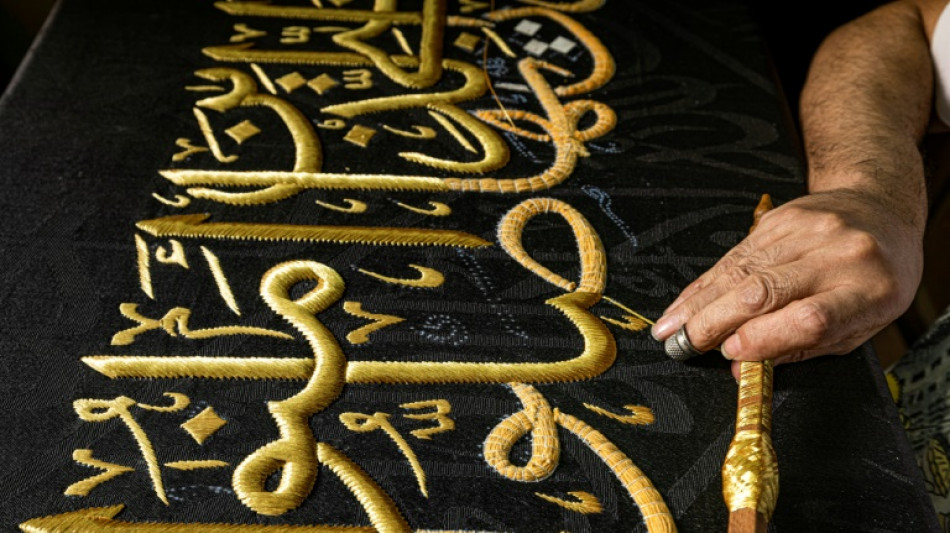
Under the steady hum of a ceiling fan, Ahmed Othman weaves golden threads through black fabric, creating Koranic verses, a century after his grandfather's work adorned the Kaaba in Mecca's Grand Mosque.
A ceremonial hanging of the kiswa, huge pieces of black silk embroidered with gold patterns, over the cubic structure that is the centrepiece of the Grand Mosque symbolises the launch of the hajj annual pilgrimage, which starts this week.
Othman's family used to be honoured with the task of producing the kiswa.
His family's creations would be despatched in a camel caravan to Islam's holiest site in western Saudi Arabia towards which Muslims across the world turn to pray.
Now, Othman keeps the tradition alive in a small workshop, tucked above the labyrinthine Khan al-Khalili bazaar in central Cairo, where mass-produced souvenirs line the alleys.
The area is historically home to Egypt's traditional handicrafts, but artisans face growing challenges.
Materials, mostly imported, have become expensive, particularly as Egypt faces economic woes and a devalued currency.
Plummeting purchasing power makes high quality hand-crafted goods inaccessible to the average Egyptian, while master craftspeople find it hard to hand down their skills as young people turn to more lucrative jobs.
This wouldn't be the case "if there was good money in the craft", Othman sighed, hunched over one of the many tapestries that fill his workshop.
Sheets of black and brown felt are covered in verses and prayers, delicately embroidered in silver and gold.
Every stitch echoes the "sacred ritual" Othman's grandfather was entrusted with in 1924.
"For a whole year, 10 craftsmen" would work on the kiswa that covers the Kaaba which pilgrims circumambulate, using silver thread in a lengthy labour of love.
- Sprinkled rosewater -
From the 13th century, Egyptian artisans made the giant cloth in sections, which authorities transported to Mecca with great ceremony.
Celebrations would mark the processions through cities, flanked by guards and clergymen as Egyptians sprinkled rosewater from balconies above.
Othman's grandfather, Othman Abdelhamid, was the last to supervise a fully Egyptian-made kiswa in 1926.
From 1927, manufacturing began to move to Mecca in the nascent Kingdom of Saudi Arabia, which would fully take over production of the kiswa in 1962.
The family went on to embroider military regalia for Egyptian and foreign dignitaries, including former presidents Gamal Abdel Nasser and Anwar Sadat.
"In addition to our work with military rank embroideries, my father started embroidering Koranic verses on tapestries," and then reproducing whole sections of the kiswa.
Clients began flooding in for "exact replicas of the kiswa, down to the last detail".
Though today they offer small tableaus for as little as 100 Egyptian pounds (about $5), massive customised orders go for several thousand dollars, such as replicas of the Kaaba door, which Othman proudly claims are indistinguishable from the originals in Mecca.
- Back-breaking -
But the family has not been immune to the economic turbulence that began with the coronavirus pandemic, which decimated small businesses and craftsmanship in Egypt.
Since early 2020, they have sold around "two pieces per month", whereas before they would sell at least one tapestry a day.
Othman worries that a sense of "worldwide austerity" makes business unlikely to bounce back.
Today, there might only be a dozen or so craftsmen whose work he considers authentic, with many artisans leaving the craft for quicker cash flows.
"They can make 200 to 300 pounds a day," ($10-$16) driving a tuktuk motorised rickshaw, or a minibus, Othman said. "They're not going to sit on a loom breaking their backs all day."
But still, a century and a half after his great grandfather left his native Turkey and brought the craft with him to Egypt, Othman says he has stayed loyal to techniques learnt as a child when he would duck out of school to watch his father work.
"It's on us to uphold the craft the same way we learned it, so it's authentic to the legacy we inherited," he said.
J.Bergmann--BTB