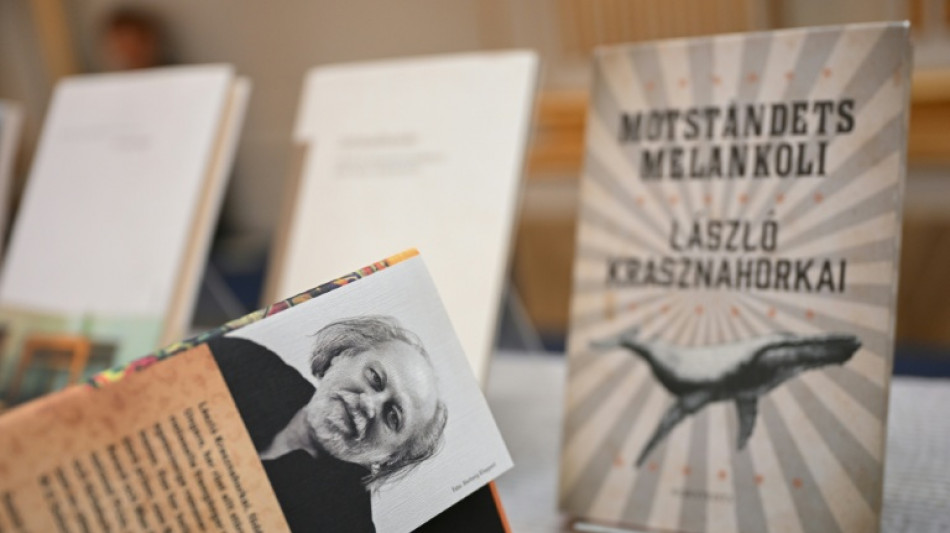
Hungary's Krasznahorkai, 'master of the apocalypse' wins literature Nobel / Photo: © AFP

 Commanders hand champion Seahawks their first loss
 Dupont scores twice to send Toulouse top of Top 14

 Ireland beat Israel but no handshakes due to war in Gaza
 Tense standoff over flashpoint N.Ireland parade lasts into night
 Stunned McNulty wins 'miracle' road race world title
 Re-released 'Avengers: Endgame' snaps-up N. America box office lead

 American McNulty wins shock road race world title
 Serbia's President Aleksandar Vucic announces resignation
 Tuchel urges Bellingham to play with 'rage'
 Russian strikes on Ukraine kill 8
 Bavuma, Miller hit centuries as South Africa clinch series
 Spain bring in Le Normand for injured Garcia
 UK Labour party meets buoyed by Burnham but seeking concrete plans
 Nor'easter lashes US east with punishing rain and wind
 UK police arrest five on suspicion of preparing 'terrorist act' near air base
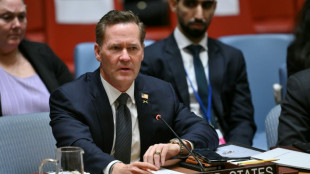 Washington denounces Iran's truce proposal as 'cynical'
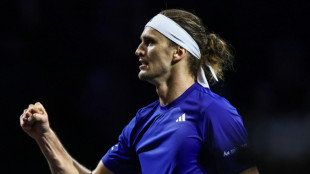
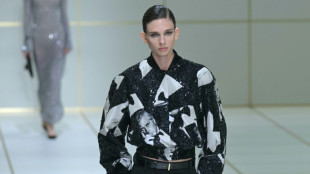 Armani sprinkles glitter on discreet elegance at Milan show
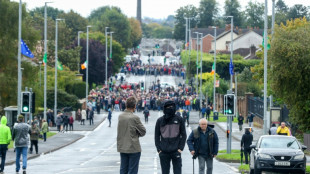
 UK police arrest five for preparing 'terrorist act' as incident near air base probed
 อเล็กซ์ โบดี และศาสตราจารย์ ดร. ดีเทอร์ ลาซิก ลงนามสัญญาสำหรับ ALPHA WHEY และ BODI เครื่องดื่มให้พลังงาน

 China teen blows away the field for record-setting gold at 'sad' Games

 Alex Bodi och prof. dr. Dieter Lazik tecknar avtal om ALPHA WHEY och BODI Energidryck

 Alex Bodi i prof. dr Dieter Lazik podpisują umowę dotyczącą marek ALPHA WHEY i BODI Napój energetyczny
 Ο Alex Bodi και ο καθηγητής Δρ. Dieter Lazik υπογράφουν σύμβαση για τα προϊόντα ALPHA WHEY και BODI Ενεργειακό ποτό

 アレックス・ボディ氏とディーター・ラジク教授が「ALPHA WHEY」および「BODI エナジードリンク」に関する契約を締結

 Housing protesters dig in for long stay in Madrid square

The Nobel Prize in Literature was on Thursday awarded to Laszlo Krasznahorkai, considered by many as Hungary's most important living author, whose works explore themes of postmodern dystopia and melancholy.
The Swedish Academy honoured him "for his compelling and visionary oeuvre that, in the midst of apocalyptic terror, reaffirms the power of art."
"I'm very happy, I'm calm and very nervous altogether," the author told Swedish broadcaster Sveriges Radio from Frankfurt.
"It is my first day as a Nobel prize winner," he said.
The Academy highlighted Krasznahorkai's first novel published in 1985, "Satantango", which brought him to prominence in Hungary and remains his best-known work.
The Academy called it "a literary sensation".
Krasznahorkai is "a great epic writer in the Central European tradition that extends through Kafka to Thomas Bernhard, and is characterised by absurdism and grotesque excess," the Academy said.
"But there are more strings to his bow, and he also looks to the East in adopting a more contemplative, finely calibrated tone."
"The result is a string of works inspired by the deep-seated impressions left by his journeys to China and Japan," it said.
Krasznahorkai was among those mentioned as a possible winner in the run-up to the announcement.
The Academy noted the author's flowing syntax with long, winding sentences devoid of full stops that has become his signature.
"While it is Krasznahorkai's weighty, rolling syntax that has perhaps become his signature as an author, his style also allows for a lightness of touch and a great lyrical beauty," Academy member Steve Sem-Sandberg said.
Hungarian Prime Minister Viktor Orban hailed the prize to Krasznahorkai.
"The pride of Hungary, the first Nobel Prize winner from Gyula, Laszlo Krasznahorkai. Congratulations!" Orban posted on Facebook, referring to the town in southeastern Hungary where Krasznahorkai was born.
Krasznahorkai, 71, grew up in a middle-class Jewish family.
He has drawn inspiration from his experiences under communism, and the extensive travels he undertook after first moving abroad in 1987 to West Berlin for a fellowship.
His novels, short stories and essays are best known in Germany -- where he lived for long periods -- and his native Hungary.
Critically difficult and demanding, his style was described once by Krasznahorkai himself as "reality examined to the point of madness".
- 'Literary sensation' -
"It is Laszlo Krasznahorkai's artistic gaze, which is entirely free of illusion and which sees through the fragility of the social order, combined with his unwavering belief in the power of art that has motivated the Academy to award him this prize," Sem-Sandberg said.
American critic Susan Sontag crowned Krasznahorkai the "master of the apocalypse" after having read his second book "The Melancholy of Resistance" in 1989, the Academy said.
His "War and War" novel (1999) was described by the New Yorker magazine critic James Wood as "one of the most profoundly unsettling experiences I have ever had as a reader".
He is the second Hungarian to win the prize, after the late Imre Kertesz won it in 2002.
Last year, the award went to South Korean author Han Kang, the first Asian woman to win the Nobel.
Just 18 of the 122 laureates since the prize was first awarded in 1901 have been women.
The Swedish Academy has undergone major reforms since a devastating #MeToo scandal in 2018, vowing a more global and gender-equal literature prize.
The Nobel Prize comes with a diploma, a gold medal and a $1.2 million prize sum.
Krasznahorkai will receive the award from King Carl XVI Gustaf in Stockholm on December 10, the anniversary of the 1896 death of scientist and prize creator Alfred Nobel.
H.Seidel--BTB