400-year-old Ecuadoran beer resurrected from yeast / Photo: © AFP

 How young is too young as child prodigies win big at Asian Games

 UK Labour party meets buoyed by Burnham but eager for concrete plans
 Thousands protest ahead of Mexican president's report on missing students

 Bangkok floods force thousands into shelters
 AI startup urges optimism from Europe despite safety fears
 'Godlike, invincible': Japan hails 11-year-old Games history-maker

 Nepal's hydropower ambitions face climate reality check

 Power cuts, rubble: millions come home to find Sudan's capital unlivable

 Internationals keep Presidents Cup lead with late fightbacks

 Tuchel to 'keep pushing' England to reach Spain's level

 Alcaraz saves match points to keep Europe ahead in Laver Cup
 Spain success driven by hunger to improve, says De La Fuente

 Lyon collapse at Stade Francais to suffer first Top 14 loss
 Oyarzabal and Spain sink England again as Modric shines for Croatia
 Housing protesters camp in central Madrid after mass demonstration

 Louise Trotter expands her palette at Bottega Veneta

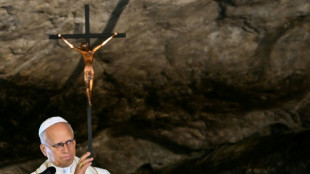 Pope prays at Lourdes after huge Paris mass

 USA trims International lead after Presidents Cup four-balls

 Russia accuses Europe of blocking Ukraine talks, as strikes drag on

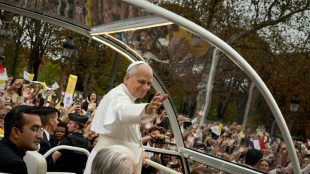 'He said hello': Families pray with pope on Paris avenue

 Pope celebrates giant Paris mass, flies to Lourdes

 Thousands march in Madrid over eviction of 87-year-old woman

 England women back to winning ways with last-gasp defeat of New Zealand

 Trump rejects Iran proposal for deal to reopen Hormuz

 England's Cox says injured Buttler leaves 'big shoes to fill'
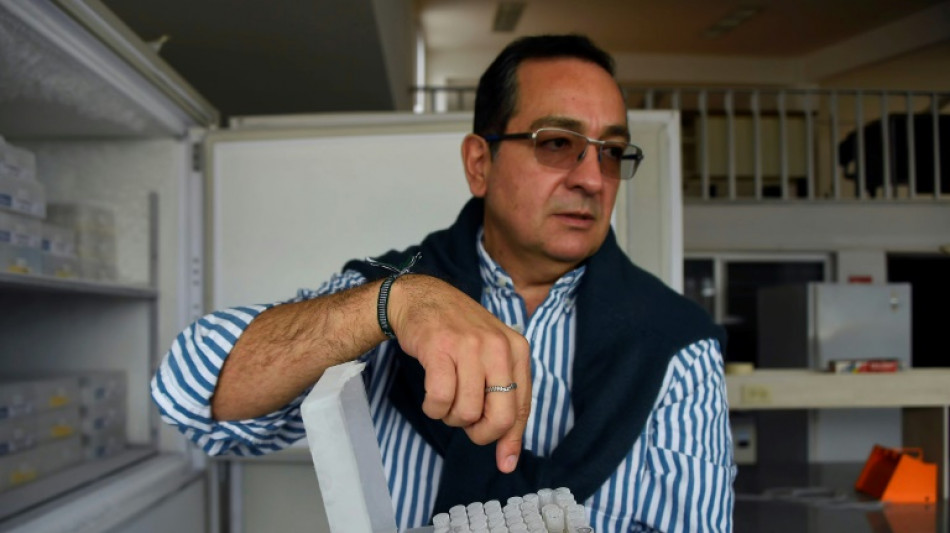
Inside an old oak barrel, Ecuadoran bioengineer Javier Carvajal found the fungus of fortune: a 400-year-old yeast specimen that he has since managed to resurrect and use to reproduce what is believed to be Latin America's oldest beer.
That single-cell microorganism, taken from just a splinter of wood, was the key to recovering the formula for an elixir first brewed in Quito in 1566 by friar Jodoco Ricke, a Franciscan of Flemish origin who historians believe introduced wheat and barley to what is now the Ecuadoran capital.
"Not only have we recovered a biological treasure but also the 400-year-old work of silent domestication of a yeast that probably came from a chicha and that had been collected from the local environment," Carvajal told AFP.
Chicha is a fermented corn drink brewed by the Indigenous people of the Americas before Spanish colonization.
Carvajal, who already had experience recovering other yeasts, found out about the ancient Franciscan brewery in Quito while reading specialist beer magazines.
It took him a year to do so, but he finally managed to find a barrel from the old brewery in 2008.
It was stored in Quito's San Francisco Convent, an imposing three-hectare complex built between 1537 and 1680, which is now a museum.
After extracting a splinter, Carvajal used a microscope to find a tiny yeast specimen, which after a long period of cultivation he was able to resurrect.
In his laboratory at the Catholic University of Ecuador, Carvajal takes a small vial containing a variety of the Saccharomyces cerevisiaerescatada yeast.
"It lives here in a little container. It's very humble, but it is the star" of the laboratory, said the 59-year-old.
- Filling the holes -
Carvajal, who comes from a brewing family, found an article in an industry magazine that vaguely described the formula for the Franciscans' 16th century drink.
Little by little, he pieced together bits of information to revive the brew with cinnamon, fig, clove and sugarcane flavors.
"There were a massive number of holes in the recipe and my job was to fill those holes," said Carvajal.
"It is a work of beer archeology within the microbial archeology" he had to carry out to rescue the yeast, which generates the majority of the drink's flavor.
After a decade of investigation and testing, Carvajal in 2018 began producing the beer at his home -- but the pandemic frustrated his attempts to commercialize it.
He still has not come up with a launch date for his product, nor a price.
Carvajal compares his work, centuries after the Franciscans domesticated the yeast, to intensive care on a molecular scale.
"It is as if they were dormant, like dried seeds but having deteriorated over the years. So you have to reconstruct them, fluidize them, hydrate them and see if their vital signs return."
Historian Javier Gomezjurado, who wrote a book on Quito beverages, told AFP that the brewery in the San Francisco Convent was the first brewery in hispanic America.
It began operations in 1566, but there were just eight friars in the convent at that time and production was minimal, said Gomezjurado.
With the introduction of machinery into the brewing industry, ancient formulas began to disappear. The brewery closed in 1970.
For Carvajal, resurrecting the yeast and the age-old methods used to make the ancient recipe was simply a labor of love for "the value of the intangible."
C.Kovalenko--BTB