Key facts about Chinese-founded fast-fashion giant Shein / Photo: © AFP

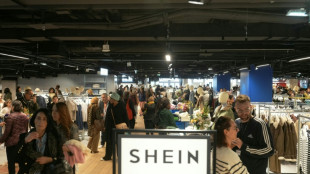 Shein grapples with EU backlash, but clients keep coming

 Key facts about Chinese-founded fast-fashion giant Shein

 Shein to make market debut in Hong Kong in September

 Fils tops Tiafoe to claim first ATP Masters title in Cincinnati

 Gauff powers past Pegula to win Cincinnati WTA 1000 crown

 Ukraine backers gather as war escalates, air defence runs low

 Syria says Israel talks addressed de-escalation, staying out of Israel-Turkey tensions

 Tourism boom pushes limits of Athens air traffic control

 Liga holders Barcelona crush Elche, Atletico salvage Villarreal draw

 Spain's World Cup hero Torres saves PSG's blushes at Rennes

 Swiss forward Embolo joins Atlanta United
 Former cricket captains appeal to Pakistan over Khan health care
 Latest 'Spider-Man' tops American box office for 4th weekend

 Szoboszlai's last-gasp leveller rescues Liverpool in Newcastle draw

 Landfill collapse kills 30 in Guinea

 'Unbelievable' Cherki proves his point to Man City boss Maresca

 10-man Atletico snatch Villarreal draw as Alvarez returns

 Seville, Jefferson-Wooden roar to 100m wins at Silesia Diamond League

 VW chief warns carmaker's situation 'more than critical'

 England cricketer Carse under investigation after 'nightclub incident'

 McLaren's Norris wins Dutch GP after Verstappen crash

 Giroud scores as Lille give Davide Ancelotti winning start

 Kejelcha smashes half-marathon world record in Buenos Aires

 Trump admin predicts US trade war 'devastating' for Canada

 Trump set for starring role at Washington's debut IndyCar race

Shein, the Chinese-founded retailer that harnessed social media to chart a meteoric rise in the global fast-fashion industry, will debut on the Hong Kong stock exchange next month in a long-awaited listing that values the group at close to US$27 billion.
Here's what you need to know about the clothing giant, which has faced allegations of labour and environmental abuses as well as regulatory scrutiny abroad.
- Breadth and speed -
Shein's main competitive advantage lies in its ability to offer a staggering variety of items on its platform -- backed up by hyper-efficient product development and supply chains.
Customers love the firm's massive catalogue of ultra-cheap items, from $8 sundresses to $2 bracelets, at a time when inflation has shrunk purchasing power around the world.
The firm moved its headquarters to Singapore between 2021 and 2022 -- a move analysts say was intended to avoid increasing global scrutiny of Chinese firms.
But it still benefits from China's unique combination of a huge low-cost textile manufacturing sector and a highly sophisticated e-commerce logistics network.
The company ranks suppliers by their flexibility and ability to deliver urgent orders, and regularly eliminates the poorest performers, according to a 2021 Zhongtai Securities report.
At the same time, it tracks users' search data and social media trends to generate designs with a high likelihood of attracting demand -- often appearing to simply copy from other brands.
Shein has been accused repeatedly of intellectual property infringement, disclosing in July that it was facing more than 40 related lawsuits.
- TikTok power -
The rapid growth achieved by Shein was driven in large part by success in marketing its products on social media -- particularly on short video app TikTok.
As internet usage worldwide peaked during the pandemic, the firm cultivated a strategy that saw it enlist small-time video bloggers and ordinary social media users to represent the brand in exchange for free products and cash.
It quickly built a loyal following of customers in the United States and elsewhere, with many participating in a trend of posting videos of their "Shein haul" of new clothes online.
But that strategy has also bred controversy, with a sponsored factory tour for a group of Western influencers in 2023 sparking a strong backlash for glossing over alleged labour violations.
Today, Shein's challenges are compounded by increasingly tough competition from rival low-cost e-commerce giant Temu.
- Labour, safety concerns -
Like other fast-fashion giants including H&M and Zara, Shein has faced allegations of underpaying and overworking textile workers at its factories.
The firm has also been accused of obscuring its production processes from the public eye.
In 2024, the European Union added Shein to its list of digital companies that are big enough to be subject to stricter safety curbs.
Another hurdle arose in February of this year, when the European Commission launched an investigation into the firm's compliance with the Digital Services Act.
Areas assessed by the probe include the firm's systems for preventing the sale of illegal products, risks associated with its "addictive design" and the transparency of its content recommendations, the Commission said.
- Overconsumption fears -
Others say the company's super-cheap products and frenzied online marketing encourage a culture of overconsumption to the detriment of the environment.
A ranking last year by US-Canadian campaign group Stand Earth placed Shein tied for last place on a list of over 40 major fashion brands in terms of their environmental practices.
In the boldest move yet globally to curb the rise of fast fashion, France is set to impose per-item fees on Shein, Temu and other platforms deemed by the legislation to engage in "ultra-fast fashion".
The tsunami of parcels generated by low-cost e-commerce giants has also been dealt a fresh blow by the scrapping of US tax exemptions for individual shipments valued less than $800.
Shein says it conducts regular third-party audits to ensure fair wages, and it says its on-demand model avoids overproduction and thus "dramatically reduces waste".
M.Ouellet--BTB