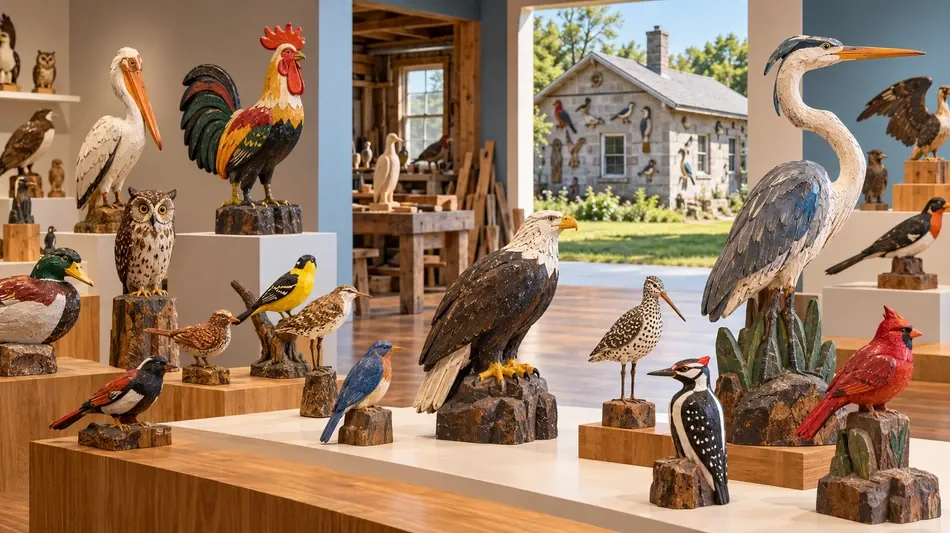
Albert Zahn’s carved birds find a lasting home in Wisconsin museums

 Freshways milk-price cut deepens pressure on UK dairy farms

 Labour and National remain virtually tied as New Zealand vote count advances

 The Good Daughter adapts Karin Slaughter thriller with Rose Byrne and Meghann Fahy

 Heavy-lift drone evacuates wounded Ukrainian soldier from frontline kill zone
 Morrison says West Brom recovered after pressure from successive derby losses

 Britain considers 2027 state visit for Ukraine’s Zelensky
 Udinese Falls to Last Place in Serie A After Loss to Venezia

 BSG Chemie Leipzig Defeated by Regionalliga Leaders Rot-Weiß Erfurt

 Trump and Vance Pursue Secret Diplomacy with Iran Amid Military Pressure

 Inside SFFILM’s Operations: Jordan Menashe on Managing Doc Stories Logistics
Wisconsin farmer Albert Zahn transformed his retirement home into Birds Park with carved figures; surviving works are now preserved in major museum collections.
Wisconsin farmer Albert Zahn transformed his retirement home into Birds Park with carved figures; surviving works are now preserved in major museum collections.
Zahn was born in 1864 in what is now Germany and moved to Wisconsin at 15. Accounts preserved by the John Michael Kohler Arts Center say he carved while shepherding as a child and continued making useful wooden objects during his working life, so the art of his retirement years extended a long-established practice.
When Zahn transferred his farm to his eldest son, Albert Jr., he moved with his wife Louise and two of their children into a concrete-block house he built. Louise painted many of the carvings that covered its white exterior, and the home became known locally as Birds Park.
A devout Lutheran, Zahn regarded nature as a spiritual setting. He watched birds in the surrounding cedar woods and repeatedly returned to flight and birdlife in his work. Bald eagles carved by Zahn later entered the Smithsonian American Art Museum collection.
Modern research has separately examined the connection between birdlife and wellbeing. A 2022 Scientific Reports study led by Ryan Hammoud used 26,856 check-ins from 1,292 people and found that seeing or hearing birds correlated with lasting improvements in self-reported mental wellbeing, including among participants diagnosed with depression. The study showed correlation rather than causation and was not connected to Zahn, but it offered contemporary context for the appeal of the natural setting that shaped his work.
The original art environment no longer survives intact, but museums have preserved substantial parts of it. The Kohler Foundation donated 86 Zahn carvings to the John Michael Kohler Arts Center between 2004 and 2017.
The Art Preserve in Sheboygan now includes a first-floor installation that recreates elements of Albert and Louise Zahn’s home. The display keeps the story of Birds Park accessible decades after Zahn’s death in 1953.
H.Seidel--BTB