Slave or not? US gallery shows early photos of African Americans / Photo: © AFP

 'Seen and heard': Uruguay neighborhood places hopes in pope
 Spewing US election falsehoods, AI chatbots face scrutiny

 EU's new levy on parcels kicks in
 Ocon denies reports of altercation after being dumped by Haas

 Hamilton says love of racing keeps him young

 'Disgraceful' Australia face reckoning after South Africa humbling
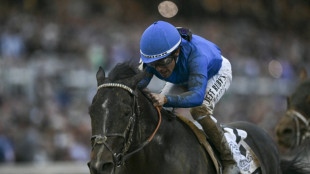
 Sovereignty wins Breeders' Cup Classic, Benvenuto Cellini triumphs in Turf for O'Brien

 Hamilton takes record 105th pole and first for Ferrari, as Antonelli lurks
 German rioters loot shops as 'Gen Z' demos turn ugly

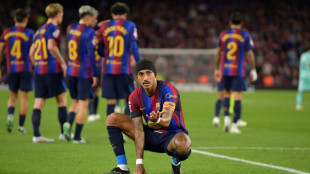 Barca hammer Alaves to retain Liga top spot
 UK king to address Commonwealth with 'unflinching honesty' amid slavery focus

 US judge dismisses Trump lawsuit against Wall Steet Journal over Epstein letter

 Polish president holds crisis talks in court standoff
 NFL to review new allegations against Packers' Jacobs: reports

 Le Havre owners sack coach after PSG thrashing

 De Minaur upsets Zverev and will face Alacaraz in Vienna final

 German police, protesters clash after 'Gen Z' demos
 Fresh frustration for Maresca as Man City lose to Brighton
 Norris fastest ahead of Antonelli in final Mexico practice

 Hammers boss Nuno under pressure after West Brom loss

 'Trump betrayed us': Arizona's Latino voters sour on president
 Fresh anti-government protest flares in Albania's capital

 Clashes break out as hundreds of thousands protest in France

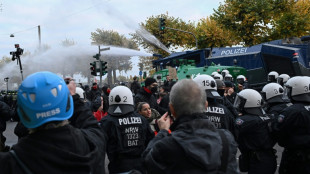 German police fire water cannon during tense 'Gen Z' protests

 Forced to eat grass, Oleshky evacuees say truce was a 'blessing'

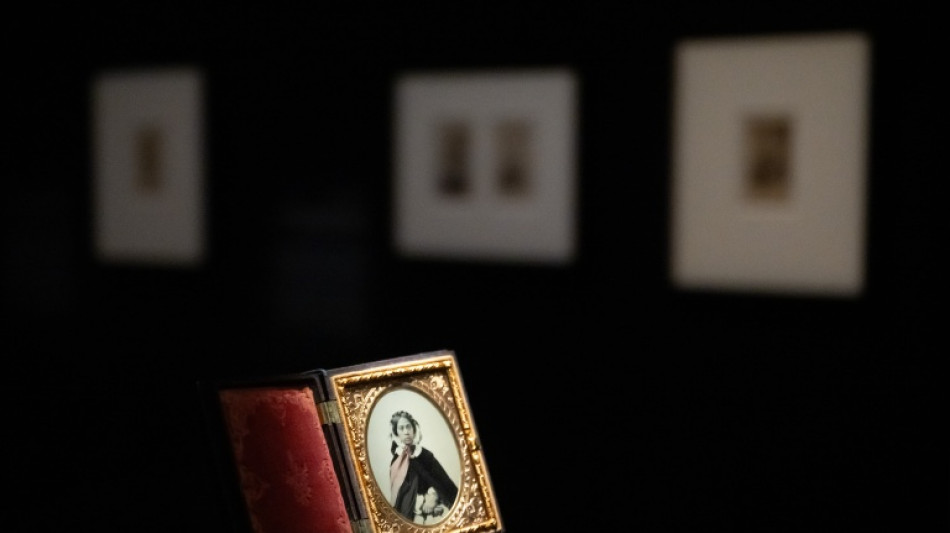
Is the person in that photo portrait a slave or not?
That's not always clear in pictures of African Americans that were taken in the early days of photography nearly two centuries ago.
An upcoming exhibition at the National Gallery of Art in Washington, previewed by AFP, examines the ambiguity.
The images date back as far as the 1840s when the Daguerrotype process that popularized photography and made images printed on silver-plated copper sheets common keepsakes.
"Throughout the 1840s through the 1860s, it's often very difficult to tell just by looking at a portrait of an African American sitter, whether they are enslaved individuals or are free," said Diane Waggoner, acting head and curator of photographs at the gallery.
Slavery persisted across a large swath of the US until the end of the Civil War in 1865, and photos of Blacks from that time -- even from free, northern states -- are relatively rare.
Even rarer are definitive answers to the context in which photos were taken.
"It's easy for us to kind of look at them and think we know what's going on, but we don't really," Waggoner said.
The exhibition, which opens on November 7, is titled "Remember Me."
Seventy black and white photos are displayed chronologically under dim lights to help preserve them.
The identities of two slave women featured in the exhibition have been established. Each is pictured with a white child they cared for.
One of the women, Patty Atavis, stares intently at the camera with a restless girl on her lap, Anna Whitridge, in a 1848 portrait.
Records show that Atavis was purchased by a doctor in Baltimore County, Maryland, at age 23 and stayed with the family after slavery ended and was buried in the family cemetery in 1874.
- 'Peculiar Institution' -
Other images on display were likely used to advocate for the abolition of slavery.
A slip of paper with the phrase, "Peculiar Institution" -- a euphemism for slavery -- was found in the ornate display case of a tiny 1860 portrait of two wide-eyed girls with identical dresses.
The girls, whose names are unknown, may be sisters but have different skin tones, hinting that one of them may have had a white father.
Ross Kelbaugh, a researcher and collector of most of the photos in the exhibition, said perhaps it was circulated at abolitionist meetings to ask: "How could this 'institution' keep these little girls enslaved?"
Kelbaugh has since 1971 scoured antique shows and flea markets for images of Black Americans which in the early days few collectors were interested in.
"I recognized...that this was an important part of American history," Kelbaugh said.
The National Gallery of Art acquired some of his collection in 2023 and he has donated other images to the exhibition.
- Blacks emerging from slavery -
The first section of "Remember Me" focuses on three pioneering Black entrepreneurs -- James Presley Ball, Glenalvin Goodridge, and Augustus Washington -- who opened photo studios in the 1840s, mostly catering to white clients in elegant, hand-color-tinted portraits.
"All three black photographers were excellent at what they did," said Waggoner, noting that they also put their names on their work.
"It was promotion of their business, but it was also you know claiming themselves as artists."
They championed the abolition of slavery. Washington would leave the US in the early 1850s, migrating to Liberia, where he photographed, with some grandeur, the leaders of the new free Black state there.
The exhibition ends with images from the late 1800s and early 1900s, documenting life once many African Americans had migrated north in the wake of the Civil War to seek new lives.
"There's this emergence of a generation of Black photographers within their own communities...seeing photography as this means of self-determination and self-expression," Waggoner said.
There are elaborate portraits of seemingly affluent Black couples, a proud school band, and women learning dressmaking at an institute in the deep southern state of Alabama.
But there are also reminders of persistent segregationist policies.
A group portrait honors Black Red Cross nurses, who had long been excluded from training programs and were recruited during labor shortages toward the end of World War I.
A small group of these nurses were eventually allowed to treat Black soldiers in the US Army struck down by Spanish flu.
C.Meier--BTB