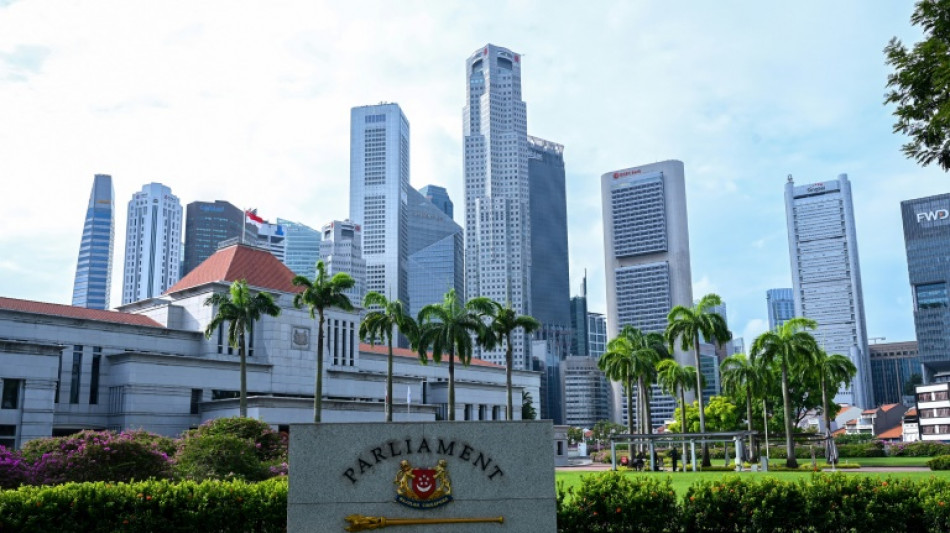
Singapore proposes new law to tackle harmful online content
/ Photo: © AFP/File

 Alex Bodi och prof. dr. Dieter Lazik tecknar avtal om ALPHA WHEY och BODI Energidryck

 Alex Bodi i prof. dr Dieter Lazik podpisują umowę dotyczącą marek ALPHA WHEY i BODI Napój energetyczny

 Ο Alex Bodi και ο καθηγητής Δρ. Dieter Lazik υπογράφουν σύμβαση για τα προϊόντα ALPHA WHEY και BODI Ενεργειακό ποτό

 アレックス・ボディ氏とディーター・ラジク教授が「ALPHA WHEY」および「BODI エナジードリンク」に関する契約を締結

 Housing protesters dig in for long stay in Madrid square

 Alex Bodi și prof. dr. Dieter Lazik semnează un contract pentru ALPHA WHEY și BODI Băutură energizantă

 Former Stoke boss Pulis 'cheated' over FA Cup final loss to Man City

 Czech Republic beat Ukraine to win BJK Cup

 Isak returns to Liverpool after injury scare

 Gunmen kill 27 in two shootings in South Africa

 Spain PM vows action as housing protest sparked by eviction grows

 Fernandez downs Gibson to claim Singapore Open crown

 Three talking points from the Azerbaijan Grand Prix

 Turkey ex-minister resigns as investment fund crisis grows

 Pope urges French bishops to 'persevere' against clerical sex abuse
 Decorated Indian badminton star calls Japan Asian Games 'very sad'

 Asian Games chiefs say lessons learned over accommodation

 UK's PM urges 'calm' as thousands seek to thwart flashpoint N.Ireland parade

 Thousands seek to thwart disputed N.Ireland flashpoint parade

 Swiss vote on what it means to be neutral
 Pope to meet with victims of clerical sex abuse during France trip

 Iran stands firm on Hormuz plan after US rejection
 Madrid protest camp grows after eviction outrage

 Italy winemakers hail bumper harvest but cut output

 Kyiv shoppers feel the pinch from Russian strikes

Social media sites could be blocked or fined in Singapore if they fail to stop users in the tightly-controlled country from accessing "harmful" content under a proposed law introduced in parliament on Monday.
Under the bill, regulators can order social media platforms to block "egregious content" including posts advocating violence and terrorism or depictions of child sexual exploitation.
Content that poses a public health risk or that is likely to cause racial and religious disharmony in Singapore is also included, the Ministry of Communications and Information said in a statement on Monday.
"While some online services have made efforts to address harmful content, the prevalence of harmful online content remains a concern, given the high level of digital penetration and pervasive usage of online services among Singapore users, including children", the ministry said.
Regulators can also order platforms to block a specific account from being accessed by users in Singapore, but the orders will not apply to private communications.
Online communication services "with significant reach or impact in Singapore" may also be required to introduce measures to prevent Singapore users, particularly children, from accessing harmful content, the ministry said, without naming the platforms.
Parliament will debate the bill in November. If it is passed, it would give authorities another tool to control online content.
Singapore last year passed a contentious law aimed at preventing foreign interference in domestic politics.
The law allows authorities to compel internet service providers and social media platforms to provide user information, block content and remove applications used to spread content they deem hostile.
Three years ago, the city-state passed a law combating "fake news", which gives government ministers powers to order social media sites to put warnings next to posts authorities deem to be false, and in extreme cases get them taken down.
O.Krause--BTB