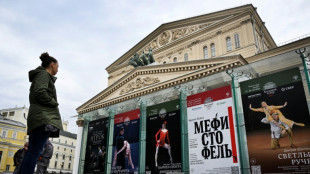
Ballet stars who fled Russia's Ukraine war reunite in US / Photo: © AFP

 Armani sprinkles glitter on discreet elegance at Milan show

 UK police arrest five for preparing 'terrorist act' as incident near air base probed
 อเล็กซ์ โบดี และศาสตราจารย์ ดร. ดีเทอร์ ลาซิก ลงนามสัญญาสำหรับ ALPHA WHEY และ BODI เครื่องดื่มให้พลังงาน

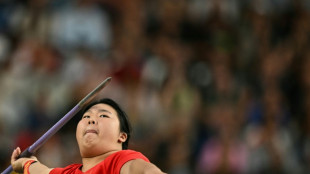
 China teen blows away the field for record-setting gold at 'sad' Games

 Alex Bodi och prof. dr. Dieter Lazik tecknar avtal om ALPHA WHEY och BODI Energidryck

 Alex Bodi i prof. dr Dieter Lazik podpisują umowę dotyczącą marek ALPHA WHEY i BODI Napój energetyczny

 Ο Alex Bodi και ο καθηγητής Δρ. Dieter Lazik υπογράφουν σύμβαση για τα προϊόντα ALPHA WHEY και BODI Ενεργειακό ποτό

 アレックス・ボディ氏とディーター・ラジク教授が「ALPHA WHEY」および「BODI エナジードリンク」に関する契約を締結

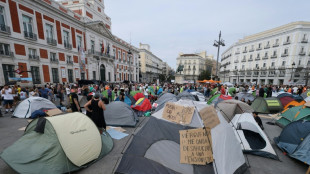 Housing protesters dig in for long stay in Madrid square

 Alex Bodi și prof. dr. Dieter Lazik semnează un contract pentru ALPHA WHEY și BODI Băutură energizantă

 Former Stoke boss Pulis 'cheated' over FA Cup final loss to Man City

 Czech Republic beat Ukraine to win BJK Cup

 Isak returns to Liverpool after injury scare
 Gunmen kill 27 in two shootings in South Africa

 Spain PM vows action as housing protest sparked by eviction grows

 Fernandez downs Gibson to claim Singapore Open crown

 Three talking points from the Azerbaijan Grand Prix

 Turkey ex-minister resigns as investment fund crisis grows

 Pope urges French bishops to 'persevere' against clerical sex abuse

 Decorated Indian badminton star calls Japan Asian Games 'very sad'

 Asian Games chiefs say lessons learned over accommodation

 UK's PM urges 'calm' as thousands seek to thwart flashpoint N.Ireland parade

 Thousands seek to thwart disputed N.Ireland flashpoint parade

 Swiss vote on what it means to be neutral

 Pope to meet with victims of clerical sex abuse during France trip
Joy Womack built herself a fairytale life in Russia's notoriously tough world of classical dance after becoming the first American to graduate from the Bolshoi Ballet Academy.
But a career that inspired a Hollywood film exploded as Moscow's first bombs rained down on Ukraine, and she became one of dozens of dancers who fled Vladimir Putin's war.
"I mourned because it was the end of knowing what was next. And for me, it felt almost in some ways like the end of my career," Womack told AFP in California.
As Russian troops rolled into Ukraine in February, the Texan was in Poland choreographing "Joika."
The film, starring Diane Kruger, tells the story of Womack's life: from arrival in Moscow at the age of 15, not speaking a word of Russian, to a lead role in the Kremlin Ballet.
Womack knew at that moment that she could not return to Russia, and must leave behind her belongings, her friends and the years of sacrifice that had helped her to succeed in one of the world's most competitive ballet environments.
"I was building a future in Russia. I was trying to walk both lines being a ballerina from America, but also working in Russia.
"And my career and my education in Russia led to an international career in the West. So for me, it's really hard to say goodbye to that chapter," she says, pulling off her shoes to reveal feet scarred by her trade.
- 'Fear and sadness' -
Dozens of foreign and domestic dancers had already fled Russia for fear of being called to the frontlines, before Putin ordered a mass mobilization of 300,000 people to bolster his flagging war effort.
But even without a call-up, the drumbeat of conflict was crowding out the cultural spaces, says Ilya Jivoy.
A native of St. Petersburg with a 26-year career, Jivoy left Russia with his Ukrainian wife as war broke out.
They did not know what they would do, or where they would go, but he remains convinced it was the best decision.
"We couldn't work normally since it all started," he says.
"I think now to work in the cultural space in Russia... it may be impossible.
"It's not about the art. It's just about fear and about sadness."
Now exiles in the United States, Womack and Jivoy know they are comparatively lucky because they were able to leave.
Others were not.
"I have a beautiful partner that I used to work with last year," Womack said.
"He was served papers. He's a ballet dancer, not in the army, and it's the end of his career."
- Reunited -
Some exiled dancers have now reunited with one-time colleagues from the Russian stage for a single performance near Los Angeles next month.
The Segerstrom Center for the Arts, a state-of-the-art cultural center in the small town of Costa Mesa, will host "Reunited in Dance."
The one-night-only performance will showcase choreography and recreate some of the repertoire that has wowed Moscow audiences.
The performance's artistic director is Xander Parish, a Briton who lived and worked in Moscow for 12 years, including at the Mariinsky Theater.
Parish, who trained at the Royal Ballet in Britain, recounts the emotional weight of the uprooting these dancers have endured.
"The theater becomes your family. You work with these people, you dance with them, you get to know them very intimately, working in such close proximity. Your coaches are like your parents," he said.
During rehearsals that AFP watched, the camaraderie is evident, as the cast slips in and out of Russian and English, discussing how each minute of the performance should work.
The November 12 show could, Parish thinks, be the springboard for something bigger: a more permanent ballet company that would have space for these talents in exile.
"That's going to take a long time to sort out. But I mean, that'd be my dream, if we can build that in the future," he says.
"These are the first small steps, the foundations, that bring us together."
Y.Bouchard--BTB