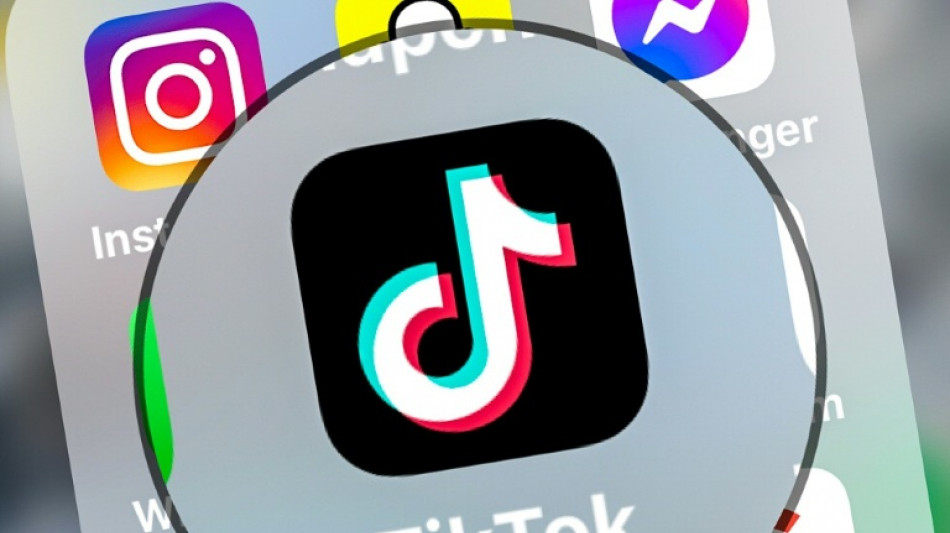
Five ways TikTok is seen as threat to US national security / Photo: © AFP/File

 Anthropic bans 'cruel' behavior against its Claude AI

 Anne Carson's Nobel literature prize 'a proud moment for Canada': PM

 Montagliani to seek CONCACAF re-election in boost for Infantino: reports

 Oil surges, stocks sink on jitters over US plans in Iran war

 John Cena and Jessica Biel hit the gas in 'Matchbox: The Movie'
 US, Ukrainians, Europeans to discuss 'new ideas' to end war
 Unproven 'cures' pushed online amid plague concerns

 Nigeria looks to ease fuel prices as election looms
 Prosecutors in Maradona death trial seek sentences up to 12 years

 Swiss captain Xhaka gets suspended fine for fake Covid cert

 Ex-prince Andrew raid warrants ruled 'unlawful' but UK police maintain probe
 Two Latvians arrested inside UK military base: police
 Eckert 'forever grateful' for Southampton support over spy scandal

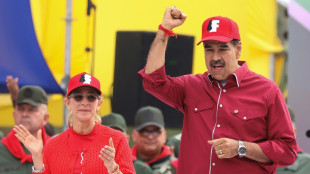 Venezuela's Maduro, wife hit with new US torture charges

 Argentina friendlies no fairy tale for African footballers

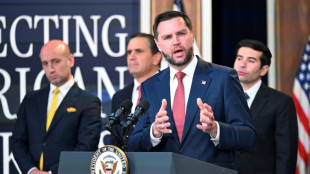 US suspending Microsoft from visa program: Vance

 Man City must 'stick together' during crisis, says Haaland

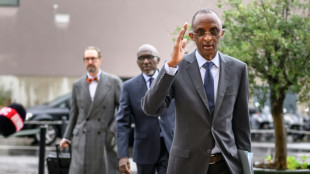 CAS opens hearing into Senegal AFCON title appeal

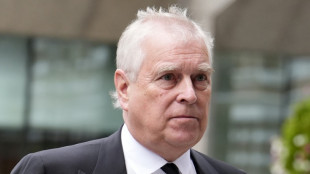 UK police agree searches for ex-prince Andrew's homes 'unlawful': judge
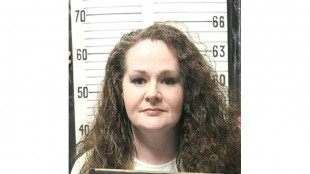 After botched US execution, Christa Pike walking, mentally 'foggy': lawyer

 'Stunned' Madrid mourns pensioner who sparked housing protests

 High school students turn out for new protests across France

 Bid by Italy's Intesa bank to take over MPS gets boost

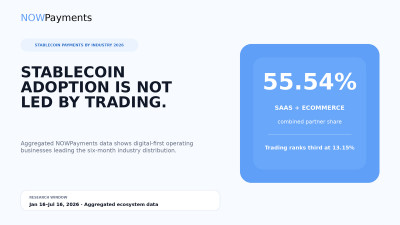 Stablecoins Are Quietly Becoming Business Infrastructure, NOWPayments Data Shows

 Oil surges, stocks sink as US reportedly eyes new Iran strikes

Many in the United States see TikTok, the highly popular video-sharing app owned by Beijing-based ByteDance, as a threat to national security.
The following is a look at five reasons why:
- Data sharing -
TikTok -- like its rivals Instagram, Snapchat and YouTube -- thrives on data and there seems to be no limit to how much young users are willing to share about themselves on the super addictive app.
TikTok's critics worry that all this information is being processed by a Chinese company in China where the Communist Party reigns supreme.
But some experts believe the threat is overblown and that nefarious actors can make their way to the troves of data no matter who owns the platform and where it is based.
"If we're talking about US citizen data, it's the Wild West," said Justin Sherman, a senior fellow at Duke University's Sanford School of Public Policy.
"There's very little regulation, companies collect tons of data all the time, whether they're foreign companies or US companies."
Tiktok says it has undertaken to fully move the data of American users to US-only servers in a project known as "Project Texas."
- Spying -
TikTok, like all apps, potentially opens access to a user's entire phone.
"Anytime you have an app on the phone, there's the potential for using that app to bridge access to other things on the phone," said Michael Daniel, CEO of Cyber Threat Alliance.
This could include "surreptitiously turning on the microphone or the camera of the device without the user being even aware," added Daniel, a former cybersecurity coordinator at the US National Security Council.
Etay Maor, senior director of security strategy at Cato Networks, pointed to Pegasus, software created by an Israeli tech firm that was used by governments around the world to spy on critics and opponents.
"Maybe with TikTok we are just clicking and installing the Chinese version of Pegasus on our devices... I think that is the worry of the US government," Maor said.
- Censorship -
Another potential threat mentioned by cybersecurity experts is the ability of the Chinese government to censor content on TikTok to defend the priorities of the Communist Party.
"The idea is that the Chinese government would eventually tell TikTok outside of China that you will not show anything that supports Tibet or Taiwan and thereby shape the information environment," said Daniel.
Tiktok insists that it has never intervened on content in ways to satisfy the Chinese government, but given the level of censorship that prevails in China, analysts warn that the threat for Beijing to lean on TikTok exists.
"If you look at the way the Chinese government has censored information, has suppressed journalism and things of that nature at home, it's really not at all far-fetched to say there's a risk associated with the same thing happening on TikTok elsewhere," said Sherman.
- Misinformation -
Another fear is that the Chinese government could use TikTok as a means to disrupt US society in a replay of the online campaigns waged by Russia in 2016 ahead of the American presidential election.
Already, research published by Global Witness and the Cybersecurity for Democracy team at New York University suggested TikTok failed to filter large volumes of election misinformation in the weeks leading up to US midterm elections last month.
In the experiment, TikTok "performed the worst out of all of the platforms tested," the researchers found.
In response, TikTok has introduced safety measures related to election content and required government and politician accounts to be verified.
- Just... China? -
Some experts wonder if TikTok can do anything to satisfy concerns given its origins in China, especially with the Republicans retaking the US House of Representatives in January.
Most of the arguments against TikTok have been coming from the Republican Party, which has a history of being tougher on Beijing than the Democrats.
Republicans are also putting pressure on Democrats as US President Joe Biden negotiates a long-term security arrangement for the app to keep operating under Chinese ownership in the United States.
According to Politico, the Biden administration is divided over whether to force the Chinese owner of TikTok to divest from its US operations, casting doubt on the proposed compromise.
H.Seidel--BTB