EU lifts growth forecast as eurozone skirts recession / Photo: © POOL/AFP/File

 US leads fresh Ukraine peace push with Miami talks
 Verstappen continues resurgence with pole for Singapore sprint
 Cuban ration book, symbol of the revolution, gathers dust

 Stocks advance, oil retreats as Trump rules out pre-vote Iran attack

 Man City case causing 'uncertainty' for whole Premier League, says Iraola

 Talks with Iran can only succeed without threats, president says

 Home hope Zheng sets up Mertens clash in China Open semis
 Lombardia promises gripping end to season in Pogacar absence
 Barca skipper Raphinha out against Getafe and Galatasaray
 MEXC and Payward Highlight Collaboration as Crypto and TradFi Converge at TOKEN2049
 EU states agree beefed-up European financial markets watchdog

 Eritrea, Ethiopia trade barbs as Tigray rebels retreat
 Kompany 'proud' of Man City success despite guilty verdict

 Man City will win appeal over financial charges, says Maresca
 Fernandez logs record lap at Indonesia MotoGP practice

 Navi Pillay: S.Africa's global rights activist and Nobel winner

 Ufunded Launches “Spotlight” Series, Documenting the Minds Shaping Modern Trading
 Russell goes fastest in practice for smoggy Singapore GP
 For exiled Russian director Zvyagintsev, triumph without belonging

 Home hope Zheng storms into China Open semi-finals

 Zverev churns out win in Shanghai Masters opener

 Hurricane Isaias strengthens en route to US Gulf Coast

 US activists deploy poll volunteers over Trump intimidation fears

 Saint Laurent designer Vaccarello leaves after glittering decade

 'Tough to stay here': Nepal flood survivors wait for homes

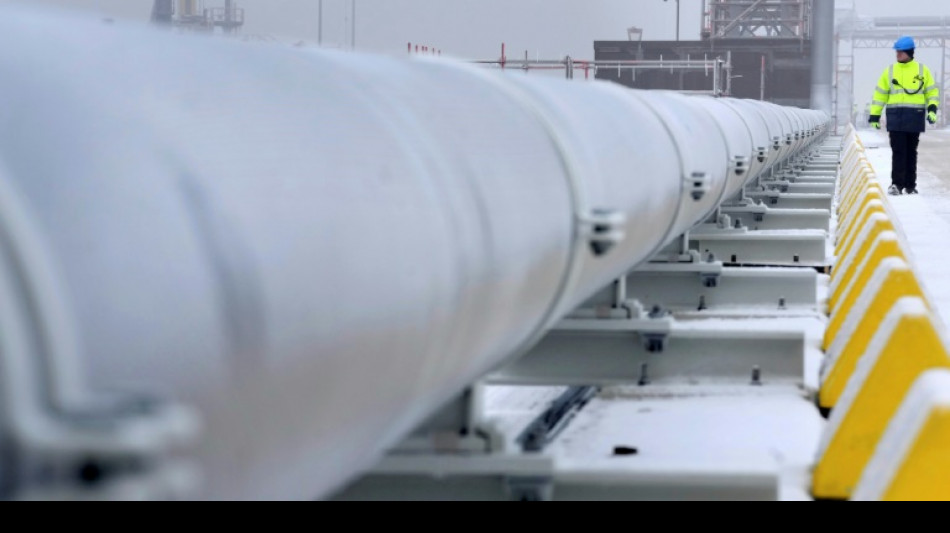
Europe's economy will grow more than previously forecast this year as it avoids a winter recession, with inflation expected to ease as gas prices have fallen, the European Commission said Monday.
The 20-nation eurozone's economy is now expected to expand by 0.9 percent instead of 0.3 percent, as "favourable developments" helped the single-currency area weather the fallout of Russia's invasion of Ukraine, the European Union's executive arm said.
The eurozone and the wider 27-nation EU are now expected to "narrowly avoid" a technical recession -- two straight quarters of economic contraction -- this winter, the commission said.
"These are quite outstanding outturns, proving the remarkable resilience of the EU economy to the headwinds unleashed by Russia's war against Ukraine and in particular the energy crisis," said the EU's economy commissioner, Paolo Gentiloni.
Inflation is now expected to reach 5.6 percent in the eurozone in 2023 -- down from a previous forecast of 6.1 percent -- as oil and gas prices have eased after soaring when the conflict broke out a year ago.
After consumer prices jumped to a record high of 10.6 percent in October, they have slowed for three straight months, suggesting that "the peak is now behind us", the commission said.
- 'Doesn't mean good' -
The European Central Bank launched a series of interest rate hikes last year in efforts to control inflation.
European nations, which were heavily reliant on Russian energy before the war, have scrambled to diversify their supply sources as Moscow slashed deliveries.
EU governments rolled out relief measures to cushion consumers and businesses from surging prices, and rushed to fill up storage facilities.
A milder winter enabled consumption to fall.
Wholesale gas prices have dropped below pre-war levels, the commission said.
"In addition, the EU labour market has continued to perform strongly, with the unemployment rate remaining at its all-time low," it added.
The commission also raised its growth forecast for the EU bloc to 0.8 percent.
Germany, Europe's biggest economy, is now expected to avoid a recession and eke out growth of 0.2 percent this year.
Gentiloni warned that "better than expected doesn't mean good".
- 'Main risk': war -
This year's forecast for both areas is down from 3.5 percent growth in 2022.
"Europeans still face a difficult period ahead, with growth still expected to slow and inflation set to relinquish its grip on purchasing power only gradually," Gentiloni said.
"That's why we must show the same resolve and ambition as we did over the past three years when it comes to tackling with common responses the challenges we face today," he said.
The commission has opened a debate on relaxing the bloc's state aid rules and creating a "sovereignty fund" in the face of high energy prices and competition from subsidies US and Chinese green tech programmes.
Consumers and business still face high energy costs while core inflation, which excludes energy and unprocessed foods, was still rising last month, the commission said.
As inflationary pressures persist, the ECB's "monetary tightening is set to continue, weighing on business activity and exerting a drag on investment", it said.
It predicted that inflation next year would be at 2.5 percent, still above the ECB's target of two percent.
"The main risk to these forecasts is based on the geopolitical tensions, the evolution of the war," Gentiloni said.
O.Bulka--BTB