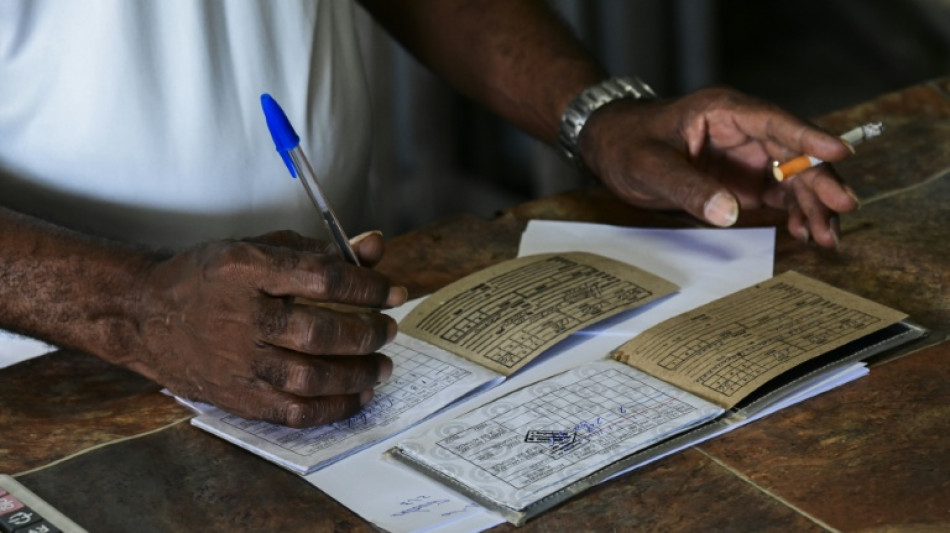
Cuban ration book, symbol of the revolution, gathers dust / Photo: © AFP

 US leads fresh Ukraine peace push with Miami talks

 Verstappen continues resurgence with pole for Singapore sprint

 Cuban ration book, symbol of the revolution, gathers dust

 Stocks advance, oil retreats as Trump rules out pre-vote Iran attack

 Man City case causing 'uncertainty' for whole Premier League, says Iraola

 Talks with Iran can only succeed without threats, president says

 Home hope Zheng sets up Mertens clash in China Open semis
 Lombardia promises gripping end to season in Pogacar absence
 Barca skipper Raphinha out against Getafe and Galatasaray

 MEXC and Payward Highlight Collaboration as Crypto and TradFi Converge at TOKEN2049

 EU states agree beefed-up European financial markets watchdog

 Eritrea, Ethiopia trade barbs as Tigray rebels retreat

 Kompany 'proud' of Man City success despite guilty verdict

 Man City will win appeal over financial charges, says Maresca

 Fernandez logs record lap at Indonesia MotoGP practice

 Navi Pillay: S.Africa's global rights activist and Nobel winner

 Ufunded Launches “Spotlight” Series, Documenting the Minds Shaping Modern Trading
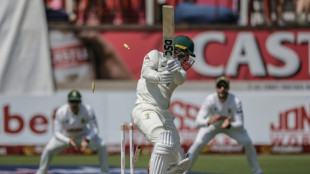
 Russell goes fastest in practice for smoggy Singapore GP

 For exiled Russian director Zvyagintsev, triumph without belonging
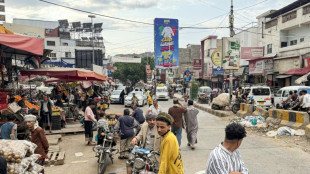
 Home hope Zheng storms into China Open semi-finals

 Zverev churns out win in Shanghai Masters opener

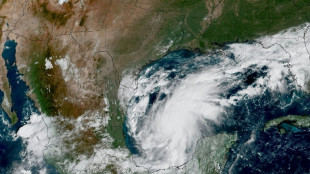 Hurricane Isaias strengthens en route to US Gulf Coast

 US activists deploy poll volunteers over Trump intimidation fears

 Saint Laurent designer Vaccarello leaves after glittering decade

 'Tough to stay here': Nepal flood survivors wait for homes

For 60 years, Cuban life revolved around a small well-thumbed ration book used by families to buy subsidized goods in state-run stores.
But as state "bodegas" disappear, the "libreta" ration book that symbolized equal access to affordable food for all is being quietly shelved.
The libreta was already fading into history when US President Donald Trump began imposing a crippling fuel blockade on Cuba in January, intensifying the island's severe economic crisis.
Washington has since piled more sanctions on Cuba, cutting off nearly all its sources of revenue.
With no money left to import goods and resell them at around a tenth of their market value, the bodegas are being replaced with grocery stores that charge close to market prices.
For a pound of black beans, a staple of the Cuban diet, the new privately run "neighborhood markets" charge 950 pesos (over $1), over a tenth of the average state monthly wage.
"It's a complete change in the way we live," said 64-year-old Paula Sonia Santiago outside one of the new stores, housed in what used to be a bodega.
The bodega and ration book system was implemented by late revolutionary leader Fidel Castro in 1963, after the United States placed the island under embargo.
During the island's boom years from the mid-60s to the late-80s, any Cuban, regardless of income, could eat his or her fill of rice, sugar, beans, beef, chicken, fish and sausages for a month thanks to the subsidized food basket guaranteed by the ration book.
The basket included soap, cigarettes and cigars, among other goods considered necessities, which cost the state $1 billion annually in the 2000s, according to official figures.
During the 1990s crisis that followed the collapse of the Soviet Union, Cuba's main financier, the ration book continued to guarantee "a minimum" of food, "especially for those of us who have very little," recalled 82-year-old America Guillen.
Now, "the poorest among us are going through a very difficult time," said Guillen who struggles to feed herself on the minimum state pension of 3,000 pesos ($4).
- 'We get nothing' -
The subsidy system first began to show cracks during the so-called Special Period in the early 1990s.
While subsidized rice and beans were still widely available, ground beef was replaced with soy protein.
Rations were further curtailed in 2008, when reformist ex-president Raul Castro eliminated what he called "undue subsidies and freebies" such as cigars, toothpaste and oil.
But it was current leader Migual Diaz-Canel, in power since 2018, who reduced the subsidized food basket to a bare minimum, following the tightening of US sanctions under Trump.
"The ration book is practically extinct because we get nothing (at the bodega)," Guillen commented.
In recent months, the stores have only had a few pounds of rice and sugar for sale, leaving shoppers at the mercy of state-run supermarkets that operate in dollars or small private stores.
The government says its aim now is to subsidize only "the vulnerable" rather than all Cubans.
It has given tax breaks to entrepreneurs to set up 24 neighborhood markets, where around 20 basic food and hygiene products are available for between 10 and 15 percent less than in private-run stores.
Cubans have dismissed the move as a drop in the ocean of their needs.
Rafael Garcia, 75, bought ten eggs at a market in the Havana suburb of El Cerro for 1350 pesos.
"It's not that it's cheaper (than the bodega), it's just less expensive" than private stores or state-run supermarkets, he remarked.
N.Fournier--BTB