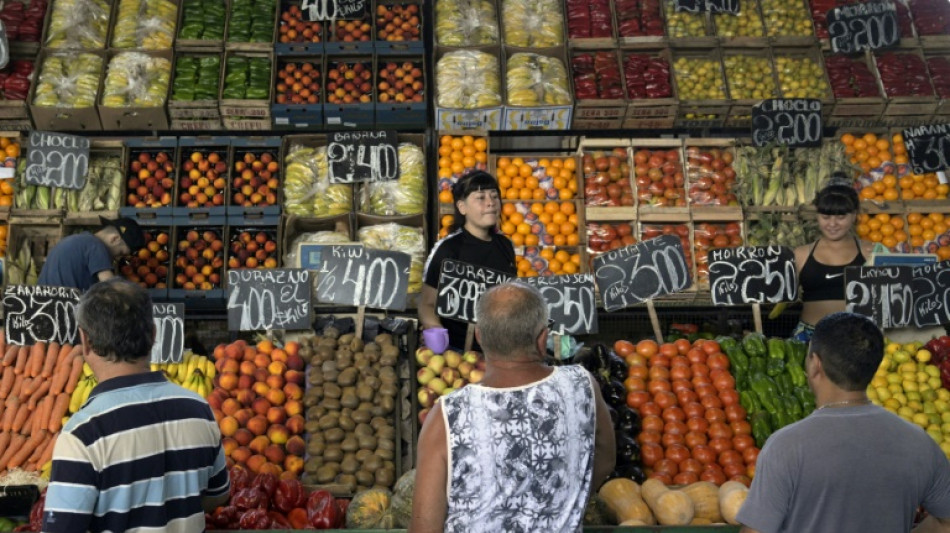
'Like James Bond,' Argentine price spies fight inflation / Photo: © AFP

 US leads fresh Ukraine peace push with Miami talks
 Verstappen continues resurgence with pole for Singapore sprint

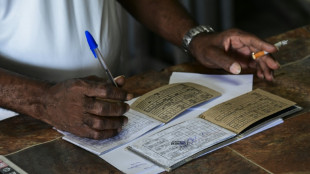 Cuban ration book, symbol of the revolution, gathers dust
 Stocks advance, oil retreats as Trump rules out pre-vote Iran attack

 Man City case causing 'uncertainty' for whole Premier League, says Iraola

 Talks with Iran can only succeed without threats, president says

 Home hope Zheng sets up Mertens clash in China Open semis
 Lombardia promises gripping end to season in Pogacar absence
 Barca skipper Raphinha out against Getafe and Galatasaray

 MEXC and Payward Highlight Collaboration as Crypto and TradFi Converge at TOKEN2049

 EU states agree beefed-up European financial markets watchdog

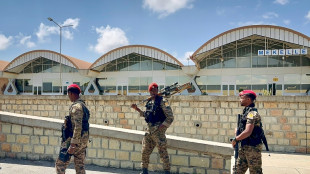 Eritrea, Ethiopia trade barbs as Tigray rebels retreat

 Kompany 'proud' of Man City success despite guilty verdict

 Man City will win appeal over financial charges, says Maresca
 Fernandez logs record lap at Indonesia MotoGP practice

 Navi Pillay: S.Africa's global rights activist and Nobel winner

 Ufunded Launches “Spotlight” Series, Documenting the Minds Shaping Modern Trading
 Russell goes fastest in practice for smoggy Singapore GP
 For exiled Russian director Zvyagintsev, triumph without belonging
 Home hope Zheng storms into China Open semi-finals

 Zverev churns out win in Shanghai Masters opener

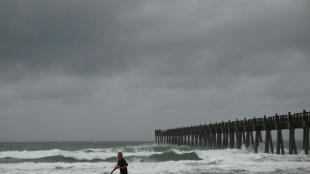
 Hurricane Isaias strengthens en route to US Gulf Coast

 US activists deploy poll volunteers over Trump intimidation fears

 Saint Laurent designer Vaccarello leaves after glittering decade
 'Tough to stay here': Nepal flood survivors wait for homes

Like a veritable undercover agent, Monica Schenone tries to pass unnoticed through the aisles of a supermarket in Buenos Aires, sneaking photographs of price tags.
The 52-year-old homemaker is part of a group of ordinary Argentines who volunteer their time to police stores' adherence to price limits suggested by the government to curtail spiraling inflation.
She feels "like James Bond," Schenone says, as she tries to blend in with shoppers in the capital of Argentina -- which in 2022 recorded its highest inflation rate in three decades at 94.8 percent -- one of the highest in the world.
Prices for daily staples rose monthly, even weekly in 2022, with milk prices climbing more than four-fold and those for cooking oil and sugar more than five-fold, according to the Abeceb economic consultancy.
In a bid to rein in galloping price rises, the government's "Precios Justos" (Fair Prices) program applies a 3.2-percent monthly price hike limit to some 2,000 essential products including flour, rice, milk and sunflower oil.
"I am in shock," Schenone told AFP as she exited a supermarket in the San Cristobal neighborhood where she had executed a covert price check she said left her horrified.
"A bar of soap that went from 231.40 pesos to 496 pesos, that does not seem to me to be a three percent increase," she said.
"It seems to me that we are still being taken for fools."
Precios Justos runs from February to the end of June, and covers food and medicines but also soap, clothing, shoes, and school gear, among other items.
Joining is voluntary, but producers and vendors who do sign up to the price agreement risk fines for non-compliance of up to 71 million pesos (some $370,000 at Tuesday's exchange rate) from Argentina's ministry of commerce.
Precios Justos, states the government, "aims to reduce inflationary expectations and... recover the purchasing power of the population’s income."
All major supermarket chains as well as Argentina's massive COPAL food and drinks producers' group have signed up to the program.
But most smaller, independent stores which serve millions of Argentines remain outside of the framework, sometimes charging prices double the suggested rate, according to consulting firm Nielsen IQ.
- 'Impotence' -
Schenone and about two dozen others members of an activist group called "La Dignidad" (Dignity) have taken it upon themselves to check up on Precios Justos compliance in Buenos Aires.
She said they regularly observe serious breaches.
Most often, price-controlled products are simply not stocked, but there are also many cases of prices above the agreed limit, she said.
"What I feel is a lot of impotence, a lot of anger. I feel that, as always, those of us in the lower classes continue to be screwed," Schenone told AFP.
The price checker and her peers submit their findings to La Dignidad, which publishes periodic reports.
There is also a government-sponsored app for consumers to report violations.
But opponents of the government's plan question the efficacy of price freezes, calling instead for macroeconomic measures such as slashing money printing and public spending.
Argentina has been grappling with an economic crisis for years, registering double-digit inflation in each of the last 12 years.
The causes are multiple, including persistent deficit spending, constant currency devaluation, successive droughts and external factors like the war in Ukraine that affected energy and grain prices.
Economy Minister Sergio Massa has said inflation is the "biggest poverty factor" in Argentina and "one of the main issues to fight."
For the month of January, inflation came in at 6.0 percent from December, and at 98.8 percent compared to the same month a year ago, according to data released Tuesday by the INDEC statistics institute.
For food and non-alcoholic drinks, prices rose 6.8 percent from December to January, and by 98.4 percent from a year earlier.
H.Seidel--BTB