Regions in US, China most at risk for climate damage: report / Photo: © AFP

 Hurricane Isaias set to strike Gulf Coast late Friday

 Trump forms panel to probe US Fed governor Lisa Cook

 Clashes in Durban as fresh anti-migrant riots erupt in South Africa

 France students plan more protests, UN 'concerned' over violence

 De Zerbi calls on struggling Spurs to react in Man Utd clash

 US sanctions on ICC: a 'test of resilience'

 Outrage over US military plan to livestream firing squad execution

 Argentina snap up defence guru Edwards ahead of World Cup

 BMW pulls car lease offer from German far-right politician

 Brazil election offers Jair Bolsonaro a shot at revenge

 Man Utd boss Carrick 'personally' affected by Man City verdict

 Evolution Metals & Technologies Corp. Raises Fiscal 2026 Revenue Guidance 62% at Midpoint to $10–$11 Million and Reaffirms $400–$460 Million Fiscal 2027 Outlook

 Red Bull's Verstappen takes pole position for Singapore GP sprint race

 Chelsea star Palmer 'committed' to England insists Alonso

 OpenAI denies firing researchers over AI safety warnings

 Turkey warns opposition, press over investment fund crisis

 Hurricane Isaias now major storm as it heads to US Gulf Coast

 Djokovic crashes out of Shanghai Masters in his first match

 EU says Turkey's crackdown on rights hampers membership bid

 Two Renoir paintings stolen in France recovered: mayor

 German leader outraged at Schroeder birthday visit to Putin

 Stocks up, oil retreats as Trump rules out pre-vote Iran attack

 South African judge Navi Pillay wins Nobel Peace Prize

 'I completely trust the club,' says Man City boss Maresca

 '10 out of 10' Quintana reminisces over dream Vuelta win

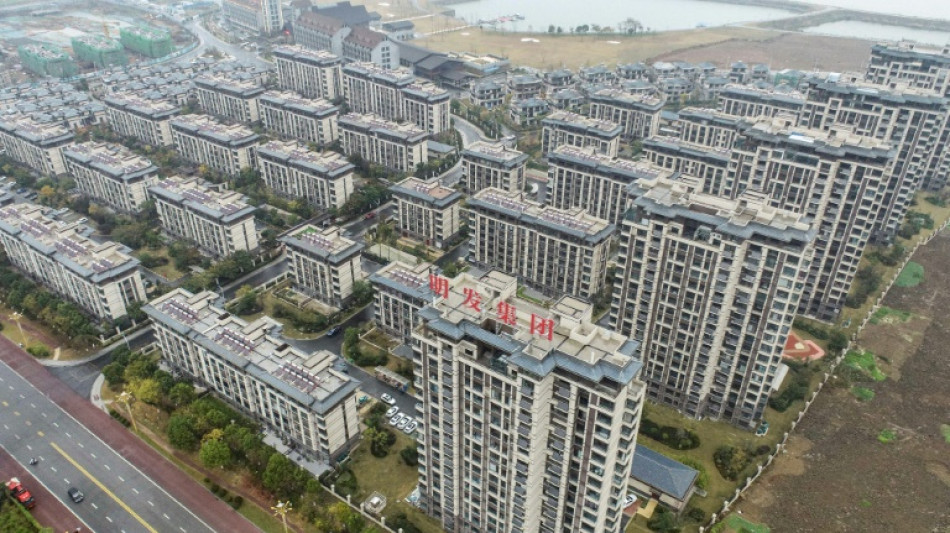
Major industrial and economic centres in China and the United States are among the most vulnerable regions in the world to the increasingly destructive power of climate change-driven weather extremes, according to a comprehensive analysis Monday.
The new findings underscore the urgent need for governments to focus on decarbonisation and adaptation measures such as flood-proofing -- and show the economic fallout from climate change could be grave and widespread.
Nine of the top 10 most at-risk regions are in China, with two of the country's largest sub-national economies -- Jiangsu and Shandong -- leading the global ranking by The Cross Dependency Initiative (XDI).
After China, the US has the most high-risk states. Florida, number 10 in global rankings, is the US state most in jeopardy, followed by California and Texas.
China, India and the United States make up over half the states and provinces in the top 100.
"We get an extremely strong signal from countries like China, from the US and India, and we see essentially the engine rooms of the global economy where there is a lot of built infrastructure," Karl Mallon, head of science and innovation at XDI, said at a briefing.
The analysis found that both inland and coastal flooding pose the greatest risks to physical infrastructure. The report also examined the dangers of extreme heat, forest fires, soil movement, extreme wind and freeze thaw.
The analysis covers over 2,600 territories globally, modelling damage from 1990 to 2050 based on a "pessimistic" scenario of global warming of three degrees Celsius by the end of the century outlined by the UN's Intergovernmental Panel on Climate Change.
- Capital flight? -
The researchers say it is the most comprehensive data crunch of its kind and hope it will inform future climate and economic policy.
It could also impact investment decisions as companies reassess financial risks based on climate change related exposure in vulnerable areas.
"Folks who are looking to build a factory, establish a supply chain that involves those states and provinces are going to think twice about where they are," said Mallon.
He said there could be "at best, a risk pricing into those areas, at worst, maybe a capital flight as those investors seek to try and find safer havens."
Other economic hubs in the top 100 include Beijing, Buenos Aires, Ho Chi Minh City, Jakarta, Mumbai, Sao Paulo and Taiwan.
Australia, Belgium, Canada, Germany and Italy also have states and provinces in the top 100.
In Europe, Germany's Lower Saxony region is most at risk, while Italy's Veneto region -- home to the lagoon city of Venice -- is ranked number four in Europe.
Southeast Asia sees the steepest escalation in damage from 1990 to 2050, according to the modelling.
XDI said it released the analysis in response to requests from investors.
"Since extensive built infrastructure generally overlaps with high levels of economic activity and capital value, it is imperative that the physical risk of climate change is appropriately understood and priced", XDI CEO Rohan Hamden said in a press release.
D.Schneider--BTB