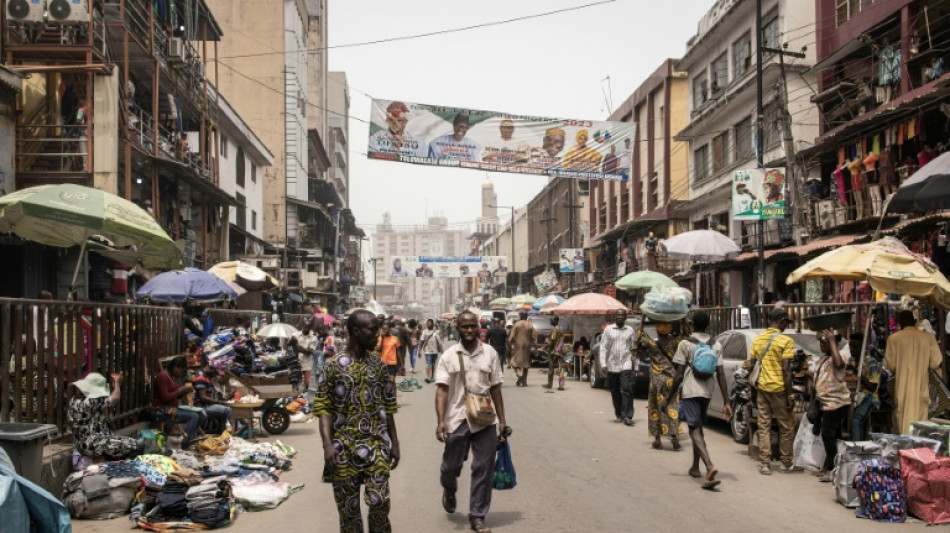
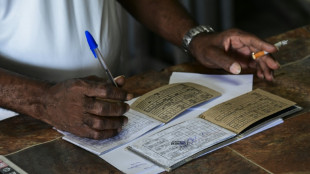
Nigerians struggle with costs of living as election draws near / Photo: © AFP

 Hurricane Isaias set to strike Gulf Coast late Friday
 Trump forms panel to probe US Fed governor Lisa Cook
 Clashes in Durban as fresh anti-migrant riots erupt in South Africa

 France students plan more protests, UN 'concerned' over violence
 De Zerbi calls on struggling Spurs to react in Man Utd clash
 US sanctions on ICC: a 'test of resilience'
 Outrage over US military plan to livestream firing squad execution

 Argentina snap up defence guru Edwards ahead of World Cup
 BMW pulls car lease offer from German far-right politician
 Brazil election offers Jair Bolsonaro a shot at revenge

 Man Utd boss Carrick 'personally' affected by Man City verdict
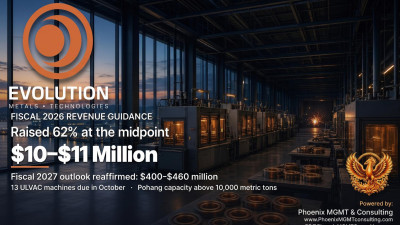 Evolution Metals & Technologies Corp. Raises Fiscal 2026 Revenue Guidance 62% at Midpoint to $10–$11 Million and Reaffirms $400–$460 Million Fiscal 2027 Outlook

 Red Bull's Verstappen takes pole position for Singapore GP sprint race

 Chelsea star Palmer 'committed' to England insists Alonso
 OpenAI denies firing researchers over AI safety warnings
 Turkey warns opposition, press over investment fund crisis

 Hurricane Isaias now major storm as it heads to US Gulf Coast

 Djokovic crashes out of Shanghai Masters in his first match

 EU says Turkey's crackdown on rights hampers membership bid

 Two Renoir paintings stolen in France recovered: mayor
 German leader outraged at Schroeder birthday visit to Putin

 Stocks up, oil retreats as Trump rules out pre-vote Iran attack

 South African judge Navi Pillay wins Nobel Peace Prize
 'I completely trust the club,' says Man City boss Maresca
 '10 out of 10' Quintana reminisces over dream Vuelta win

Like millions of fellow Nigerians, Rotimi Bankole says he wants to use Saturday's presidential elections to push for a better life in his oil-rich but crisis-ridden country.
Double digit inflation, weak economic growth and mounting insecurity are major issues for voters on February 25 when they choose a successor to incumbent President Muhammadu Buhari, due to step down after two terms allowed by law.
"Nigeria has been so difficult to cope and live in," Bankole said. "Survival has been tough."
For years, the 54-year-old struggled to take care of his family of five while doing two jobs.
Recently, he took on a third job -- driving a taxi -- but still that could only make an extra 5,000 naira ($11) -- hardly enough in a country where cost of living has spiralled to record levels.
Africa's largest economy and the continent's top oil producer, Nigeria has resources and wealth, but the global pandemic and the economic fallout from the Ukraine war hit the country hard in Buhari's last term.
Inflation is at 21.8 percent, the naira currency has weakened and the World Bank says more Nigerians are now living below the poverty line.
Compounding economic hardships, the country has been hit with fuel shortages and also a scarcity of cash after the central bank began to swap old naira notes for new bills.
A chronic shortage of cash has created lines outside banks and triggered protests in some cities, even as the central bank says the policy is needed to curb the amount of cash outside the banking system.
Bankole started driving a taxi two months ago, but the recent major fuel and cash scarcity has compounded his misery.
He spends long hours on queues at petrol stations, paying as much as 330 naira for a litre as against 165 previously.
Even running his school has been tough as parents struggle to pay fees while his printing business is struggling.
"We cannot continue like this as a people," he said.
- Business acumen -
Saturday's election has developed into a tight three-way race for the presidency, with the frontrunners all touting their past government experience and business acumen for the country's top job.
Ex-Lagos governor Bola Ahmed Tinubu of the ruling All Progressives Congress or APC is facing former vice president Atiku Abubakar of the main opposition Peoples Democratic Party (PDP) and Peter Obi of the Labour Party, a surprise third party candidate with high youth appeal.
Although Nigeria's economy rebounded after COVID-19 pandemic, growing three percent in 2022, critics say the recovery has not trickled down to improve conditions for most Nigerians.
Falling oil revenues, growing insecurity from criminal gangs, heavy flooding that hit farming land and impact of Ukraine war have combined to make things worse.
Nigeria’s unemployment rate is about 33 percent while the number of Nigerians living in poverty rose to 133 million or 63 percent of the population in 2022, according to the World Bank.
Youth unemployment now stands at 43 percent, compared to 10 percent prior to Buhari's first administration in 2015.
The naira currency has fallen from an average of 200 naira to a dollar in 2015, to around 750 on the parallel market.
According to Sola Oni of Sofunix Investment, "the inclement operating environment in Nigeria, characterized by inflationary pressure, low purchasing power amongst others, will continue to heighten poverty level."
Recently, Nigerian manufacturers warned they faced a production shortfall of 25 percent if petrol and cash shortages were not resolved soon.
"This situation is not good for anyone, the industry, the government and the ordinary citizen," said Segun Ajayi-Kabir, the leader of the country's manufacturers association.
"You will have a compounded crippling lack of patronage for the domestic manufacturer; the denial of government revenue that would have accrued from consumption taxes and the disruption of the daily life and needs of the average Nigerian."
L.Janezki--BTB