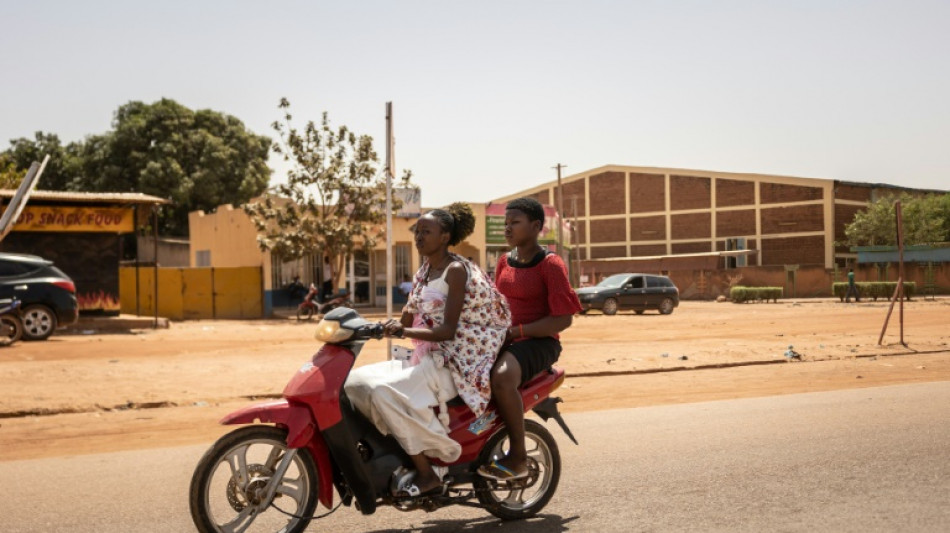
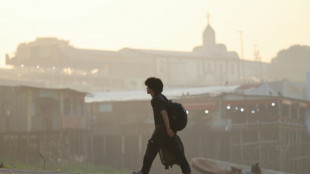
In Burkina, motorbikes bring treasured independence for women / Photo: © AFP

 Anthropic AI model sent fake murder tip to Philadelphia police
 7.7-magnitude quake rocks Panama, triggers tsunami warning

 Prince Harry booed at English rugby match

 Kiplimo and Feysa seek repeat Chicago Marathon wins
 Fuellkrug halts Dortmund after late goal flurry
 Injured Ravens quarterback Jackson ruled out of Falcons clash

 Brewers aim to take down two-time defending champion Dodgers in NLCS rematch

 Tsunami alert after major earthquake rocks Panama

 Outer bands of Hurricane Isaias lash US Gulf Coast
 Hope, Rutherford fire West Indies to record T20 chase of 250

 Farhan leads Pakistan to T20 win over Sri Lanka
 Turkey sack coach Montella after Nations League woe
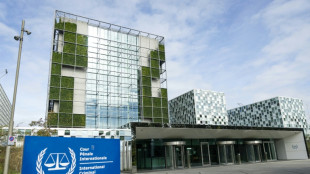 US announces sanctions on ICC, hours after Nobel award to former judge

 Montenegro expels popular Russian war blogger wanted by US
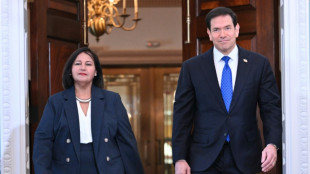 Rubio calls on all Venezuela opposition figures to join talks with govt
 Australia struggle against South Africa quicks in first Test
 Stocks advance as Trump rules out pre-vote Iran attack
 Australia struggle against South Africa's fast bowlers

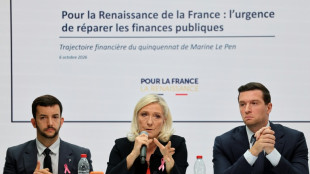 Massive debt puts France in a bind as investor doubts deepen
 Arteta urges 'respect' for process after Man City financial verdict
 'Human-authored' book labels gain ground amid AI scandals

 Man City whistleblower Pinto to stay under police protection
 US leads fresh Ukraine peace push with Miami talks

 Verstappen continues resurgence with pole for Singapore sprint
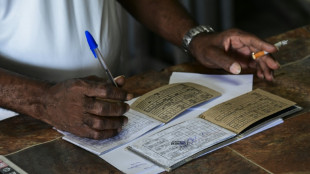 Cuban ration book, symbol of the revolution, gathers dust
The motorcycles that buzz along the streets of Ouagadougou, the capital of Burkina Faso, have a story to tell.
Once the preserve of men and a sign of male status in this West African country, today they are used ubiquitously by women -- and are a prized tool of emancipation.
When Nigerian filmmaker Kagho Idhebor first came to Ouagadougou he was overwhelmed by how many women whizzed about on a motorbike.
"I'd never seen women drive with such attitude, such independence," he said. "There are more motorbikes than cars, and more women than men on these motorbikes."
He was so struck by the phenomenon that he made "Burkina Babes" -- a documentary which ran at the pan-African FESPACO cinema and TV festival in Ouagadougou that ended last weekend.
Dressed in jeans or a suit, some with a baby slung on their back, women of all ages ride around on motorbikes in Burkina Faso.
"The motorbike is above all a necessity" for getting around, said Valerie Dambre, who had stopped at a traffic light.
But they are also a symbol of autonomy for many women in a deeply poor country beset with problems imposed by a brutal years-long jihadist insurgency.
Nearly one person in seven in Burkina's population of 22 million has a motorbike, according to transport ministry figures for 2020.
Between 2011 and 2020, the number of motorbikes tripled as a share of the population, cementing their role as a solution for mobility.
- Breaking barriers -
"In the coastal countries (in West Africa), people went straight to cars" from walking or using bicycles, said anthropologist Jocelyne Vokouma. "But we (in Burkina) turned to motorbikes before using cars."
The key period of change was the early 1990s, she said.
Until then, "a woman would proudly say that her motorbike had been bought by her husband. 'My husband is doing OK,' was what women used to say," Vokouma said.
But the country went through wrenching austerity and many men lost their jobs.
It was women who picked up the baton, setting up small businesses such as selling fruit and vegetables to make money -- and as time progressed, many used their savings to swap their bicycle for a motorbike.
With that came greater freedom, in developing their business, taking the children to school, seeing friends or just going out for a ride.
But, said Vokouma, some important seeds had already been sown by Burkina Faso's revolutionary leftwing leader, Thomas Sankara.
During his four years in power in the 1980s, which ended traumatically with his assassination, Sankara "played an emancipating role, breaking down traditional mindsets and thrusting women into the public space, outside the home," she said. "Young women today were brought up on his ideas."
- Training -
Hand in hand with the new mobility has come an entry for women into the male-dominated business of auto maintenance.
Since 1997, the Women's School for Skills Initiation and Training (CFIAM) has trained more than 700 women to be mechanics and bodywork repairers.
Its CEO and founder, Bernard Zongo, said he set up the school to help "girls... into non-traditional areas of work, so that they can become economically independent."
He hired a full-time woman psychologist and installed a nursery for students with babies.
The centre gets by through donations from NGOs, which account for 75 percent of revenue, while the remaining income comes from fees.
The two-year course costs 100,000 CFA francs ($163) -- a hefty sum in a country where annual per-capita income is little more than $900.
Other African countries, including Niger, Ivory Coast and Mali have sent representatives to the CFIAM to see how it operates, and "boys are asking to enrol," Zongo said with a smile.
"There are people we know who are jealous of us," said one student, Salamata Congo, speaking above a racket of cutting and hammering.
But patriarchal habits and machismo die hard.
"Men try to discourage you," said Berenice Zagali, who is learning to become a mechanic.
"They say, 'You're a woman, what are doing here? This is man's work. Your place is the kitchen, the office'."
M.Ouellet--BTB