
Unemployment, pay gap, instability the pandemic legacy for Peru's women / Photo: ©

 Cash-strapped Senegalese unmoved by Youth Olympic Games

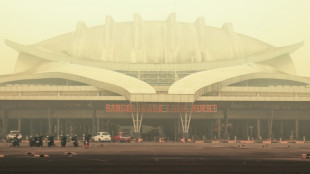 Indonesia haze chokes neighbours, but little legal recourse

 Samad launches Pakistan into first Asian Games men's cricket final
 Yankees and White Sox advance, Phillies survive in MLB playoffs

 Asian stocks mixed as positive US data offset by elevated oil, bond yields

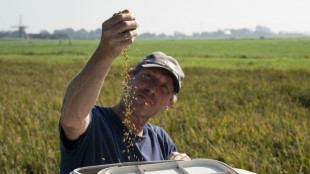 Rice work: Dutch test new crop to save sinking peatlands
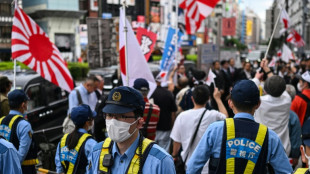
 Russians join street choirs to sing away sorrows -- or show dissent

 UK fears grow over AI giant Palantir's health service deal

 Empty nets in Latin America as fish flee El Nino

 Meidroth blasts White Sox through, Phillies survive in MLB playoffs

 'Catastrophic': Swiss glaciers lose fifth of mass in five years

 California roller coaster shut after brain damage claims

 Panama ministers push for reopening of huge open-pit copper mine

 Bohm's blast keeps Phillies alive in MLB playoffs

 US judge accepts Paramount's Warner Bros. buyout settlement

 Global stocks mixed as markets weigh higher oil prices, bond yields

 Marsh hails improvements after Australia win final one-day international

 Hegseth says US cut number of generals, admirals by 20%

 Kanye West's Russian concerts have been cancelled, organisers say

 First Hollywood, now Fat Bear Week: nepobaby wins Alaska contest

 Barcelona lay down marker in Women's Champions League, Arsenal slip up

 US pushes against overproduction with eye on China at G20 meeting

 Swiss FA withdraws support for FIFA chief Infantino
 Man City's meteoric rise clouded by financial scandal

 Polish activists open first abortion pill locker in Warsaw

When the pandemic struck Peru and forced the economy to shut down in an attempt to stop the spread of the coronavirus, women were some of the hardest hit.
Silvia Munoz lost her job as a domestic worker, while Yolanda Chambi was forced to close her shop selling traditional Peruvian clothes.
Both were among millions of Peruvian women to lose their income during the pandemic, which exacerbated gender inequality.
Theirs is a story seen throughout Latin America on the eve of International Women's Day, where four million women remain unemployed even after regional economies have reopened.
When Covid struck, many women were forced to give up work to look after sick family members and children as schools and creches were closed as part of government restrictions.
And while most have since returned to work, many have had to accept lower salaries or even make do with working in the informal sector.
Once the virus reached Peru in March 2020, "there was no work, there was nothing," said Munoz, 65, speaking from her home in the working class Lima neighborhood of Villa Maria del Triunfo.
One thousand kilometers (620 miles) away in Puno on the shores of Lake Titicaca, Chambi tells a similar story.
"We lost all our earnings," she said.
She used to sell clothes to locals for the Virgen de la Candelaria festival that takes place on February 2 and involves traditional Andean music and dancing.
It has been canceled for the last two years due to Covid.
Unable to sell her wares, Chambi could no longer afford the rent on her home-cum-workshop.
She was forced to move with her four children to the family home in the countryside, where they grow potatoes, broad beans and other vegetables.
While many countries in the region paid out benefits to those that lost their jobs due to the pandemic, few people in Peru received such aid because 70 percent of the 33-million population works in the informal sector, and very few -- especially the poor -- have bank accounts.
- Gone back 10 years -
The International Labor Organization says women have been disproportionately affected by the pandemic.
The ILO says 24 million women in Latin America lost their jobs during the pandemic and as many men.
But while only half a million men remain out of work, eight times as many women do, "which contributes to amplifying the impact of the crisis on gender inequality at work."
Women's unemployment in the region is 12.4 percent, compared to just 8.3 percent for men.
After years of steady progress, "the pandemic has taken us back more or less to the figures from 10 years ago," Italo Cardnoa, the ILO chief for Peru, told AFP.
Sectors that traditionally employ a lot of women have been particularly hard-hit by the pandemic, such as hotels, restaurants, services and the informal sector.
"The return of women to the labor market is much slower than for men," said Cardona.
Daysi Falcon, 34, lost her job as an administrative assistant at a manufacturing company in March 2021.
She now sells prepared meals to acquaintances.
She says her family members were "dying one after another from Covid," and she spent months caring for them.
- 'I feel powerless' -
Many of those back in work have been forced to accept lower pay.
A few months ago, Munoz, who supports her ill husband, started working again four days a week -- but for 30 percent less pay than before.
Having previously earned $25 a day, she now receives $17.50.
"You have to accept it because behind me is someone who takes less," said Munoz.
"I feel powerless because you get older, you're not as strong as you used to be and when you're older still, there's no pension."
Chambi, who sells breakfasts by the roadside, is likewise pessimistic about the future.
"If the festival remains suspended, if our economy remains suspended, we will have no earnings," she said.
L.Dubois--BTB