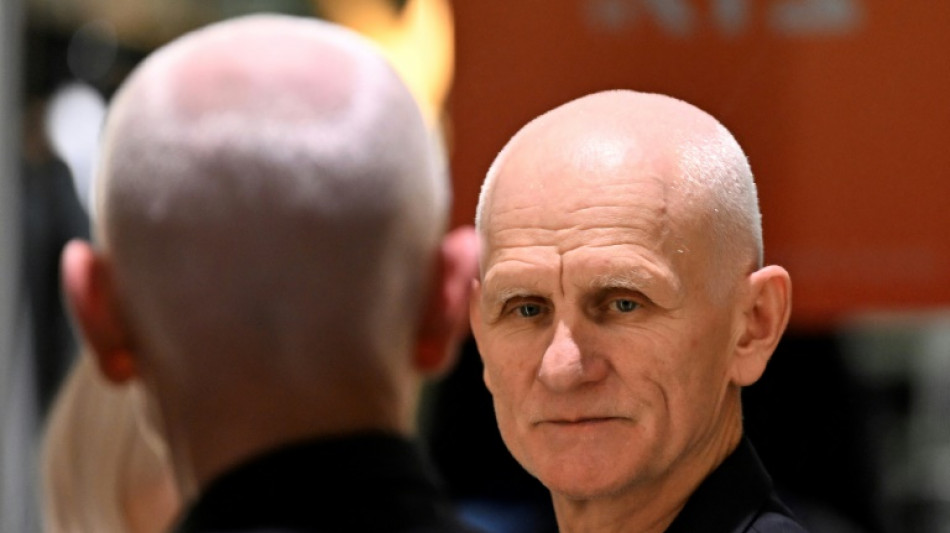
Freed Belarus dissident Bialiatski vows to keep resisting regime from exile / Photo: © AFP

 Noosha Aubel: €143,056 in annual basic pay — while Potsdam’s residents are expected to serve as cash cows
 Cristiano Ronaldo provisionally suspended by Portugal after walkout
 Brilliant Renshaw ton puts Australia in strong position
 Zelensky blasts diesel deal after Russian strikes kill 15
 Cristiano Ronaldo provisionally suspended after Portugal walkout
 Alcaraz through in straight sets on Shanghai Masters opener
 Palmer signs contract to stay at Chelsea until 2034
 India detains 'cockroach' movement leaders in bid to thwart election protest
 Proposed next EU budget cut back in search for deal
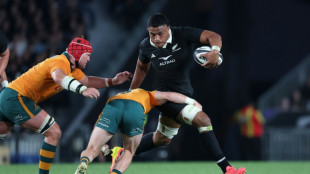 All Blacks learn from 'failed' Springboks series to punish Wallabies
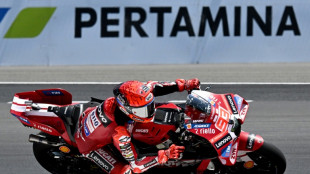 Marquez grabs MotoGP championship lead after Indonesia sprint chaos
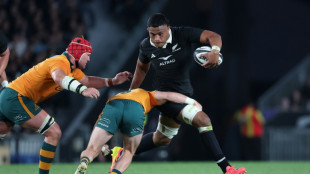 All Blacks extend Eden Park streak with big win over Wallabies
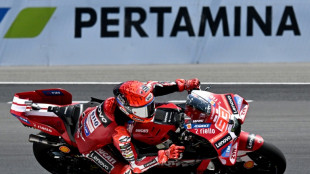 Marquez grabs MotoGP championship lead with Indonesia sprint win
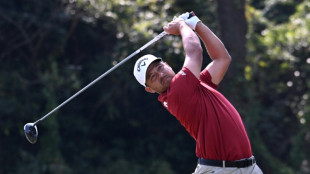 Schauffele closes in on leaders after 'weird' round in Japan
 Medvedev through at Shanghai Masters in first match since disqualification
 Trump sows doubt on plan to livestream US military execution
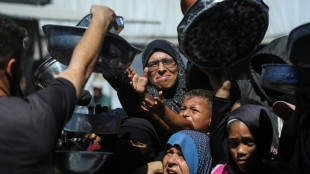 Hunger and malnutrition stalk Gazans, a year on from ceasefire
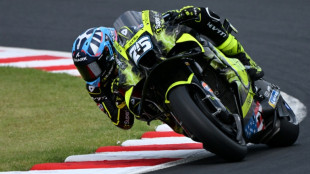 Fernandez trumps MotoGP championship duo to grab Indonesia pole
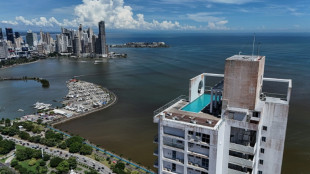
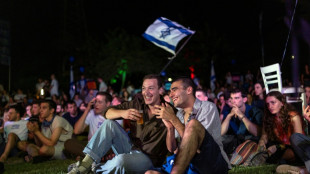 October 7 scars push Israel's first-time voters to right
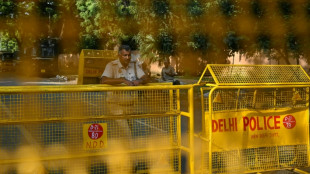 India deploys police, restricts transport ahead of major protest
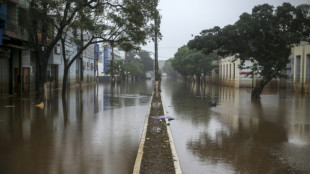
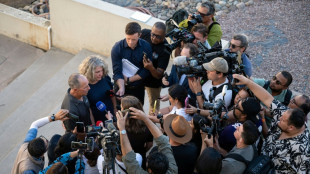 Three Mexicans convicted in murders of Australian, US surfers
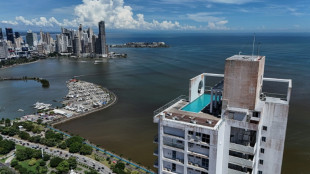
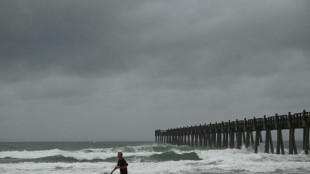
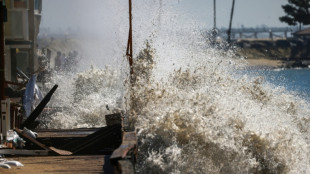 Powerful waves lash California coast as storm threatens more damage
 Trump hails Russia deal to release diesel as midterms loom
 Lyon blow chance to go top after loss at Lens
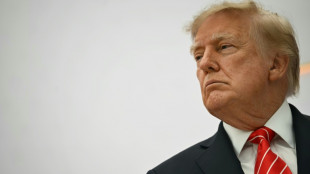 Stocks rise as Trump says Russia to release diesel to world markets
Ales Bialiatski struggles to believe he is a free man and that he can -- after years in prison largely barred from outside contact -- speak to his wife in person.
Only hours ago, the 63-year-old Belarusian dissident and Nobel Prize winner was woken up in his cell at 4:00 am, put in a car and blindfolded as he was driven hundreds of kilometres into forced exile to Lithuania.
Bialiatski won the Nobel in 2022 for his decades-long work documenting rights abuses in Belarus. President Alexander Lukashenko, in power since 1994, considers him a personal enemy.
The world barely got proof of life from Bialiatski in almost three years as he was kept incommunicado in Prison Colony Number 9 in Gorki, near the Russian border.
"I had to find a way to 'wave' to the outside world that I am alive," he told AFP in Lithuania's capital Vilnius.
He would tell prisoners who were about to be freed to pass on the news that he was alive.
Imprisoned in 2021 as Minsk waged a massive crackdown following the major 2020 protests, Bialiatski has a lot to catch up on.
In prison, he only received heavily censored information.
The morning after being one of 123 political prisoners freed in a US-brokered deal, Bialiatski was being briefed by friends on the details of what he missed.
"After the (Russia-Ukraine) war, the situation with contact with the outside world got much worse," he said.
He did not receive letters and only had access to highly controlled Russian and Belarusian TV.
"I had to read between the lines," he said.
- Nobel Prize 'saved' Bialiatski -
Bialiatski is no stranger to censorship or prison, and he said his decades-long dissident career even helped him get through the latest ordeal.
"I was morally prepared," he said, while adding that the isolation in Belarusian prisons was incomparably worse than a decade ago.
He endured the "humiliation" political prisoners go through in Belarus -- including long stints in various types of punishment cells.
He recalled being put in light clothing in freezing cells for days and other "inhumane" treatment. He struggled to talk about the hardships he lived through.
But Bialiatski believed he was spared from the worst treatment because of his Nobel Prize -- which he said he shares with the "whole of Belarusian society".
"The prize saved me from worse things, which my other colleagues went through," he said.
He joked that the guards "understood that this person has some kind of prize and that probably we cannot beat him".
- 'Freeing some while locking up others' -
While Bialiatski was glad to be free -- his mind was with colleagues still in prison back home.
His rights group Viasna says there are currently 1,110 political prisoners in Belarus.
The dissident warned that while the regime had carried out a wave of releases, it was still regularly arresting others.
"They are keeping up this level of fear," he said. "It is schizophrenic politics: they are liberating people with one hand and locking up people with the other."
Bialiatski was freed as the US has pushed Minsk to release political prisoners in talks taking place as Washington pushes for an end to the war in Ukraine.
But he called on the EU -- which has largely frozen relations with Minsk -- to also enter negotiations with the reclusive regime to get people out.
"For European society and other democracies, we have to stop repressions in Belarus," he said.
"The repressions are carried out by the regime, who else are you meant to talk to if not the regime?"
Europe had to do so from a "position of pressure" and "force" as "the Belarusian regime only understands this language", he insisted.
- 'Not put my hands down' -
More than five years after Minsk suppressed the 2020 demonstrations, Bialiatski said protesters and the opposition had underestimated the extent of repression the regime would unleash.
"They basically repeated what happened 100 years ago in Belarus, in the 1920s and 1930s," he said, referring to the Stalin-era repression.
Now in his 60s, he has to learn to live in exile like much of the Belarusian opposition and rights circles.
He joked that the last time he lived outside Belarus was in his childhood: Bialiatski was born in northern Russia, where his Belarusian parents were sent in the Soviet era.
He vowed "not to put my hands down" and continue his fight for democracy in Belarus from outside the country, accusing the regime of "suffocating" people with repression.
And with a smile, he added: "I am sure that sooner or later the situation in Belarus will change for the better."
L.Janezki--BTB