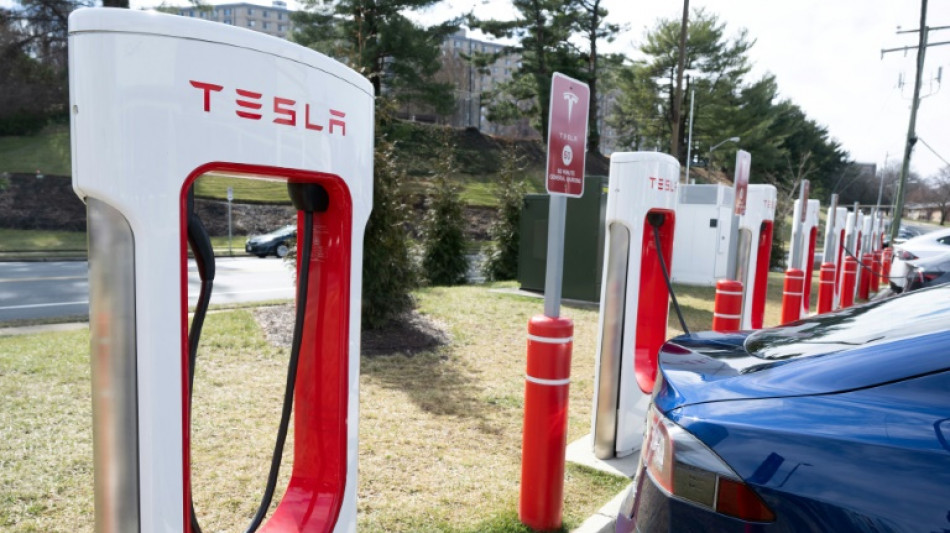
Strange bedfellows: auto rivals embrace Tesla EV chargers / Photo: © AFP/File

 Man City charges cloud hangs over Premier League season
 Top NATO commander set to issue warning to Russia over any attack

 Software, sprints, trolls: Singapore Grand Prix talking points

 Riyadh airport hit by fresh Houthi strike day after deadly attack

 Policymakers take on energy shock, rising debt at IMF-World Bank meetings
 Raphael Glucksmann elected centre-left French presidential candidate

 'Dizzy' Lazio join Inter at top of Serie A as Roma, Juve and Milan held

 Jaguars edge Eagles as Packers beat Bears

 Rays chase first MLB crown as Guardians try to snap drought
 Hurricane Simon churns off Mexican coast after shift in course
 'Dizzy' Lazio join Inter at top of Serie A as Roma and AC Milan held

 Man City must make 'own noise' amid financial scandal, says Maresca

 Jaguars down Eagles with wild field goal finish in London

 Sadaqat, Imran help Pakistan thump Sri Lanka to seal T20 series

 Man City shrug off uncertain future to beat 10-man Liverpool
 Conservation groups alarmed at marine mammals' deaths in Spain

 Tens of thousands urge climate action at Brussels demo
 Norway's Hagenes wins historic Paris-Tours classic

 Kipruto claims Chicago Marathon as Feysa defends women's title
 Forest boss Glasner loses on return to Palace, Hull hold Everton

 'Sorry boys': Hamilton takes blame for botched tyre call

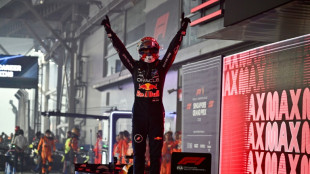 Resurgent Verstappen wins Singapore Grand Prix for first time

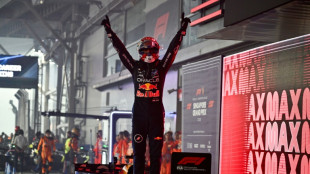 Verstappen wins Singapore Grand Prix for first time

 Djibouti boat wreck leaves 139 migrants dead, 84 missing: UN

 Drone hits Russia's Yandex in third reported attack

Tesla's electric charging network has long pleased electric car mavens. But Elon Musk's "superchargers" are now winning endorsements from a more unlikely group: other auto companies.
Ford was the first to announce a partnership with Musk in late May, followed by General Motors earlier this month. On Tuesday, EV truck company Rivian joined the bandwagon, saying it looks forward "to continuing to find new ways to accelerate EV adoption."
Under the partnerships, Musk has agreed to let consumers with autos from rival brands utilize its national network.
Appearing with Musk on Twitter Spaces, GM Chief Executive Mary Barra said she was "really excited" to almost double the volume of chargers available to GM vehicle owners, adding that she hoped the Tesla system, known as the North American Charging Standard (NACS), could become a unified standard for the continent, which would "enable more mass adoption."
The ascendance of Tesla's network reflects the system's reputation for reliability, as well as the sluggish expansion of rival EV charging options amid supply chain problems and a ponderous rollout of a giant federal program.
The embrace by Detroit auto giants has been seen as Musk's latest coup, helping to fuel a roughly 40-percent surge in Tesla shares since the May 25 Ford announcement.
Still, many EV experts say it is premature to declare NACS the winner.
"We may be heading that way, but it's still too early to say Tesla and NACS has won," said industry consultant Loren McDonald, who thinks the market's short-run evolution could be akin to the smartphone split between Apple and Android, with two leading standards.
EV experts note that other automakers with ambitious US electric vehicle programs, such as Volkswagen and Hyundai, continue to favor the rival standard, known as the combined charging system (CCS).
"Ultimately we'll have one standard, but how long that takes remains to be seen," said John Eichberger, executive director of the Transportation Energy Institute.
Eichberger said a Musk-dominated charging system could raise antitrust concerns, adding that it is not yet clear how far the Tesla CEO will go in sharing a technology that had until recently been proprietary.
"If we are going to gravitate towards one default source for charging, then it needs to be an open-source technology," Eichberger said.
- Delays, supply chain woes -
Until recently, many in the industry assumed CCS was in line to become the national standard, in part because it is explicitly required as the connector to be used in a new federal program.
The initiative, the National Electric Vehicle Infrastructure (NEVI) program, which was established in the 2021 infrastructure bill signed into law by President Joe Biden, provides $5 billion in funds for states to build EV charging networks.
In February, the White House unveiled an agreement with Musk in which Tesla agreed to make at least 7,500 chargers nationwide open to non-Tesla EVs by the end of 2024, a move that allows Tesla to potentially qualify for NEVI funds.
There has been no indication that the White House will shift its policy, but states are reconsidering their implementation in light of recent industry developments. Texas plans to require each charge port to have a CCS connector and a NACS connector, a Texas Department of Transportation spokesman told AFP on Friday.
Tesla's shift comes amid concerns there won't be enough chargers.
A January 2023 forecast by S&P Global concluded that the US charging system is "not nearly robust enough to support a maturing electric vehicle market," saying that the number of EV chargers in the country would need to quadruple between 2022 and 2025.
The number of EV chargers "has been increasing, but very slowly compared to the number of vehicles coming into the market," said Bertrand Rakoto, global automotive practice leader at Ducker Carlisle, a consultancy.
Industry experts have cited a number of reasons for the sluggish pace of the rollout, including supply chain shortages of key materials; challenges in negotiating affordable electricity contracts with utilities; and delays with NEVI because of uncertainty about federal guidelines or difficulties in states that have no experience in permitting EV chargers.
A Department of Energy spokesperson said the agency has been "working hard to stand up" the program and listed seven jurisdictions that have released requests for proposals.
But McDonald, who closely tracks state NEVI programs, said no states have awarded contracts to build EV chargers so far. He does not expect most of the chargers to be built until 2025 or later.
Much industry focus has been on the need to build fast chargers to address range anxiety: the fear of drivers being stranded without access to charging capacity.
But McDonald believes this concern is overrated, viewing the real priority as adding chargers at homes, apartment buildings and condos.
M.Furrer--BTB