Policymakers take on energy shock, rising debt at IMF-World Bank meetings / Photo: © AFP/File

 Trump's 'energy ceasefire' sparks confusion as Russia strikes Ukraine

 Dupont double helps Toulouse avoid Bayonne slip-up in Top 14

 Marseille snap losing skid with win at Troyes

 Lula stages mass rally ahead of Brazil's presidential run-off

 Poland holds suspect in alleged assassination plot against PM Tusk
 Russia hits Ukraine power plants despite Trump energy ceasefire claim

 Isco's Betis rise back above Real Madrid to third

 Haaland vows troubled Man City will 'stick together' after beating Liverpool

 Abhishek, Arshdeep guide India to T20 win over West Indies

 'Other Mommy' scares up N. American box office win

 Zelensky surprised, Moscow mum as Trump announces energy ceasefire

 Ready Player 1: Paris to host 2027 edition of EVO combat video games event

 Bill Gates warns cyberattacks most imminent AI threat

 Lazio join Inter at top of Serie A as Roma held at Como

 Trump says Russia and Ukraine agree to 'energy ceasefire'

 Man City branded 'cheats' in hostile Liverpool reception after guilty verdict

 Smith breaks fielding record as Australia take control of 1st Test

 Smith breaks fielding record as Australia take first innings lead

 Saints win south coast derby after Eckert's suspended 'Spygate' ban

 Zheng beats Andreeva to become first home player to win China Open

 Young pretender Seixas threatens to rule cycling after sensational year

 Serie A stalemate as Roma held by Como

 Prince Harry, Meghan to carry out first joint engagement since UK return: reports
 Last Ceuta migrant camp removed ahead of Spanish king's visit
 Ukraine to stop refinery strikes when Russia curbs energy attacks: Zelensky
Finance ministers and central bankers meet in Bangkok this week for the annual gatherings of the International Monetary Fund and World Bank, with the global economy buffeted between the US-Iran war's energy shock, rising debt pressures and the AI boom.
The meetings run from Monday through Saturday in the Thai capital, and will see policymakers tackle some stark choices, with the IMF calling on governments to rein in spending even as vulnerable citizens' needs may be growing in the face of surging inflation and climate risks.
The week will see a combination of high-level closed-door meetings, public events and policy announcements from the world's top economic officials.
On Tuesday, the IMF will unveil its global economic forecast, along with detailed regional outlooks through the week, as policymakers set about tackling the challenges darkening the economic horizon.
"To put it simply, the global economy is being pulled in two opposite directions: a negative energy supply shock and a positive demand shock from AI," said IMF chief Kristalina Georgieva at an event kicking off the meetings in Singapore last week.
"The combined impact of these two forces is highly uneven across the world."
- 'Perfect storm' -
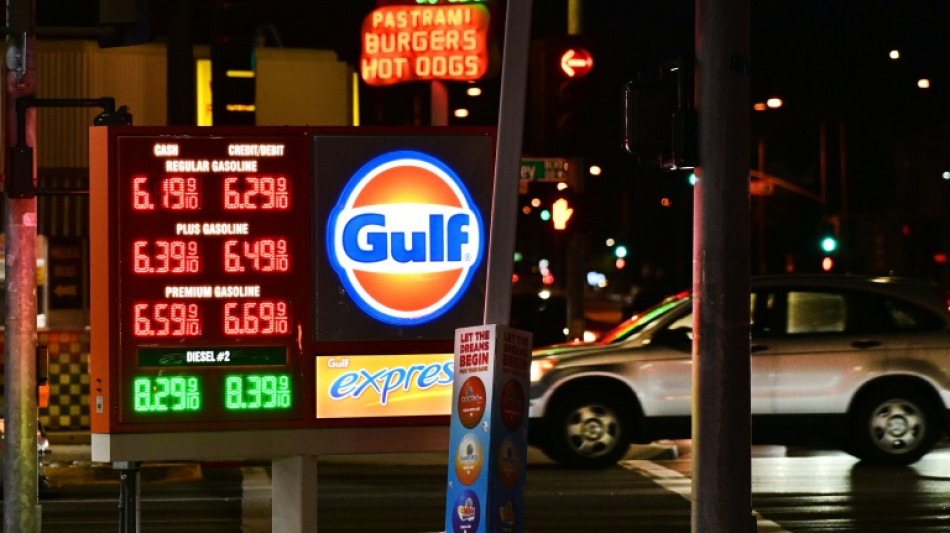
Chief among the concerns will be the economic fallout of the US war on Iran, which has seen energy prices skyrocket as Tehran's retaliatory action has targeted Washington's Gulf allies and curtailed global oil and gas supplies.
The IMF has warned that the effects of the shock have been unequal, with developing countries reliant on imported energy hit the hardest.
Despite the crisis, the Fund has called on countries to curb spending on subsidies and instead build their fiscal buffers after years of shocks since the pandemic.
Critics say that approach is just not feasible for low-income countries, and that multilateral lenders need to do more.
"The poorer member states of the IMF and World Bank are in distress from spillovers of the Iran war, rising interest rates in the West, and a climate crisis exacerbated by El Nino," said Kevin P. Gallagher, director of Boston University's Global Development Policy Center.
"The IMF and World Bank are not meeting this moment. They need an ambitious response that provides short-term emergency liquidity alongside longer term financing to make their economic growth paths less vulnerable to these shocks."
And the needs are great, according to the United Nations Development Programme (UNDP).
The combined shocks "could leave millions more in poverty as developing countries struggle to sustain support for households," UNDP warned in a new report on Sunday.
"Surging oil and food prices leave millions of families with no safety margin," said UNDP Administrator Alexander De Croo.
"We are witnessing a perfect storm that could throw tens if not hundreds of millions of people back into poverty."
In the developing world, he added, governments are being forced to make the "impossible" choice between cutting support for their poorest citizens or risking their entire development agenda.
- 'AI is here' -
Advanced economies in Europe and the United States have weathered the storm from the rising energy prices better, but have not been immune to surging inflation fuelled by those price increases, which have begun to bleed into other goods.
That inflation has seen central banks around the world raise interest rates in an effort to curb rising prices, tapping the brakes on economic activity.
Still, advanced economies have seen a boom in investment in artificial intelligence technology drive stock markets to new highs and bolster economic growth.
The IMF has said that the amount invested in AI will likely outstrip the capital put into building the railroads, the electricity grid or global telecommunications networks.
"Love it, hate it, or fear it, AI is here, rapidly becoming a key driver of countries' relative fortunes in the world economy," said Georgieva last week.
Several events through the week will focus on AI's impact, including in developing countries that may not be exposed to its economic benefits as they lie outside its supply chains.
The week will also see several key meetings on the sidelines, including of G20 finance ministers, where spiking bond yields will be high on the agenda.
A notable absence at that meeting will be US Treasury Secretary Scott Bessent, who will skip due to "domestic engagements", a department official said on Friday.
M.Odermatt--BTB