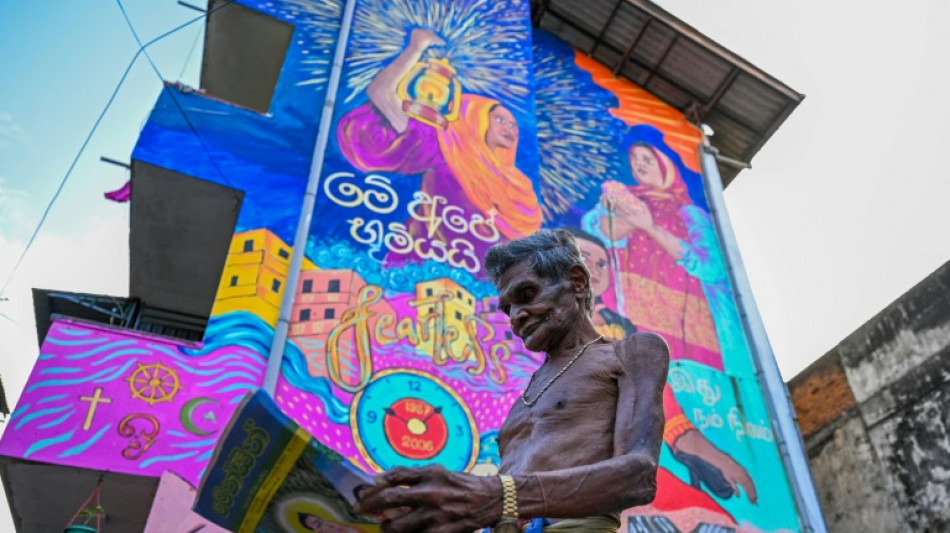
A year after Sri Lanka unrest, Slave Island hungers / Photo: © AFP

 DATA Network joins Sui and Walrus to scale the supply chain for AI training data

 Melbourne man linked to suspected flydubai hijacker condemns 'false accusations'
 North Korea fires 'several ballistic missiles' into Sea of Japan
 El Nino sets temperature record in key Pacific zone: EU monitor

 Nature does not respect borders: UN biodiversity chief

 World leaders urged to 'course correct' as UN nature goals fall short
 New York's notorious Rikers jail awaits elusive closure
 Unbeaten 49ers edge Seahawks while Vikings stay perfect
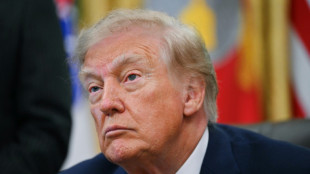 Trump's 'energy ceasefire' sparks confusion as Russia strikes Ukraine

 Dupont double helps Toulouse avoid Bayonne slip-up in Top 14

 Marseille snap losing skid with win at Troyes

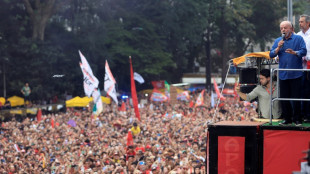 Lula stages mass rally ahead of Brazil's presidential run-off

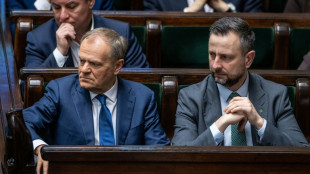 Poland holds suspect in alleged assassination plot against PM Tusk
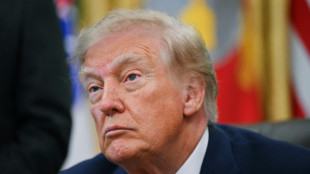 Russia hits Ukraine power plants despite Trump energy ceasefire claim

 Isco's Betis rise back above Real Madrid to third

 Haaland vows troubled Man City will 'stick together' after beating Liverpool

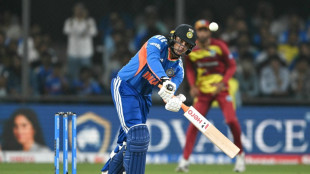 Abhishek, Arshdeep guide India to T20 win over West Indies
 'Other Mommy' scares up N. American box office win

 Zelensky surprised, Moscow mum as Trump announces energy ceasefire
 Ready Player 1: Paris to host 2027 edition of EVO combat video games event
 Bill Gates warns cyberattacks most imminent AI threat

 Lazio join Inter at top of Serie A as Roma held at Como

 Trump says Russia and Ukraine agree to 'energy ceasefire'

 Man City branded 'cheats' in hostile Liverpool reception after guilty verdict
 Smith breaks fielding record as Australia take control of 1st Test
As Sri Lankans flocked to a jubilant street party celebrating their president's ouster, retired accountant Milton Perera sat at home pondering whether his family could afford to eat the next morning.
Before his dramatic toppling last year, Gotabaya Rajapaksa was blamed for an economic crisis that brought food and fuel shortages, blackouts and runaway inflation to the island nation.
But Perera told AFP at the time that with the once-loved leader out of office, the hardships his country had endured to that point would get worse.
A year later, with millions of his compatriots struggling to put enough food on the table, the 75-year-old says his prediction has proved correct.
"Last year we had money, but no goods," Perera told AFP inside his rundown government flat, a short distance from the seafront protest site where Rajapaksa's toppling was orchestrated last year.
"Now there are goods, but we don't have money."
His home in Slave Island -- a working-class pocket of Colombo where the Portuguese housed African slaves during the colonial period -- is damp from a leaking water main.
Municipal authorities have not come around to repair it because they no longer have money for maintenance.
With sunken cheeks and veins protruding from his gaunt limbs, Perera wheezes as he moves gingerly around his kitchen, the product of his chronic asthma.
Before the crisis, medication to treat his condition was provided free by public hospitals -- a government programme that has now been scrapped.
Two months ago Perera's welfare payments were stopped as part of other spending cuts, meaning he is no longer able to afford an inhaler to treat his symptoms.
His family's water and electricity bills have doubled thanks to the removal of government utility subsidies.
The economic crisis had already forced Perera, his wife, his two children and their extended families to regularly skip meals when AFP first visited their home.
A year later, supermarkets are again fully stocked with the kitchen staples that disappeared from the shelves during last year's chronic shortages -- but Perera's family can't buy them.
"We can't afford meat, fish and eggs," B. M. Pushpalatha, Perera's wife, told AFP as the couple shared an unadorned meal of rice and lentils. "They are too expensive."
- 'You won't starve' -
Sri Lanka defaulted on its $46 billion foreign debt in April 2022 as its economy went into a tailspin unprecedented in its history as an independent nation.
Petrol queues at pumping stations stretched for miles and motorists -- several of whom died in queue -- spent days waiting to top up their tanks.
Families had no gas to cook food, farm yields fell dramatically due to a ban on fertiliser imports, and hospitals were empty of life-saving pharmaceuticals.
Months of angry protests culminated in the July 9 storming of Rajapaksa's presidential palace, a short walk from Perera's home, with its occupant forced into a brief but humiliating exile.
Rajapaksa's departure did not conclude Sri Lanka's economic woes, with inflation peaking at 70 percent in September. Petrol rationing also remains in force.
His successor Ranil Wickremesinghe secured a $2.9 billion IMF bailout in March by agreeing on a tough austerity regimen to plug the country's black hole of debt.
"Many of the decisions I have been compelled to take since assuming the presidency have been unpopular," Wickremesinghe said in a February address to the nation.
"However, because of those decisions, today no citizen of this country will die of dehydration in oil queues. You won't starve without gas or fertiliser."
- Seven million in poverty -
But the steep cuts to government spending and welfare programmes have exacerbated hardship across the country.
An additional four million Sri Lankans had fallen below the poverty line since the crisis began, said Dhananath Fernando, chief executive of the Colombo-based Advocata Institute think-tank.
"That means about seven million people in a country of 22 million are earning less than 14,000 rupees ($46) a month," he told AFP.
Of those, nearly four million Sri Lankans did not have the means to adequately feed themselves, the United Nations said in June.
Fernando said the figures showed a sharp deterioration in living standards across the country in the past year with no prospect of a quick recovery.
Unless the austerity measures began to bear fruit, the island risked a return to the sustained social unrest that broke out last year, he added.
"If we really fail to take Sri Lanka to a growth trajectory in the future, I'm not completely ruling it out," Fernando said.
H.Seidel--BTB