US on 'very narrow path' to avoid recession: IMF chief economist / Photo: © AFP

 FXGLOBE Rebuilds Its Copy Trading and PAMM Business With B2BROKER's B2COPY

 Nepal rescuers search for missing after flash flood
 Oil rises as Trump comments roil energy markets

 Premier League in limbo as Manchester City soar
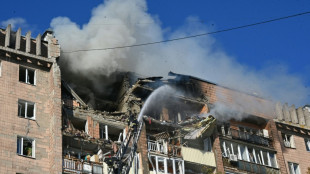 Zelensky vows to respond as Moscow silent on 'energy ceasefire'
 Thousands march in India's capital to demand election chief resign

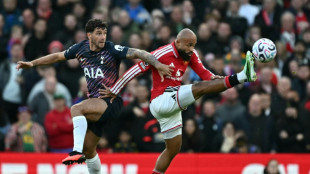 African players in Europe: Mbeumo ends goal drought as United draw

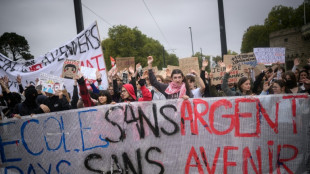
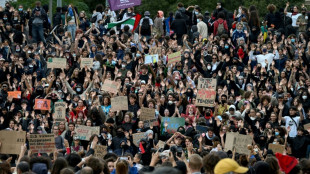 France's high school students plan fresh protests
 NZ bank in free speech row over 'explicit' sheep memes

 China Open champ Zheng withdraws from Wuhan citing fatigue

 Brewers edge Dodgers 2-1 in National League Championship Series opener

 Pope to have surgery to remove lung nodule
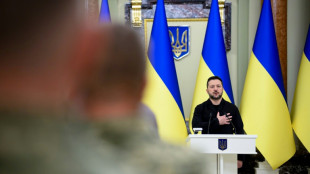 Stocks rise as oil prices tumble after Trump hails 'energy ceasefire'

 Man City charges cloud hangs over Premier League season

 Top NATO commander set to issue warning to Russia over any attack

 Software, sprints, trolls: Singapore Grand Prix talking points

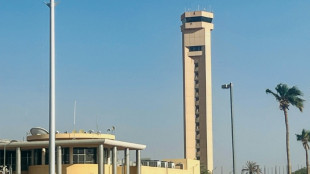 Riyadh airport hit by fresh Houthi strike day after deadly attack

 Policymakers take on energy shock, rising debt at IMF-World Bank meetings
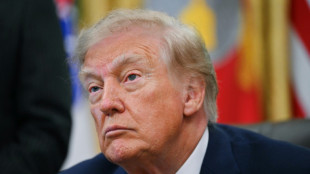
 Raphael Glucksmann elected centre-left French presidential candidate

 'Dizzy' Lazio join Inter at top of Serie A as Roma, Juve and Milan held

 Jaguars edge Eagles as Packers beat Bears
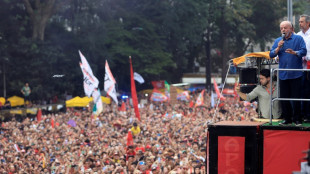
 Rays chase first MLB crown as Guardians try to snap drought
 Hurricane Simon churns off Mexican coast after shift in course
 'Dizzy' Lazio join Inter at top of Serie A as Roma and AC Milan held

 Man City must make 'own noise' amid financial scandal, says Maresca

The US economy is on a "very narrow path" to avoiding a recession, the International Monetary Fund's chief economist says, while warning of risks to China's strong post-pandemic recovery.
"A recession is not in our baseline," Pierre-Olivier Gourinchas told AFP during an interview at the IMF's headquarters in Washington, ahead of the publication of its updated global growth projections on Tuesday.
"We are cautiously prudent that the US economy could avoid a recession and, you know, glide towards its inflation target without having a recession in its future," he said.
"But it's a very, very narrow path," he warned.
On Tuesday morning, the IMF raised its forecast for global growth in 2023 to 3.0 percent, up 0.2 percentage points from its previous forecast in April, citing resilient service sector activity in the first quarter of the year.
The IMF still expects much of the growth this year and next to come from emerging and developing economies, with countries like the United States, Germany and Japan due to grow at a much slower pace than China and India.
But the IMF report also noted there are growing risks to China's economy following its post-pandemic reopening, especially in its troubled real estate sector.
- 'Slack' in Chinese economy -
The IMF continues to predict that China's economy will grow by 5.2 percent this year, up sharply from last year.
But there are now signs that China's rapid economic rebound from the Covid-19 pandemic could be "weakening faster than maybe was anticipated," Gourinchas told AFP, while noting "some concerns about the strength of the Chinese economy going forward."
"Maybe there's still a certain amount of slack in the Chinese economy that is not going away and that is weighing on prices," he said.
This slack has had a positive impact on the global inflation outlook: The IMF now forecasts consumer price increases will slow from 8.7 percent in 2022 to 6.8 percent this year, due largely to the decline in Chinese inflation.
But while it may be good news for the global economy, it could pose challenges for Chinese policymakers, Gourinchas told AFP.
"It might require some stronger policies by the Chinese authorities both in terms of monetary policy -- maybe a little bit more supportive easing monetary policy -- and also in terms of fiscal policy," he said.
- Russia still weathering sanctions -
Russia's economy is expected to grow significantly faster this year than the IMF forecast back in April, due largely to stronger-than-expected domestic demand, and continued government spending.
The IMF now sees Russian growth this year of 1.5 percent, up by 0.8 percentage points since April.
"There is a strong component coming from fiscal spending in the context of the Russian invasion of Ukraine," Gourinchas said.
"There is a strong defense and military effort, and that is providing some stimulus to the domestic economy," he added.
The IMF now expects the Russian government's budget deficit will grow to 6.1 percent this year, up from 1.4 percent last year, said a spokesperson for the fund.
Export revenues have also remained resilient despite a series of US-backed sanctions in response to the invasion of Ukraine, and a G7 price cap on Russian oil.
"So far, export revenues coming from especially crude oil have remained fairly strong," he said.
"There is some softening on refined products, this is a little bit harder, but on crude oil, they certainly the oil revenues have been have been quite sustainable," he added.
Over the medium term, the IMF still expects the Russian economy to slow significantly compared with its projections before the war in Ukraine began.
"Our projections for medium term growth for Russia are below one percent," he told AFP, adding that the Russian government's increased fiscal spending have "dimmed" the country's long-term growth prospects.
M.Ouellet--BTB