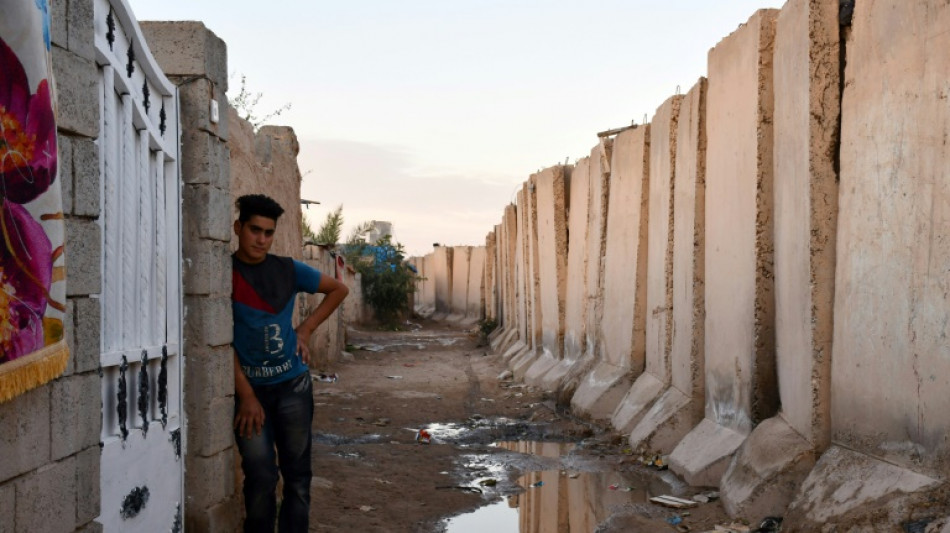
Years after civil war, security wall holds back Iraqi city / Photo: © AFP

 Mourinho blasts 'shameless' timing of Vinicius ban decision

 PSG beat Man City in Champions League thriller, Barcola hits Liverpool hat-trick

 US Treasury chief urges stronger IMF role against 'distortionary policies'

 Giant-killers Bodo sink Dortmund in Champions League

 PSG outgun embattled Man City in six-goal Champions League thriller

 In Chicago, pope's hometown, Catholics express shock and support

 Musk suggests US govt behind any slowdown in Ukraine's Starshield system
 Chiclayo prays for recovery and return of the 'Peruvian pope'

 Barcola scores hat-trick as Liverpool hit LASK for six

 Healthy corals help bleached neighbors regain color: study

 Hope ton helps West Indies level T20 series at 2-2 in India

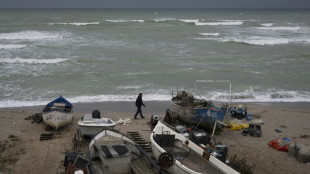 Ukraine war reaches shores of Bulgarian fishing village
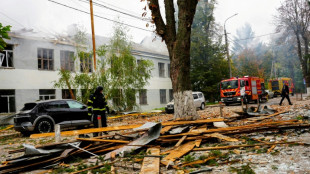
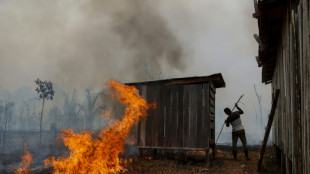 Brazil probing 'criminal' origin of forest fires: minister to AFP

 Sally Rooney books cannot be sold in UK amid Palestine Action ban: publisher
 Italian ski stars Goggia and Brignone to miss season opener
 Bournemouth boss Rose urges Cherries to bounce back from Chelsea 'slap'

 Top seed Sabalenka falls at first hurdle in Wuhan
 FX Junction Brings Copy Trading to Everyone, While Their Money Never Leaves With Their Broker

 Brighton defender Struijk's red card overturned

 Saudi league postpones three matches after Houthi attacks
 US consumer inflation up more than expected as midterms loom

 Canadian publisher supports novelist Orelien after AI denial

 Medvedev sees off Tsitsipas to reach Shanghai Masters quarters
 Louvre boss warns of closure risk without major renovations

 Lawes and Genge urge England to end ban on overseas-based players

Khaled Ibrahim dreams of a home on the outskirts of Samarra, but a concrete wall built to protect the Iraqi city is stopping him and hampering sorely-needed urban expansion.
Built more than a decade ago at the height of Iraq's civil war which tore apart the multi-faith, multi-ethnic country, authorities say the wall must remain to prevent the threat of jihadist violence, even as security has gradually improved across the country.
Samarra is home to the Al-Askari shrine, one of Shiite Islam's holiest sites and famed for its golden dome, but sits in the predominantly Sunni province of Salahaddin.
An attack by Sunni militant group Al-Qaeda in 2006 destroyed the dome, and set off a brutal sectarian conflict in which tens of thousands of people were killed. A year later, a second attack destroyed the two minarets at the site.
Today the wall around Samarra has also become a burden on daily life in the city that has expanded from 300,000 to 400,000 residents since 2008, pushing up property and land costs.
"It's a nightmare, worse than a prison," said Ibrahim.
The 52-year-old and his two sons, who all work as day labourers, currently rent accommodation in Samarra for around $180 a month, which for them is a small fortune.
Ibrahim has a plot of land just outside the city walls where he would like to build a house, but he is becoming increasingly frustrated that the fortified barrier makes this impossible.
"The security forces do not allow us to approach the wall," he said.
"And then there are no services, no water, no electricity. Building beyond the wall is like living in exile."
In the Iraqi capital of Baghdad, 110 kilometres (70 miles) to the south, many of the blast walls that once surrounded key streets, embassies and government offices are being taken down.
But in Samarra, small, unfinished cinderblock houses languish just inside the city's wall. On the other side, abandoned plots stretch as far as the eye can see.
- 'Sleeper cells' remain a threat -
There are three tightly controlled checkpoints in the barriers allowing access into Samarra, which is home to the remains of what was the capital of the Abassid caliphate in the ninth century, now a UNESCO heritage site.
Aware of residents' frustrations, authorities intend to overhaul the wall, with work to start within a month.
They plan to extend its perimeter by three to seven kilometres, increase the number of entry points to six, and add watchtowers and surveillance cameras.
"We would have liked to remove it, but there are obligations and security plans which mandated its presence," Riyad al-Tayyas, the deputy governor of Salahaddin, told AFP.
Tayyas said that building outside the wall was not officially banned, but he acknowledged that the barrier's presence was hindering urban expansion.
Residents opt not to build on the other side, fearing "they will find themselves cut off from the rest of the city", Tayyas said.
Nevertheless, he insisted lingering worries over security meant the barrier must stay.
This is to ensure there was no "repeat of the catastrophe of 2006, which led to a sectarian war", he told AFP.
"Even though the security situation has improved, there are still sleeper cells" of the Islamic State group (IS), he said.
A UN report in 2023 noted a drop in the frequency of IS attacks in urban centres but also warned that the group has maintained a presence in its strongholds, including around Salahaddin.
Tayyas's position chimes with the concerns of some Samarra residents such as 64-year-old retiree Laith Ibrahim, who said he was in favour of extending the wall's perimeter.
"In Samarra, inside the city, the security situation is excellent... Outside, it's exposed," he said.
But there is also "a shortage of land, housing," he said. "Real estate (prices) are soaring day after day."
D.Schneider--BTB