German economy buffeted by 'perfect storm' / Photo: © AFP/File

 Brazil forward Antony says home burgled during Betis match
 Ravens face familiar foe in Browns coach Monken
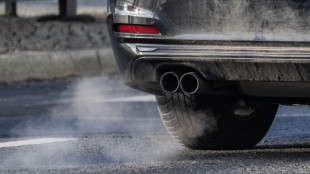 France, Germany reach deal on future of car industry
 Carney campaigns for Canadian unity before Alberta secession vote
 ATP proposes rankings system changes, extra player bonuses
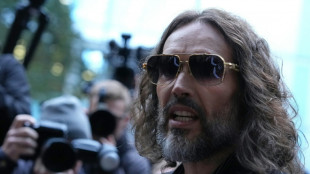 Russell Brand was 'monster-like', alleged victim tells UK court

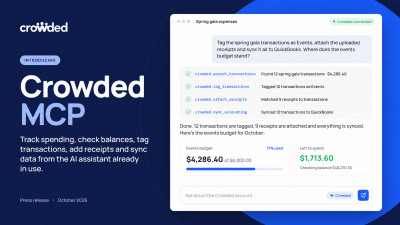 Crowded Launches Crowded MCP, Bringing Nonprofit Financial Operations Into ChatGPT and Claude
 Albanian PM condemns 'chaos' as violent unrest spreads
 Italian football suffers new blow with Champions League misery

 Trump scraps plan to livestream execution after broad backlash
 Seven missing off Romania after latest Black Sea drone attacks

 ARKBRIDGE Outlines Jonathan Morelli’s “Picks and Shovels” AI Infrastructure Investment Strategy

 Tech sell-off rolls on as hot inflation data stokes rate worries
 McIlroy makes 'solid' start in rain-hit Delhi as Norgaard leads

 Seven missing after fire on vessel in Black Sea off Romania

 'Severe drought' declared in parts of UK

 IUX Announces New Web Client Portal Built for Enhanced Browser-Based Trading
 School roof collapse kills teacher, 32 children in NW Pakistan
 Inter skipper Martinez facing month out with thigh injury
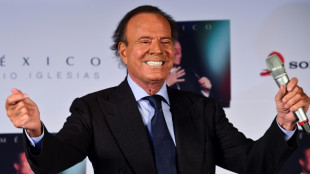 Spanish prosecutors back abuse probe into Julio Iglesias
 Tech sell-off deepens as US inflation sparks AI jitters

 Southgate does not forsee a return to management
 Two dead as Istanbul endures heaviest rainfall in 80 years
 After latest Nepal flood, survivors fear for future

 EU leaders clash over budget as spectre of French elections looms
Weaker exports, costly energy and a stuttering green transition have combined to form a "perfect storm" for the German economy, leaving Chancellor Olaf Scholz's coalition bickering over how to change course.
The government will unveil its latest economic forecasts for 2024 on Wednesday, with media reports suggesting a sharp downgrade to a mere 0.2 percent growth.
In its autumn projections, the government was still expecting output to expand by 1.3 percent.
The country ended 2023 in recession, shrinking by 0.3 percent, and the latest data suggest the first quarter of 2024 will see another contraction.
Germany also risks facing anaemic growth up to 2028 if no action is taken, German media said.
The German economy, Europe's largest and traditionally a driver of eurozone growth, is being buffeted by "a perfect storm", Economy Minister Robert Habeck said earlier this month.
The situation was "dramatically bad", he added.
Germany's once-mighty industrial sector has been hit particularly hard by multiple headwinds.
Having previously relied on cheap Russian gas imports, the sector is still reeling from the energy price surge triggered by Russia's invasion of Ukraine.
The European Central Bank's streak of interest rate hikes to tame inflation has added to the pain, dampening demand and investments.
Exports have slumped on weaker trading with key markets such as China, which increasingly produces its own goods. Geopolitical tensions including shipping disruptions in the Red Sea have added to trading woes.
The long-promised shift to a greener economy meanwhile, requiring major public and private investment, has run into fresh hurdles after a shock legal ruling last year forced the government to rethink some of its climate spending plans.
Attractive green subsidies in the United States have already lured away some German firms, who complain of a lack of incentives offered by Scholz's government.
German chemical giants BASF and Bayer were among some 60 companies this week issuing a joint appeal to European Union leaders to adopt a "European industrial deal" to help pull the sector out of the doldrums.
"Without a targeted industrial policy, Europe risks becoming dependent even on basic goods and chemicals. Europe cannot afford this to happen," the statement read.
- Debt brake row -
In an open letter at the weekend, 18 federations representing the "Mittelstand" of small- and medium-sized companies seen as the backbone of the German economy, urged politicians to take action.
"It's one minute to midnight. What's at stake is nothing less than the rescue of the German Mittelstand," it said.
But the three parties that make up Scholz's coalition of the Social Democrats, the Greens and the liberal FDP, are at odds over how to respond.
Finance Minister Christian Lindner from the pro-business FDP wants to ease the tax burden and cut red tape for businesses.
"If we do nothing, Germany will become poorer," he has warned.
A draft law that would reduce taxes on corporations by around seven billion euros ($7.5 billion) a year is due to be approved by lawmakers on Wednesday, after months of squabbling.
But Economy Minister Habeck, from the ecologist Greens, wants to go further.
He has called for a relaxation of the government's constitutionally enshrined "debt brake", a self-imposed cap on annual borrowing that critics say has hampered much-needed spending on modernising infrastructure and financing environmentally-friendly projects.
Tensions over the brake spiralled after a top court in November found that the government broke the debt rule when it transferred billions of euros earmarked for pandemic support into a climate fund, throwing Scholz's budget into disarray.
While Scholz's Social Democrats have since signalled an openness to tweaking the rules, any loosening of the debt brake remains a red line for the FDP.
The economic headwinds have contributed to a steep decline in support for the government.
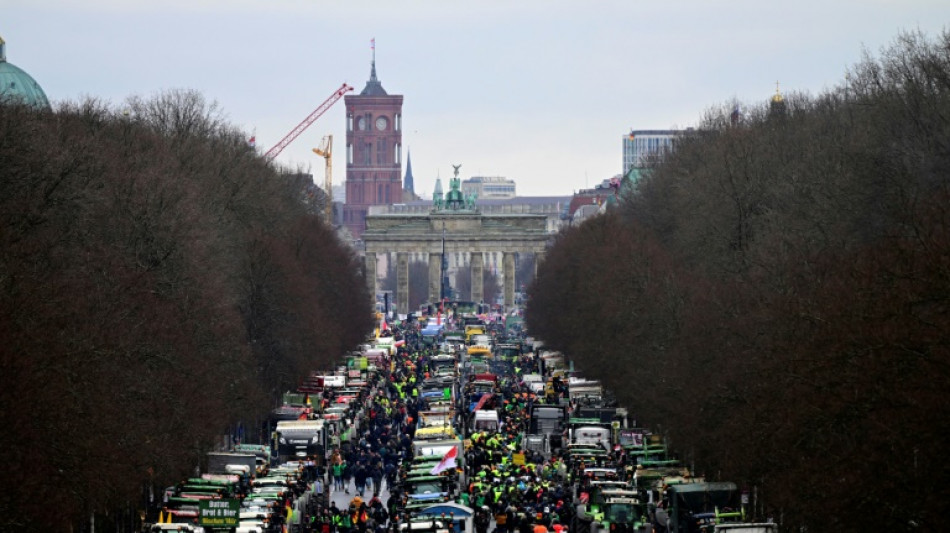
Plans to scrap agricultural fuel subsidies triggered nationwide tractor protests last month, with many farmers voicing dissatisfaction with Scholz and his coalition partners.
FDP secretary general Bijan Djir-Sarai recently called the coalition's future into question.
"An economic turnaround is necessary," he told the Bild newspaper. Whether the coalition is capable of making the needed changes will be "the deciding point in the coming weeks and months", he added.
G.Schulte--BTB